Last Updated: October 4, 2026
Quick answer: Our top pick in 2026 is the Clean and restore the current filter — our #1 rated choice. See the full ranked comparison, alternatives and buying advice below.
The Short Answer
Yes—a larger aquarium filter is worth it only if the filter is appropriately sized for your tank and livestock. Extra capacity can improve water clarity, biological stability, and maintenance intervals, but the biggest available filter is not automatically the best choice.
For most community aquariums, aim for a filter rated to circulate roughly four to six times the tank’s actual water volume per hour. A 20-gallon aquarium, for example, may benefit from a filter rated around 80 to 120 gallons per hour (GPH). Manufacturer ratings are usually based on an empty or lightly stocked setup, so real-world flow can be lower once the cartridge becomes dirty.
As an Amazon Associate we earn from qualifying purchases at no extra cost to you.

Oversizing by one reasonable step is usually safer than running a filter at its limit. However, very strong flow can stress bettas, shrimp, fry, fancy goldfish, and other fish that prefer calm water. The right question is not “How large can I go?” but “How much filtration can my fish comfortably use?”
What You Actually Get
A larger filter generally gives you three useful benefits: more water movement, more room for filter media, and a larger margin before performance drops. Those advantages are related but not identical.
More water movement helps carry floating debris toward the intake and distributes oxygen and temperature throughout the aquarium. A filter rated at 200 GPH theoretically moves more water than one rated at 100 GPH, although actual flow depends on filter design, water level, tubing, media condition, and the height of the aquarium.
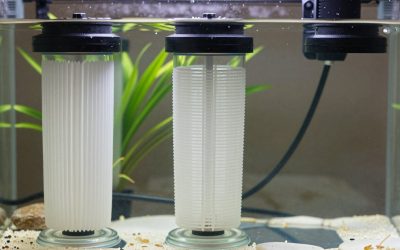
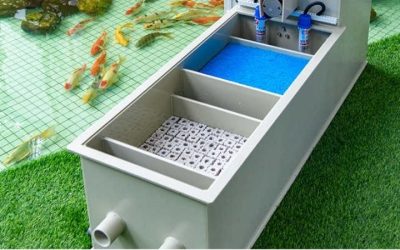
More media space can be even more valuable than raw pump speed. Mechanical media catches particles, while biological media provides a home for beneficial bacteria that process toxic ammonia and nitrite. A larger filter may accommodate a thicker sponge, additional ceramic media, or a reusable pre-filter. That can make the aquarium less sensitive to a missed water change or a temporary increase in waste.
A bigger maintenance buffer is another practical advantage. A small cartridge can become clogged quickly in a heavily stocked tank. When that happens, flow falls and the filter may stop doing its job efficiently. A larger housing or a washable sponge can continue working longer between cleanings.
Still, a larger filter does not replace basic aquarium care. It cannot compensate indefinitely for overfeeding, overcrowding, an undersized aquarium, or infrequent water changes. Beneficial bacteria also need time to establish; installing a powerful filter on a new tank does not instantly cycle the aquarium.
Pros
- Better waste handling: More media and a stronger intake can collect food particles, fish waste, and plant debris more effectively.
- Greater biological capacity: Additional porous media can support more beneficial bacteria, especially in a busy community tank.
- More oxygen exchange: Surface agitation from a hang-on-back (HOB) filter can improve gas exchange, which is useful in warm or heavily stocked aquariums.
- Longer useful performance between cleanings: A larger media chamber may resist clogging better than a compact cartridge-only design.
- Room to customize: Many larger filters allow you to combine sponge, ceramic, and chemical media instead of relying on one disposable cartridge.
- Useful protection against changing conditions: A little extra capacity helps when fish grow, new fish are added, or feeding temporarily increases.
- Often a modest power cost: Many small and medium HOB filters use approximately 3 to 10 watts, though the exact figure varies by model. The difference between two nearby sizes may be only a few watts.
Cons
- Too much current: Powerful flow can exhaust fish, damage delicate plants, disturb substrate, or prevent shy species from resting.
- More noise and splashing: A larger motor or higher return rate may create hum, vibration, or water noise if the aquarium is not filled high enough.
- Higher purchase and replacement costs: Larger cartridges and media can cost more, and some proprietary replacements are less economical than reusable foam.
- More space required: HOB filters need clearance behind the aquarium. A larger unit may not fit beneath a shelf, inside a hood, or on a narrow stand.
- More evaporation: Increased surface movement can accelerate water loss, particularly in warm rooms or open-top tanks.
- It cannot fix poor stocking decisions: Filtration processes waste, but it does not create extra swimming space or eliminate the need for water changes.
- Potentially wasteful media design: Replacing an entire cartridge every few weeks can discard useful biological bacteria. Rinse reusable media in removed aquarium water instead of untreated tap water.
Who Should Buy It
A larger filter makes sense for a tank that is heavily stocked, contains messy eaters, or has fish that produce substantial waste. Goldfish, larger cichlids, turtles, and tanks with frequent feeding often benefit from extra mechanical and biological capacity. It is also a sensible upgrade if the current filter’s flow slows dramatically between cleanings or if debris regularly remains suspended or settles across the tank.
Consider buying one size above the minimum recommendation when the flow can be adjusted or diffused. A pre-filter sponge, spray bar, directional outlet, or coarse sponge baffle can reduce the current while preserving the larger media chamber. In a 20-gallon community tank, for example, a filter rated for approximately 20 to 30 gallons may be adequate for a light stocking level, while a model rated for roughly 30 to 40 gallons can provide more headroom if its output is gentle enough.
Check the filter’s physical dimensions before buying. Many compact HOB units are approximately 6 to 10 inches wide and 5 to 8 inches front-to-back, but larger models can need considerably more rear clearance. Confirm that the intake reaches the tank’s water depth and that the outlet will not interfere with a lid.
Who Should Skip It
Skip the larger filter if your aquarium houses bettas, shrimp, fry, or other low-flow animals and the unit cannot be adjusted. A smaller filter with a sponge-covered intake may be safer than a high-output model that keeps fish pinned away from the return.
You should also skip an upgrade if the real problem is a dirty or poorly maintained existing filter. Cleaning the intake, impeller, and media may restore flow for little or no cost. Likewise, do not buy a bigger filter to justify overstocking. If the aquarium is already crowded, the better investment may be a larger tank, fewer fish, regular testing, and more frequent partial water changes.
Finally, avoid a model that requires expensive proprietary cartridges when it offers little additional media capacity. Compare the long-term price, not just the filter’s purchase price.
Cheaper Alternatives
| Option | Cost | Trade-off |
|---|---|---|
| Clean and restore the current filter | $0 to $10 | Best value if the impeller, intake, and media are merely dirty; it does not add capacity. |
| Reusable aquarium sponge or coarse foam | About $5 to $15 | Can replace or supplement disposable media, but it may need rinsing more often and may not fit every housing. |
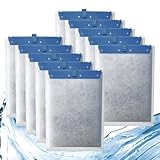
| Tetra Whisper Bio-Bag Large Filter Cartridges, 3 count | under $10 | Convenient replacement for compatible Whisper and related filters, but disposable cartridges can cost more over time and remove established bacteria when discarded. |
| Pryitier 10 Pack Filter Cartridge for compatible Whisper filters | under $30 | Lower per-cartridge cost than a small multipack, but compatibility must be confirmed and it still does not increase the filter’s pump or media chamber size. |
| Pre-filter sponge on the existing intake | About $5 to $12 | Adds mechanical protection and helps protect shrimp or fry; it can reduce flow and requires regular rinsing. |
For many aquariums, upgrading the media is more cost-effective than upgrading the entire filter. Use a washable sponge for mechanical filtration and add ceramic biological media if the housing has room. Replace chemical media only when there is a specific reason, such as removing medication or an unwanted odor; it is not necessary for routine filtration in every tank.
FAQ
Can a filter be too big for an aquarium?
Yes. Excessive flow can stress fish, uproot plants, and stir the substrate. A filter rated one size above the aquarium is often reasonable when its output is adjustable or can be diffused. A filter several sizes above the tank may be difficult to control and can create unnecessary noise and evaporation.
Does a larger filter make an aquarium cleaner?
It can improve particle removal and water circulation, but “cleaner” depends on maintenance as well. A larger filter cannot remove every dissolved pollutant, correct overfeeding, or replace partial water changes. Test ammonia and nitrite in a new or unstable tank, and clean clogged media before flow becomes severely restricted.
Is higher GPH always better?
No. GPH is only one part of the decision. Media volume, intake design, adjustability, noise, and the species’ flow preferences also matter. A filter with slightly lower advertised flow but substantially more reusable media may perform better for a stocked aquarium than a high-GPH model with a tiny cartridge.
How often should I replace filter cartridges?
Replace or clean media based on condition rather than a fixed calendar. Rinse reusable sponge or foam in a bucket of removed aquarium water when flow declines or the media is visibly dirty. If a disposable cartridge must be replaced, avoid changing all biological media at the same time. Keeping some established media helps preserve the aquarium’s beneficial bacterial community.
Ready to decide? Our #1 pick for 2026 is the Clean and restore the current filter.
Live price & availability on Amazon.
Related Reviews & Guides
6 Best Aquarium Vacuum Siphons 2026
How to Choose Nano Aquariums under 10 Gallons: What Actually Matters