Last Updated: October 21, 2026
Figuring out what size canister filter do you need comes down to the maker’s tank range and its overlaps, not a universal turnover multiplier. Fluval encodes no fixed multiple: turnover at each model’s maximum tank size runs about 2.45 to 3.17 times per hour, so ranges, not a rule, guide the size.
As an Amazon Associate we earn from qualifying purchases.
By David Nguyen
A Canister Filter Sizing Table
Sizing follows the maker’s tank ranges and their overlaps rather than a fixed turnover rule, since Fluval builds in no universal multiplier. The table maps common tank sizes to models and shows turnover at each model’s maximum, so read it as descriptive ranges you resolve by bioload, not as exact requirements.
| Tank Size (gal) | Suggested Model | Turnover at Max (x/h) | Note |
|---|---|---|---|
| 20-30 | Fluval 107 or 207 | 107 ~3.17x at its max | Overlap; resolve by bioload |
| 40-45 | Fluval 207 or 307 | 207 ~2.69x at its max | Overlap; media and flow |
| 50-70 | Fluval 307 or 407 | 307 ~2.94x at its max | Overlap; heavier stocking |
| 70+ | Fluval 407 | 407 ~2.45x at its max | Confirm against bioload |
There Is No Fixed Turnover Multiple
The first thing to understand is that no universal turnover multiplier sets canister size, since the maker does not encode one. At each model’s maximum tank size, Fluval turnover runs about 3.17 times per hour for the 107, 2.69 for the 207, 2.94 for the 307 and 2.45 for the 407, which are not a single figure.
Because those numbers vary rather than converging on one multiple, sizing by a fixed turnover rule misreads how the range is built. Read the maker’s tank ranges as the guide instead, since the differing turnover at each maximum proves the lineup was designed around tank ranges, not a constant times-per-hour target.
Ranges Overlap by Design
The models’ tank ranges overlap, so a single tank size often fits more than one filter. The 107 and 207 both suit roughly 20 to 30 gallons, the 207 and 307 around 40 to 45, and the 307 and 407 about 50 to 70, which means the maker’s range alone does not pick out one single model for you.
Read overlap as a feature that hands the final choice to bioload, media and flow. Because two models can both cover your tank, the decision at the overlap is about how much waste your stock produces and how much media you want to run, not about squeezing under a gallon ceiling by the smallest margin.
Minimum Sizes Are Descriptive
At the small end, the turnover figures climb but remain descriptive rather than required. At each model’s minimum tank size, turnover runs roughly 9.5 times per hour for the 107, 6.05 for the 207, 5.15 for the 307 and 4.9 for the 407, which describe the range’s low edge rather than a target you must hit.
So do not read a high minimum-size turnover as a requirement to chase. These figures show a filter is comfortably capable on a smaller tank within its range, not that you need that multiple, so treat them as the descriptive low end of each model’s coverage rather than a rule for sizing up.
Resolve Overlaps by Bioload
Where ranges overlap, resolve the choice by bioload and media rather than gallons. A 45-gallon tank sits in both the 207 and 307 ranges, so a heavy stocking argues for the 307’s extra media and flow while a light one is fine on the 207, with the tank size itself not deciding between them.
Factor in head height, hoses and media too, since they cut installed flow below the rating. Because the overlap deliberately leaves room for judgment, matching the filter to how much waste your fish produce and how much media you plan to run is what turns a range into a specific, correct size.
Matching Filters to Tank Ranges
With the ranges and overlaps mapped, the remaining step is matching a specific filter to your tank and bioload, since more than one model often fits. The examples below show how the same range logic lands on different models depending on stocking rather than on a fixed turnover figure.
Fluval 107
The Fluval 107 anchors the small end, suiting roughly 20 to 30 gallons where its turnover at maximum tank size is about 3.17 times per hour. On a lightly stocked tank in that range it provides ample filtration, and its high minimum-size turnover, near 9.5 times per hour, shows it is comfortable on smaller tanks too.
Because it overlaps the 207 across 20 to 30 gallons, choose it over the 207 when your bioload is light and your media needs modest. Read its turnover figures as descriptive of its range rather than as a rule, since the 107 is the right size when stocking, not the gallon ceiling, points to the smaller filter.
Fluval 207
The Fluval 207 covers the low-middle range, overlapping the 107 around 20 to 30 gallons and the 307 around 40 to 45, with turnover at its maximum near 2.69 times per hour. That places it as the step up for a slightly heavier bioload than the 107 handles, or a lighter one than the 307 requires.
At the overlaps, let bioload decide: pick the 207 over the 107 for more media on a moderately stocked tank, or over the 307 when a 45-gallon tank is lightly stocked. Its turnover figures describe its range, so the 207 is correct when your stocking sits between what its neighbors best serve.
Fluval 307
The Fluval 307 handles the upper-middle range, overlapping the 207 around 40 to 45 gallons and the 407 around 50 to 70, with turnover at its maximum near 2.94 times per hour. It suits a heavier bioload on a mid-size tank, offering more media capacity than the 207 where stocking demands it.
Choose it over the 207 on a well-stocked 45-gallon tank, or over the 407 on a lightly stocked 60-gallon one. Because its range overlaps both neighbors, the 307 is the right size when bioload and media needs, rather than the gallon figure alone, point to this middle-large filter within the overlapping lineup.
Fluval 407
The Fluval 407 covers the large end, suiting roughly 50 gallons and up, with turnover at its maximum near 2.45 times per hour and overlap with the 307 across 50 to 70 gallons. It offers the most media capacity in the line, which a heavy bioload on a larger tank genuinely needs to process its waste.
Pick it over the 307 when stocking is heavy or the tank sits above the overlap, confirming the choice against bioload rather than gallons. Its lower turnover at maximum size reinforces that the lineup encodes no fixed multiplier, so the 407 is the right size when your load, not a rule, calls for the largest filter.
Frequently Asked Questions
People sizing a canister ask about turnover rules, overlapping ranges, and which model fits common tank sizes. The answers below use the maker’s ranges and overlaps rather than a fixed multiplier, so a 30, 45, 55 or 75-gallon owner can size confidently on bioload instead of a single formula.
Is There a Fixed Turnover Rule?
No; the maker encodes no universal multiplier. Turnover at each model’s maximum tank size varies, running about 3.17 times per hour for the 107, 2.69 for the 207, 2.94 for the 307 and 2.45 for the 407, so there is simply no single times-per-hour target the whole lineup is built around.
Because those figures differ rather than converging, sizing by a fixed multiple misreads the range. Use the maker’s tank ranges as the guide and resolve overlaps by bioload, since the varying turnover proves the models were designed around tank ranges rather than a constant turnover rule you could apply blindly.
What Size Do I Need for a 45-Gallon Tank?
Either the 207 or the 307, since 45 gallons sits in both ranges. The overlap means the tank size alone does not pick one for you, so a lightly stocked 45-gallon tank is perfectly fine on the 207 while a heavily stocked one clearly benefits from the 307’s extra media capacity and flow.
Decide by bioload and media plans rather than the gallon figure. Because both models cover the size, matching the filter to how much waste your fish produce is what resolves the overlap, so a 45-gallon owner chooses on stocking, not on which model’s ceiling the tank happens to fall under.
What About a 30 or 55-Gallon Tank?
A 30-gallon tank fits the 107 or 207 overlap, and a 55-gallon tank the 307 or 407 overlap. In each case two models cover the size, so the gallon number screens the candidates while bioload and media needs choose between them, exactly as the overlapping ranges are designed to work.
For a lightly stocked 30-gallon tank the 107 suffices, while a busy one suits the 207; a 55-gallon tank follows the same logic between the 307 and 407. Read the ranges as screening ranges, since the final size at each overlap comes from stocking rather than from the gallon figure alone.
Does a 75-Gallon Tank Need the Largest Model?
Usually the 407, since 75 gallons sits above most overlaps at the large end. Its greater media capacity suits the heavier bioload a tank that size typically carries, so the 407 is the sensible size for a well-stocked 75-gallon tank rather than stretching a smaller model to its limit.
Still confirm against your actual stocking and media, since a lightly stocked 75-gallon tank has more margin. Because the lineup encodes no fixed multiplier, size the 75-gallon tank on bioload as with the others, letting the largest model’s capacity match a real load rather than assuming gallons alone require it.
Final Thoughts
Deciding what size canister filter do you need comes down to the maker’s tank ranges and their overlaps, not a fixed turnover multiplier, since Fluval turnover runs about 2.45 to 3.17 times per hour at each model’s maximum. Use the ranges to screen candidates, then resolve overlaps by bioload and media.
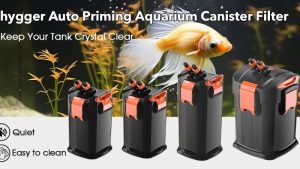
Common Mistakes When Buying a Canister Filter: Best-Rated
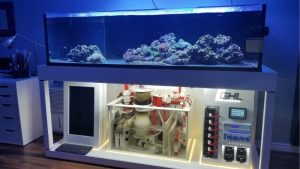
Best Aquarium Stand That Fits A Sump Underneath: Top Compared