Last Updated: October 4, 2026
Mechanical filtration on a sump comes down to two approaches: a cheap manual filter sock or a higher-cost automatic roller mat. The roller mat vs filter sock which to use choice is a trade of money for labor and space, not a case of one being universally better.
As an Amazon Associate we earn from qualifying purchases.
By David Nguyen
Quick answer: Our top pick in 2026 is the Upfront cost — our #1 rated choice. See the full ranked comparison, alternatives and buying advice below.
How Mechanical Filtration Works
Both catch particulate waste before it breaks down, and both are mechanical, not chemical. A filter sock is a low-cost consumable you change by hand every few days; a roller mat is pricier hardware that advances fresh fleece automatically. The right pick depends on your budget, time, and sump space. It also depends on how consistent you can be, since the cheapest option only stays cheap if you actually keep up with the manual work it demands.
| Factor | Filter Sock | Roller Mat | Note |
|---|---|---|---|
| Upfront cost | Low (~under $10/sock) | Higher (~$215 NanoMat / ~$399 ReefMat 500) | Hardware vs consumable, not comparable |
| Labor | Manual, frequent | Automatic fleece advance | Roller trades money for time |
| Micron | e.g. 200µm felt sock | Fleece roll | Both mechanical, not chemical |
| Space | 4in sock chamber | Roller-sized chamber | Match to your sump |
| Consumables | Replacement socks | Fleece rolls | Both ongoing |
Filter Socks
A filter sock is a fabric bag rated to a micron size, such as a 200µm felt sock at about $5, that water passes through in the sump. It traps detritus cheaply and is simple to fit into a standard sock holder.
Because it clogs as it fills, it needs regular manual changes, and a dirty sock left too long can leach waste back into the water. Its strength is low upfront cost; its real cost is your ongoing labor. Socks are also easy to source from almost any aquarium retailer, so resupply is rarely a problem even for an urgent replacement.
Roller Mats
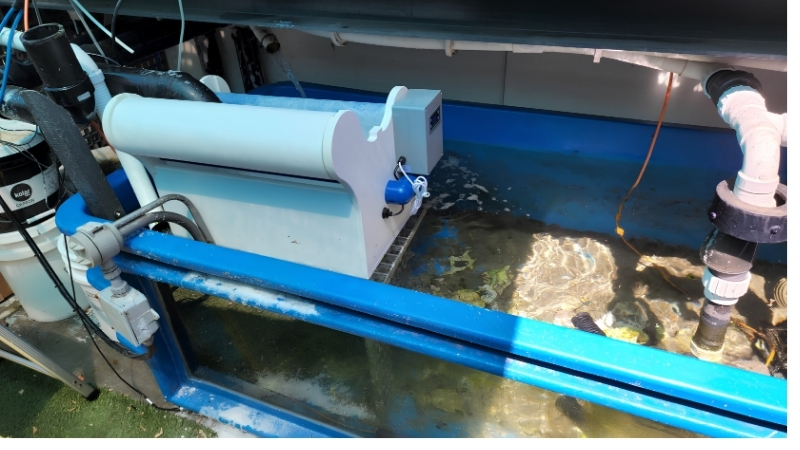
A roller mat holds a long fleece roll and advances fresh material automatically as the used section clogs, as in the NanoMat at about $215 or the ReefMat 500 at about $399. You replace the whole roll only occasionally.
That automation trades a higher upfront price and more sump space for far less hands-on maintenance. Its strength is convenience; its cost is the hardware and the fleece consumable over time. Because the roll lasts weeks, a roller also smooths out the filtration between your maintenance sessions rather than degrading steadily like a clogging sock.
Maintenance Interval
Sock changes are often quoted as every few days, but that is a hedge, not a fixed rule, since interval depends on bioload and feeding. A heavily fed tank clogs socks faster while a light one stretches the interval considerably.
A roller advances on its own based on clogging, so it removes the manual cadence entirely. Track your own system rather than assuming any universal change frequency for either method. Keeping a simple log of how fast a sock clogs will tell you far more than any rule of thumb printed on the packaging.
Flow and Geometry
Fit both to your sump geometry and flow. A 4in sock chamber accepts standard socks, while a roller needs a chamber sized for its body and fleece width, so the two are not drop-in swaps for one another.
High drain flow also matters: a sock can overflow if flow exceeds its capacity, and a roller must be rated for your drain flow. Confirm the method suits your sump before committing to it. Retrofitting a sump to change methods later is possible but rarely trivial, so it pays to plan the mechanical stage around your long-term intentions.
Putting It Into Practice
Which approach wins depends on your priorities: budget, available time, sump layout, and drain flow. Adjust the general trade-off to your specific situation rather than following a blanket recommendation.
On a Budget
If upfront cost is the priority, filter socks win easily. At about $5 each, a few socks cost a fraction of a roller, making socks the obvious start for a tight budget or a new build.
Remember that low upfront cost comes with ongoing manual labor and periodic sock replacement. It is cheap to start, but the time cost continues for the life of the tank. Over several years, the cumulative hours spent rinsing and swapping socks are a real, if hidden, part of what the cheap option costs.
For a Busy Keeper
If your time is scarce, a roller mat is worth the higher price. The NanoMat at about $215 or ReefMat 500 at about $399 automates fleece changes, cutting the manual cadence a sock demands.
For a busy keeper, the money-for-time trade often pays off in fewer missed changes and steadier filtration. The upfront cost buys back weekly effort over the year. For anyone who travels or keeps irregular hours, that automation can also prevent the water-quality dips that missed sock changes cause.
With a 4in Sock Chamber
If your sump has a standard 4in sock chamber and no room for a roller, socks are the practical fit. They drop into the existing holder without modifying the sump at all.
Adding a roller to such a sump may need a different chamber or a filter conversion, which adds cost and complexity. Work with the sump geometry you have rather than forcing a mismatch. Measuring the chamber first, before buying anything, is the single cheapest way to avoid an expensive return.
On a High-Flow Sump
On a high-flow sump, size whichever method to the drain flow. A single sock may overflow above its capacity, so high flow can require multiple socks or a roller rated for the load, such as the ReefMat 500’s 1,580 GPH capacity.
Matching capacity to real drain flow prevents bypass and overflow. The higher the flow, the more a properly rated roller earns its place over a stack of socks. Multiple socks also mean multiple changes, so at high flow the labor argument tilts further toward automation.
Frequently Asked Questions
Common questions cover micron ratings, how often to change a sock, whether either replaces a skimmer, and what fleece costs. The answers keep hardware and consumable costs separate.
What Micron Rating Should You Use?
A common felt sock is around 200µm, which catches larger particulate while letting finer material pass. Lower micron numbers catch finer debris but clog faster, so they need more frequent changes.
Roller fleece works on the same mechanical principle at its own rating. Choose a micron level that balances the detritus you want removed against how quickly it will clog. Most reef keepers land in the mid-range, fine enough to polish the water without clogging so fast that maintenance becomes constant.
How Often Should You Change a Filter Sock?
There is no fixed number; every few days is a hedge that depends on bioload and feeding. A heavily stocked, well-fed tank clogs socks quickly, while a sparse tank goes longer.
Watch for reduced flow or rising water in the sock chamber as your signal. Track your own tank rather than following a generic schedule. A sock that visibly bypasses or overflows has waited too long, whatever the calendar says.
Does Either Replace a Protein Skimmer?
No. Both socks and rollers are mechanical filtration that removes particulate, while a skimmer removes dissolved organics through a different process. They complement a skimmer rather than replace it. In fact, cleaner mechanical filtration can let a skimmer work more efficiently by removing gross waste upstream.
Run mechanical filtration and skimming together for the fullest waste removal. Dropping the skimmer because you added a roller leaves dissolved organics unaddressed.
What Does Roller Fleece Cost to Run?
Fleece is an ongoing consumable whose cost tracks how fast you advance it, similar to how socks are replaced. Do not estimate it by dividing a roller’s hardware price by one sock’s price, since those are not comparable figures.
Compare real consumable spending over months instead. A roller’s true cost is its hardware plus fleece over time, weighed against a sock’s low price plus your labor.
Final Thoughts
The roller mat vs filter sock which to use decision is a trade, not a ranking: socks are low-cost and manual at about $5 each, while roller mats like the NanoMat (about $215) and ReefMat 500 (about $399) cost more upfront but automate fleece changes. Choose socks for budget and simple sump fit, a roller for time savings and high flow, and never compare a hardware price directly against a single sock.
As an Amazon Associate we earn from qualifying purchases at no extra cost to you. Prices and availability are accurate as of the date shown and are subject to change.
Ready to decide? Our #1 pick for 2026 is the Upfront cost.
Live price & availability on Amazon.
Related Reviews & Guides


Reef Octopus Regal vs Classic Skimmer Comparison by Tank

6 Best LED Lighting For Reef Tank 2026