Last Updated: October 21, 2026
Here is the part most listings skip: the sump body itself draws no meaningful power, so energy efficiency is a pump-and-equipment question, not a sump-shell one. The best energy efficient aquarium sump setup is one where you match an efficient return pump to your real head, because that is where nearly all the watts go.
As an Amazon Associate we earn from qualifying purchases.
By David Nguyen
Why the Sump Body Is Not the Main Power Draw
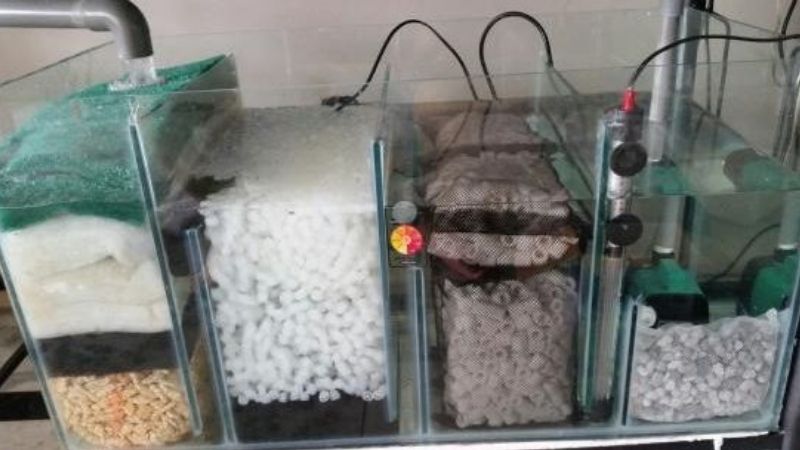
A sump body is passive plumbing; it holds water and media but consumes no meaningful electricity. The return pump, plus a skimmer and heater, create almost all of a system’s running cost. So the efficient choice is an efficient pump sized to your head, with the sump body chosen on fit rather than watts.
Locate Where the Watts Actually Come From
Manufacturer pages for sump bodies like the IceCap 15 and 24, the Bio-Fuge 24, and the ESHOPPS RS-100 publish no meaningful shell wattage, because there is nothing to power in the body itself. The electrical load lives in the return pump and equipment, so that is where efficiency is won or lost.
DC return pumps make the point clear. The Reef Octopus VarioS-2 publishes levels from 383 GPH at 10 W up to 792 GPH at 25 W, so its draw scales with the flow you set, which is a real, controllable energy variable in a way that a passive sump body on its own simply is not at all here.
Read Pump Power at Flow and Head
Pump wattage only means something with flow and head attached. The TUNZE 1073.050 lists 290 to 790 GPH at 10 to 43 W with a 3.9-meter maximum head, and the SICCE Syncra SDC 3.0 lists 260 to 800 GPH at 6 to 35 W with a 7.5-foot maximum head across its full published operating range.
Those figures come from different conditions, so they are not directly comparable. Maximum flow and maximum watts rarely occur together, and real plumbing raises head, so delivered flow at your setup sits below the zero-head maximum, which means the honest read is the pump curve at your own head.
Convert Watts to Real Running Cost
Watts and kilowatt-hours are different units, and only the second one is a bill. If a pump ran truly constant, 10 W works out to about 87.6 kWh a year, 25 W to 219.0, 35 W to 306.6, and 43 W to 376.7, so a 20 W continuous difference comes to about 175.2 kWh over a full year of running.
Those are illustrative, since real pumps ramp and are rarely at full draw. Reef equipment prices and efficiency both shift over time, and DC pump lines are refreshed regularly, so confirm the current model and its published levels, then estimate cost from the watts you actually run rather than the maximum on the box.
Choose the Sump Body on Fit, Not Watts
Since the shell draws no power, pick it on the usual gates: maker tank range, cabinet footprint, chamber fit, and drain-back reserve. The IceCap and Bashsea bodies differ on size and layout, not energy, so treating one shell as more efficient than another confuses the body with the pump that powers the loop.
Let the body serve the pump you choose. A layout that lets you plumb short, direct runs keeps head low, which in turn lets an efficient pump deliver your target flow at fewer watts, so the sump body contributes to efficiency through plumbing geometry rather than any wattage of its own.
Energy-Rated Return Pumps for a Sump System
Because the sump body is passive, the energy comparison lives in the return pump, and no single pump wins for every system on verified data. The three pumps below publish flow-and-watt levels, while the fourth row is the sump body itself, included to show it is a fit choice, not an energy one.
| Product | Best For | Key Spec | Watch Out For |
|---|---|---|---|
| Reef Octopus VarioS-2 | Tunable low-draw return | 383 GPH/10W to 792 GPH/25W published | Flow and watts vary with real head |
| TUNZE 1073.050 | Wide flow range | 290-790 GPH; 10-43 W; 3.9 m max head | Max flow and watts occur at different points |
| SICCE Syncra SDC 3.0 | Low minimum draw | 260-800 GPH; 6-35 W; 7.5 ft max head | Delivered flow sits below zero-head max |
| Sump body (IceCap / Bashsea / ESHOPPS) | Fit and layout, not energy | No meaningful published body wattage | Not an energy variable; choose on fit |
Reef Octopus VarioS-2 – Tunable Low-Draw Return
The VarioS-2 suits a keeper who wants to dial flow to the minimum their system needs. It publishes 383 GPH at 10 W rising to 792 GPH at 25 W, so you can run only the flow that is required and hold the draw right down low. It sits in the mid price tier for a DC return pump as of 09/2026.
The strength is a controllable curve that lets a small system run at the low end for modest power. The catch is that those levels are published values, and real plumbing raises head, so your delivered flow and the watts to reach it depend on your setup rather than the quoted pairs.
TUNZE 1073.050 – Wide Flow Range
The 1073.050 fits a system that needs a broad adjustment range. It lists 290 to 790 GPH at 10 to 43 W with a 3.9-meter maximum head, so it can serve a larger loop while still dialing down for a smaller one. It sits in the mid-to-upper price tier as of 09/2026 at current retail pricing.
The appeal is range: one pump covers a wide span of flow and head. The trade-off is reading it correctly, since the maximum flow and maximum watts do not occur together, so plan around the point on its curve that matches your head rather than the top figures, which describe different operating conditions.
SICCE Syncra SDC 3.0 – Low Minimum Draw
The Syncra SDC 3.0 suits a keeper prioritizing a low floor on power. It lists 260 to 800 GPH at 6 to 35 W with a 7.5-foot maximum head, so its minimum draw is the lowest of the three here, which suits a smaller system run gently. It sits in the mid price tier as of 09/2026 at current retail.
The strength is that low 6 W minimum for light-flow needs, which trims continuous cost. The catch is the familiar one: delivered flow falls below the zero-head maximum as plumbing adds head, so size it to your real head and expect the working watts to land above the minimum once the loop is plumbed.
The Sump Body – A Fit Choice, Not an Energy One
The sump body belongs in this list only to make the point that it is not an energy variable. Bodies like the IceCap 15 and 24, the Bio-Fuge 24, and the RS-100 publish no meaningful wattage, so none is more efficient than another; they differ on range, footprint, and layout instead.
Choose the body on the standard gates and let it support an efficient pump. A layout enabling short, low-head plumbing helps your chosen pump deliver flow at fewer watts, so the body contributes through geometry, not consumption, which is why fit and reserve, not wattage, should drive its selection.
Frequently Asked Questions
Keepers chasing efficiency ask the same questions once they learn the sump body is passive. Each answer leads with the direct call, then the condition that changes it, so you can size an efficient pump to your own head rather than shopping for an efficient sump shell that does not exist.
Is There Such a Thing as an Efficient Sump Body?
Not in an electrical sense, because the body draws no meaningful power. Manufacturer pages for sump shells publish no shell wattage, so no body is more efficient than another on energy, which means the phrase really points to the return pump and equipment that actually consume electricity in the loop.
Where a body helps is indirectly, through plumbing. A layout that allows short, direct, low-head runs lets an efficient pump hit your flow at fewer watts, so choose the shell on fit and reserve, and put the efficiency effort into the pump, which is the only meaningful electrical variable here.
How Do I Compare Pump Efficiency?
Read watts at a given flow and head, not headline maximums. The VarioS-2’s 383 GPH at 10 W and the SICCE’s 260 to 800 GPH at 6 to 35 W come from different conditions, so compare each on its own curve at the head your own plumbing creates rather than lining up the peak headline numbers.
Then translate to running cost in kilowatt-hours. Watts alone are not a bill, so estimate annual kWh from the level you actually run, remembering delivered flow falls below the zero-head maximum, and use that figure to compare pumps on the cost of the flow you need, which is the real efficiency question.
What Does 20 Watts of Difference Cost?
If constant, about 175.2 kWh a year, the gap between running at 10 W and 30 W around the clock. That is an illustrative figure, since pumps ramp and rarely sit at full draw, so treat it as a ceiling that shows why the pump, not the sump body itself, drives the real running cost of the system.
Convert it to money with your own rate and duty cycle. Multiply your real average watts by hours to get kWh, then by your electricity price, and remember these are estimates from published levels, so a pump you can run at the low end of its curve is the practical route to lower cost.
Do DC Pumps Save Energy Over AC?
They can, because DC pumps like the VarioS-2, TUNZE 1073.050, and Syncra SDC 3.0 let you tune flow and therefore watts to the minimum your system needs, rather than running fixed. The saving depends on running them below maximum, so the control is what delivers efficiency, not the DC label alone.
Size the pump so your target flow sits comfortably on its curve at your head. Running a large pump throttled hard or a small one maxed out both waste efficiency, so match the pump to the loop, then run it at the lowest setting that still delivers the flow the system actually requires.
Final Thoughts
Stop shopping for an efficient shell and start sizing an efficient pump, because the sump body draws no meaningful power while the return pump carries the load. The best energy efficient aquarium sump setup pairs a passive body chosen on fit with a DC pump run low on its curve at your head.

Hang On Back vs Canister Filter Which to Choose: Best Compared
Best Aquarium Filter for Large Tanks