Last Updated: October 21, 2026
Choosing a sump goes wrong when it starts with gallons instead of the cabinet it has to live in. Learning how to choose an aquarium sump the reliable way means working from the stand and equipment outward, since a sump is only better once it fits, holds the gear, and stays safe at power-off.
As an Amazon Associate we earn from qualifying purchases.
By David Nguyen
Match an Aquarium Sump to Your Cabinet and Gear
Before shortlisting sumps, pin down four things: the cabinet footprint and door, the equipment that must fit inside, the maker tank range for your display, and the operating depth. Get these right and the sump nearly picks itself; skip them and even a well-rated unit can fail to fit or reserve safely.
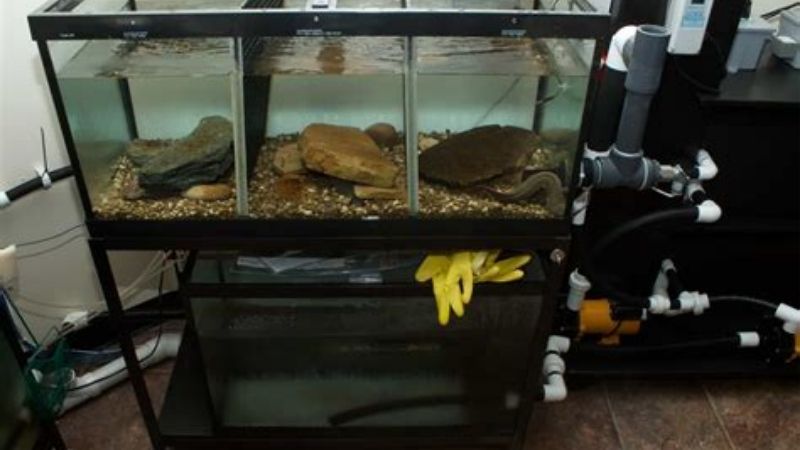
Measure the Cabinet Footprint and Door
Fit is decided by the tightest point on the whole route in, not the roomiest. IceCap sizes run 15 by 15, 24 by 14, and 30 by 16 inches, so a sump can match your interior width yet be blocked at a narrower door, which is why the door opening belongs in the measurement, not just the floor space.
Record interior length, width, and height plus the clear door aperture. Reef stands vary by brand and generation, so confirm your own cabinet rather than a generic chart, and note any cross-braces that narrow the path, since the sump must physically pass every obstruction between the door and its resting spot.
List the Equipment That Must Fit
The sump has to hold your skimmer and return, so their dimensions drive chamber choice. The IceCap 30 V2 publishes a 13.4-by-15.4-inch skimmer chamber and a 6.5-by-15.4-inch return section, which tells you the footprint your equipment must fit within far better than a total-gallon figure does.
Compare each item to the chamber, not the outer shell. A skimmer wider than the chamber will not seat even if the sump looks large, so measure the skimmer footprint and return pump against published chamber dimensions, since one oversized dimension is enough to leave the gear stranded outside the compartment.
Verify the Maker Tank Range
Confirm the sump’s rated display range genuinely covers your tank. IceCap ranges span 10 to 80, 60 to 110, and 90 to 160 gallons across the line, so match your display to a stated range rather than to sump volume, which is a separate metric that does not indicate the intended tank size at all.
Read how a range was defined before trusting it. Some figures are method-specific rather than universal, so a quoted range tied to a particular system may not translate to a standard setup, which means checking the basis of the number is part of verifying that the sump truly suits your display.
Check the Operating Depth
Operating depth sets how you place the skimmer and the working waterline. IceCap V2 sumps run a 5-to-9-inch operating depth, which needs to suit your skimmer’s required water level, since a skimmer runs poorly outside its depth window even in a sump that otherwise fits the cabinet perfectly.
Match the depth to your skimmer and leave room for reserve. The operating range gives adjustment room to set a working line that both suits the skimmer and holds drain-back at power-off, so read it alongside your skimmer’s specification rather than treating any depth as automatically workable for your equipment.
Choose an Aquarium Sump the Right Way, Step by Step
With those inputs gathered, the decision becomes a short sequence rather than a guess. Work the four steps in order, because each one narrows the field using a number from your own system, and skipping ahead is exactly how a sump ends up right on paper yet wrong in the actual cabinet it has to fit into.
| Decision Step | What to Check | Number or Range | Common Mistake |
|---|---|---|---|
| 1. Measure the space | Interior and door opening | IceCap 15×15 / 24×14 / 30×16 | Measuring the stand, not the door |
| 2. List the equipment | Skimmer and return dimensions | IceCap 30 skimmer 13.4×15.4 | Comparing area, not each dimension |
| 3. Verify range and reserve | Maker range plus power-off hold | 10-80 / 60-110 / 90-160 gal | Reading sump volume as tank size |
| 4. Match the return pump | Delivered flow at real head | Use the pump curve, not max GPH | Sizing by zero-head maximum |
Step 1 – Measure the Space, Interior and Door
Start by measuring the cabinet interior and the door opening, since fit is decided by the tightest point. Record length, width, and height plus the clear aperture, because a 30-inch sump will not enter a stand built for 24, and the door is often narrower than the interior behind it on many reef cabinets.
Note any braces or plumbing that narrow the path. Confirm the numbers on your own stand rather than a generic figure, since reef cabinets differ by brand and generation, and one overlooked obstruction is enough to stop a correctly ranged sump from ever reaching its spot inside the cabinet it was bought for.
Step 2 – List the Equipment and Its Footprint
Next, measure the skimmer and return pump against published chamber sizes. The IceCap 30 V2’s 13.4-by-15.4-inch skimmer chamber, roughly 206 square inches, tells you the footprint the skimmer body must fit, so compare each dimension rather than trusting chamber area, since area alone hides a tight width or length.
Confirm every single piece has a home before buying anything. The return section on that model runs about 100 square inches, so check the return pump fits too, and remember that a sump passing the space test still fails if the equipment you own cannot seat inside the chambers it actually provides.
Step 3 – Verify Tank Range and Power-Off Reserve
Then confirm the maker range covers your display and plan the power-off reserve. Match your tank to a stated range such as IceCap’s 10-to-80, 60-to-110, or 90-to-160 gallons, and set the working waterline low enough to hold all the water that siphons back when the return pump suddenly stops.
There is no universal fixed reserve figure, so test it. Fill to a working level, shut the return off, and watch where the water settles, then lower the line until it holds safely, since the reserve depends on your display surface, overflow, and plumbing rather than a single number you can look up.
Step 4 – Match the Plumbing and Return Pump
Finally, size the return pump by delivered flow at your real head, not the maximum GPH. Estimate the vertical rise and plumbing losses, read the pump curve at that head, and choose the flow that turns your display over as intended rather than the optimistic top figure printed on the box.
Then compare convenience features among the sumps that pass. Once fit, range, reserve, and flow are settled, details like a refugium, lids, or adjustable levels can break a tie, so treat them as the last step rather than the first, since a feature-rich sump that fails an earlier gate is still the wrong choice.
Frequently Asked Questions
These questions come up mid-decision, once a shortlist exists but doubt remains. Each answer gives the direct call first, then the condition that changes it, so you can finish choosing with confidence for your own cabinet, equipment, and plumbing rather than second-guessing a spec you half-remember from a listing.
Can I Choose a Sump by Gallons Alone?
No, gallons are far too blunt a guide on their own. A sump’s volume says nothing about whether it fits your cabinet, holds your skimmer, or reserves at power-off, so choosing by capacity alone regularly produces a unit that is right on paper and wrong in the stand. Fit and equipment come first.
Use the maker tank range to confirm suitability, then verify the physical gates. Measure the space and door, match chambers to your gear, and test drain-back, since those checks reflect your actual system in a way a gallon figure never can, whether it describes the sump or the display in the end here.
How Do I Read the Chamber Dimensions?
Compare each equipment dimension to the matching chamber dimension, not the area. The IceCap 30 V2’s 13.4-by-15.4-inch skimmer chamber will reject a skimmer wider than 13.4 inches even though its area looks generous, so a single oversized dimension decides fit regardless of the overall square inches.
Check width, length, and the skimmer’s required depth together. A chamber that fits the footprint but not the operating depth still will not run the skimmer well, so read the chamber dimensions alongside your skimmer’s full specification rather than assuming a large-looking compartment accepts any unit you own.
What Reserve Should I Leave for Power-Off?
Enough to hold the water that siphons back when the return stops, which has no universal fixed value at all. It depends on your display surface area, overflow, and plumbing, so set the working waterline to absorb that return, using the sump’s operating-depth range as room to place the line.
Confirm it with a real power-off test at setup. Shut the return off, watch where the water settles, and lower the line until it holds safely unattended, since a calculated estimate is only a starting point and the actual reserve your system needs is best proven by watching it happen on your own system.
Does the Biggest Sump That Fits Win?
Not automatically, no. Bigger is only better after the sump fits, holds the equipment, and reserves safely, so a large unit that barely clears the cabinet or crowds the return chamber can be worse than a right-sized one, since capacity that you cannot use safely is not a real advantage to the keeper at all.
Choose the sump that passes every gate with room to work, not the largest that merely squeezes in. Once fit, range, reserve, and flow are all met, extra volume is optional headroom, so let the physical checks lead and treat sheer size as a tiebreaker rather than the goal of the decision.
Final Thoughts
Keep the order fixed and the choice gets easy: measure the cabinet and door, match chambers to your equipment, verify the maker range and power-off reserve, then size the return pump at your real head. Knowing how to choose an aquarium sump is really about working from the stand outward with your own numbers.
How to Clean an Aquarium Filter Without Killing Beneficial Bacteria
6 Best Water Filters For Aquarium Tank 2026