Last Updated: September 27, 2026

UWIOFF Pond Liner, 20 Mil HDPE Pond Liners for Outdoor Ponds, 7 x 10 FT
Included for 'How to Choose a Pond Liner: Best Tested Guide for Beginners' because the listing specifies 20 Mil HDPE Pond Liners for Outdoor Ponds and 7 x 10 FT, details this guide uses to compare options.
View on Amazon
VIVOSUN 10 x 13 Feet Pond Liner for Koi Ponds, Aquaculture and Water Garden
Included for 'How to Choose a Pond Liner: Best Tested Guide for Beginners' because the listing specifies Aquaculture and Water Garden, details this guide uses to compare options.
View on Amazon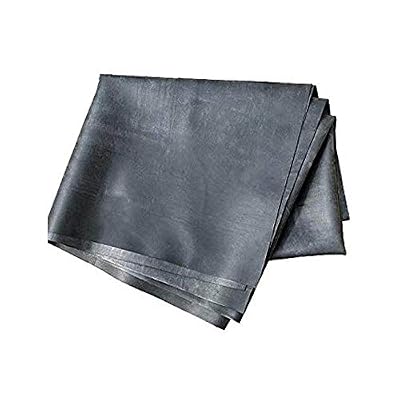
Firestone 45mil EPDM Rubber Pond Liner 15ft.x20ft.
Included for 'How to Choose a Pond Liner: Best Tested Guide for Beginners' as a relevant option in this category; details come from the product listing.
View on Amazon
DGSL 20 Mil HDPE Pond Liner, 7 x 10 FT Flexible Water Garden Liner
Included for 'How to Choose a Pond Liner: Best Tested Guide for Beginners' because the listing specifies 7 x 10 FT Flexible Water Garden Liner, details this guide uses to compare options.
View on AmazonStart with the use case and the tape measure, not the product listings. Working out how to choose a pond liner means deciding the application, matching material to it, measuring geometry, applying one sizing formula consistently, and budgeting protection underneath.
As an Amazon Associate we earn from qualifying purchases.
By David Nguyen
Find the Right Pond Liner Requirements
Requirements come from the application and the excavation rather than from a gallon figure. Establish four things before shopping: what the liner must do, which material suits that job, the extreme dimensions of the hole, and how much overlap the edging you have planned will eventually consume.
Decide the Application Before the Material
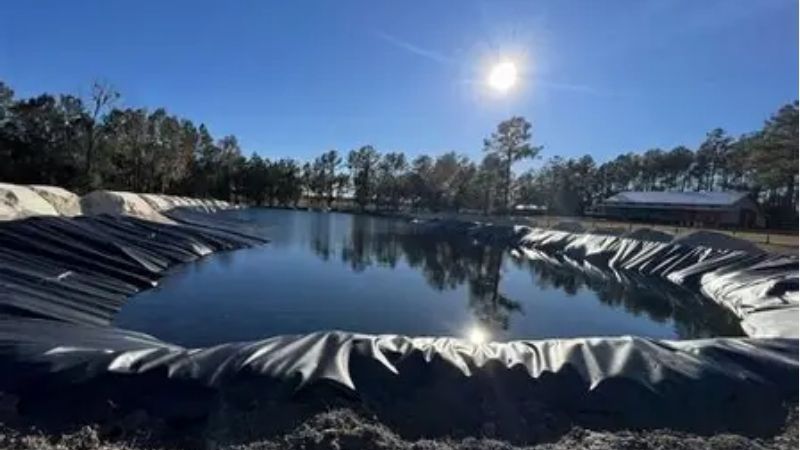
A stocked pond, a stream bed, a pondless reservoir and an ornamental water feature impose different requirements on the same sheet. Fish-holding installations demand explicit pond or fish wording from the manufacturer, which ordinary landscaping sheeting simply does not carry on its packaging.
Write the application down in one sentence, including whether livestock is planned within the first year. That sentence eliminates entire categories of product immediately and prevents the common situation where a liner suits the excavated shape but not the eventual contents of the pond.
Match Material to That Application
Published products differ considerably within pond-grade territory. smartpond supplies reinforced PVC at 14.5 mil with fish-safe wording in a 13 by 20 foot sheet at 97.01 USD, while Aquascape supplies 45 mil fish-safe EPDM in boxed sizes running from 8 by 10 feet up to 20 by 25 feet.
Avoid treating 45 mil as a universal requirement, because thickness figures mean different things across materials. Rubber conforms to sculpted excavations while PVC weighs less and costs considerably less, so the correct choice depends on pond shape, handling and budget considered together.
Measure the Excavation Properly
Three numbers matter: the longest length, the widest width and the maximum depth. Measure the extremes rather than typical dimensions, because liner must span the greatest distance across the hole regardless of how much narrower the pond happens to become elsewhere along its length.
Depth is measured at the deepest point rather than averaged, since the sheet has to physically reach that level somewhere along its run. Record all three before opening any product page, as ordering from a drawing rather than from the finished hole causes the majority of sizing errors.
Why Gallons Are Supporting Context Only
Volume describes stocking capacity and pump sizing, not sheet dimensions. Two ponds holding identical water can require very different liner because one spreads shallow and wide while the other sits deep and compact, and only the physical measurements ever drive the sizing calculation.
Manufacturer gallon labels attached to particular sheets are examples built around specific geometry. Use them as a sanity check after your own arithmetic rather than as the starting point, and recalculate whenever the excavation changes shape or depth at any point during digging.
Choose a Pond Liner Step by Step
Four steps in order, each producing a figure you carry forward. Work through them with the measurements in hand before comparing any prices, because reversing the sequence produces a purchase that must then be justified afterwards rather than one that simply fits the hole you actually dug.
| Symptom | Sign Alongside | Likely Cause | First Action |
|---|---|---|---|
| Liner stops at the rim | Heavy rock edging planned | Tighter overlap formula used | Recalculate with 2 ft |
| Huge offcut left over | Sheet chosen from gallons | Sized without geometry | Measure and resize |
| Puncture in first seasons | Gravel visible in base | No underlayment fitted | Add a protection layer |
| Creases across curves | Cold, stiff material | Shape and material mismatch | Warm sheet before fitting |
Step One, Pick One Sizing Protocol
Two published methods circulate, and mixing them causes shortfalls. The Pond Guy adds one foot of total allowance, giving pond length plus twice the depth plus one foot, while smartpond adds two feet in total in total to accommodate a more generous overlap right around the finished rim.
Choose whichever matches your planned edging and apply it to both dimensions without deviation. Where the edge treatment remains undecided, take the more generous method, since surplus trims away in minutes while any shortfall forces either an added seam or a second purchase entirely.
Step Two, Run the Numbers and Round Up
Apply the formula to your recorded extremes. A pond measuring 10 by 5 feet at 3 feet deep produces 17 by 12 feet under the one foot allowance, which is the figure you then round upward to whatever stocked sheet size happens to sit immediately above it in the manufacturer’s range.
Rounding down is never the right answer here, not even by a few inches. Standard sheet sizes exist in steps, so the practical choice is usually between a sheet that fits comfortably and one that leaves you improvising at the rim on the day the pond finally gets filled with water.
Step Three, Check Available Boxed Sizes
Your calculated requirement also has to exist as a genuinely purchasable sheet. Aquascape boxes 45 mil fish-safe EPDM from 8 by 10 feet up to 20 by 25 feet, and comparing your figure against that ladder shows immediately whether a stock size or a custom cut is required for this particular job.
Where the calculation lands awkwardly between two sizes, price both options carefully before deciding. Custom cutting removes waste on unusual footprints, though it introduces lead time that matters a great deal when the excavation is already open and the autumn weather is turning.
Step Four, Budget Underlayment and Protection
Protection belongs in the same order as the liner rather than a later one. Underlayment distributes pressure from stones and roots across the sheet, and manufacturers frequently supply it by area, so calculate the required square footage alongside the liner dimensions themselves.
Add a second protective layer above the liner wherever heavy rock will eventually sit, since edging stone concentrates weight at a few contact points. That secondary layer costs little compared with draining an established pond to reach a single small puncture two or three summers later.
Frequently Asked Questions
Four questions follow on from this process: which material suits a first build, how much overlap to leave, whether thickness compensates for preparation, and when a custom sheet makes sense. Direct answers below, together with the exceptions that change each of them on a real site.
Which Material Should a First-Time Buyer Choose?
Match the material to your excavation rather than accepting a blanket recommendation. EPDM at 45 mil conforms to curves and planting shelves with minimal pleating, while reinforced PVC at 14.5 mil weighs considerably less and installs comfortably without needing a second person present.
Simple rectangular ponds with gently sloping walls suit the lighter sheet perfectly well, and sculpted designs with undercuts reward rubber’s elasticity. Fish plans settle the rest, since explicit pond or fish wording from the manufacturer is required before any livestock arrives.
How Much Overlap Should You Leave?
Enough to tuck securely beneath your chosen edging, which is precisely why the two formulas differ. One foot of total allowance suits a modest turf or gravel edge, while the two foot version accommodates substantial stone edging that consumes considerably more material around the rim.
Ground that slopes toward the pond needs more again, since runoff must be diverted rather than allowed behind the sheet. Trimming surplus after filling takes minutes, whereas falling short creates the one problem on a pond build that genuinely cannot be solved cheaply afterwards.
Does Thicker Liner Replace Good Preparation?
No, and treating thickness as a substitute is expensive. Concentrated pressure from an unremoved stone defeats material of any published thickness once months of water weight press down, which is why thorough clearing and underlayment together matter more than any upgrade in mil.
Thickness genuinely helps where roots, shale or large fish routinely disturb the base, so the two work together rather than competing. Where budget forces a choice, preparation beneath a mid-range sheet generally outperforms thicker material laid straight across uncleared, stony ground.
When Does a Custom-Cut Sheet Make Sense?
When your calculated dimensions fall awkwardly between boxed sizes and the offcut would be substantial. Long narrow ponds and strongly lobed designs waste the most material against rectangular stock, which is precisely where cutting to specification genuinely repays the premium involved.
On more compact ponds the saving usually shrinks below the lead time cost involved, so a stocked size wins instead. Order custom only once measurements are final, because a sheet cut precisely to your figures offers no margin whatsoever should the excavation later change shape or depth.
Final Thoughts
Application first, material second, measurements third, and one formula applied consistently throughout. How to choose a pond liner comes down to four recorded numbers and a protection budget, which together eliminate almost every expensive mistake made at the ordering stage itself.
Related Reviews & Guides

How Often to Clean Aquarium Filter: Full Schedule by Type
5 Best Aquarium Water Conditioners and Dechlorinators