Last Updated: September 27, 2026

Aquascape 91017 Aquasurge Submersible Pump, Black
Included for 'Common Mistakes When Buying a Pond Pump: Proven Top Guide' because the listing specifies Black, details this guide uses to compare options.
View on Amazon
Aquascape AquaForce 1000 Solids Handling Submersible Pond Pump, Asynchronous Waterfall and Water Feature Pump with Pre Filter Cage and 25 ft Cord, 91011
Included for 'Common Mistakes When Buying a Pond Pump: Proven Top Guide' because the listing specifies 91011, details this guide uses to compare options.
View on AmazonAquascape AquaSurge 4000 Pond Pump, 4,000 GPH, Professional-Grade Waterfall and Feature Pump, Energy Efficient, 91019
Included for 'Common Mistakes When Buying a Pond Pump: Proven Top Guide' because the listing specifies 000 GPH and Professional-Grade Waterfall and Feature Pump, details this guide uses to compare options.
View on Amazon
Aquascape 45010 AquaSurge PRO 4000-8000 GPH Water Pump Asynchronous, Smart Control App Ready, Black
Included for 'Common Mistakes When Buying a Pond Pump: Proven Top Guide' because the listing specifies Smart Control App Ready and Black, details this guide uses to compare options.
View on AmazonThe costliest error is buying on the box’s max-GPH number while ignoring total dynamic head, the lift and friction that decide real flow. Most common mistakes when buying a pond pump trace back to that single confusion, so sizing by required flow at your total dynamic head fixes them before you ever add to cart.
As an Amazon Associate we earn from qualifying purchases.
By David Nguyen
Quick answer: Our top pick in 2026 is the Max GPH vs delivered flow — our #1 rated choice. See the full ranked comparison, alternatives and buying advice below.
How Pond Pump Sizing Works
Sizing rests on one idea: the flow you need must arrive at your total dynamic head, not at zero head. That means combining required flow with vertical lift, adding the friction your pipe creates, and, for waterfalls, converting spillway width to a flow target before you ever compare a pump’s rating.
Flow and Head Together
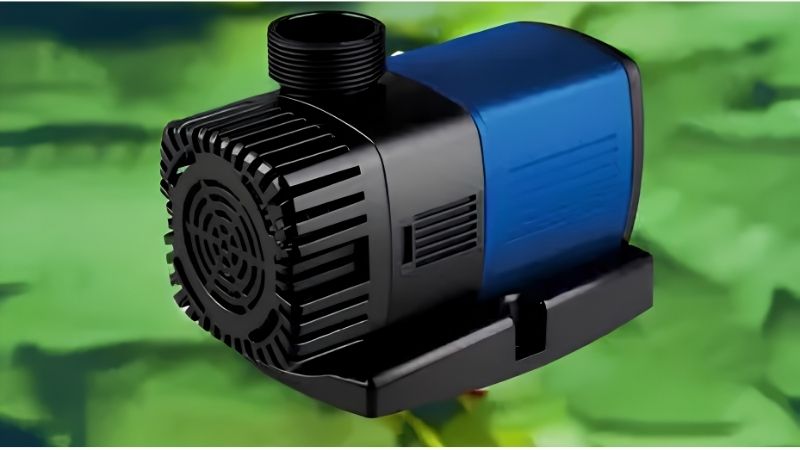
A pump has a flow number and a head number, and they only mean something together. Rated flow is measured at zero head, so it falls as lift rises; a pump listed near 2,193 GPH maximum can deliver closer to 1,465 GPH at 10 feet, which is why flow and head must always be read as a pair.
The common mistake is treating the max figure as delivered flow. That number is the top of the curve, not what reaches your filter or fall, so reading only the headline GPH sets you up to under-deliver. Always pair the flow you need with the head you have before judging any pump.
Total Dynamic Head Explained
Total dynamic head, or TDH, is vertical lift plus the friction losses along your plumbing. A simple estimator adds roughly 1 foot of head for every 10 feet of tubing, so a 5-foot lift with 20 feet of pipe lands near 7 feet of TDH before fittings, which further raise it.
The mistake is counting only the vertical rise. Ignoring horizontal pipe and fittings understates TDH, so the pump is chosen for a lower head than it faces and delivers less than expected. Estimate the full TDH, then read the pump’s flow at that number, not at an optimistic 5 feet.
Pipe Diameter Matters
Pipe size changes friction dramatically at a given flow. At 3,000 GPH, 1.5-inch pipe loses about 0.22 foot of head per foot of pipe, while 2-inch pipe loses only about 0.05, so over a 20-foot run the narrow pipe adds roughly 4.4 feet of friction against about 1 foot for the wider one.
Undersizing pipe is a hidden mistake that strangles a good pump. That extra 3-plus feet of TDH pushes the pump down its curve, cutting delivered flow even though the pump itself is capable, so matching pipe diameter to flow protects the output you paid for far more than upsizing the pump would.
Waterfall Width Sets Flow
For a waterfall, spillway width sets the flow target. Visual guides put a low sheet near 750 GPH per foot of width, a medium sheet near 1,500, and a full sheet at 2,250 or more per foot, so the look you want translates directly into a flow number before any pump enters the picture.
The mistake is sizing a fall by pond volume instead of width. A 2-foot medium spillway can want around 3,000 GPH at the top regardless of pond size, so ignoring width undersizes the pump for the fall. Set the width target first, then read flow at your TDH to meet it.
What It Looks Like in Practice
These are the sizing errors as they actually play out, each tied to a threshold you can check. Recognizing the common mistakes when buying a pond pump in real setups, rather than in theory, is what keeps a purchase from arriving underpowered, and the table below maps each factor to what to do.
| Factor | Normal Range | Watch-out Threshold | What to Do |
|---|---|---|---|
| Max GPH vs delivered flow | Flow at your TDH | Only a max, zero-head number | Read the curve at your head |
| Tubing friction | ~1 ft head per 10 ft pipe | Long runs on 1.5-in pipe | Estimate TDH; upsize to 2-in |
| Sizing method | Larger of volume or feature | Gallons-only with a waterfall | Size to the waterfall or head |
| Curve margin | Comfortable margin above need | Flow equals need exactly | Choose headroom on the curve |
Buying on Max GPH
In practice, the max-GPH trap looks like a pump that seemed powerful but barely feeds the filter. A shopper reads a bold zero-head number, skips the curve, and installs a pump that delivers far less at real head, then blames the pump rather than the missing head calculation behind the choice.
The threshold to watch is any pump advertised only on max GPH with no published curve. Without flow given at 5, 10, and 15 feet, you cannot size it to your head, so treat a missing curve as a stop sign and choose a pump whose delivered flow at your total dynamic head is actually documented instead.
Undersized Plumbing
This mistake hides in the pipe, not the pump. Someone buys a capable pump, connects it with narrow 1.5-inch tubing over a long run, and loses several feet of head to friction, so a pump that should clear turnover arrives weak while everyone inspects the pump instead of the plumbing.
The threshold is a long run on 1.5-inch pipe at higher flow. Around 3,000 GPH, that pipe loses about 0.22 foot per foot, so past roughly 15 to 20 feet the friction becomes significant; step up to 2-inch pipe to reclaim the flow rather than buying a bigger pump to fight the restriction.
Sizing by Gallons Only
Here the buyer sizes by pond volume alone and forgets the waterfall or head. A 500-gallon pond suggests about 500 GPH for circulation, but a 2-foot spillway on it can demand around 3,000 GPH, so a volume-only choice leaves the fall starved and the pond looking wrong despite adequate circulation.
The threshold is any pond with a waterfall or notable lift. When a feature exists, size to the larger requirement, the fall or the head, not to gallons, because the biggest demand drives selection. Volume sets a floor for circulation, but the feature usually sets the real flow target.
Running at the Curve’s Edge
The last practical error is choosing a pump that only just meets the need at your head. With no margin, a clogging filter, algae, or a slightly higher fitting count pushes it below target, so flow that was adequate on day one falls short within weeks as the system loads up in normal use.
The threshold is delivered flow that equals the requirement exactly at your TDH. Aim for a useful margin above the target instead, so the pump sits comfortably on its curve rather than at the edge, and everyday fouling or a small design change does not tip it into underperformance.
Frequently Asked Questions
Buyers keep asking the same sizing questions, and each answer points back to flow at total dynamic head rather than a single headline number. These cover what a max-GPH label really means, how tubing length changes things, sizing a small waterfall, and whether bigger pipe is worth it.
Does a 3000 GPH Label Mean 3000 GPH at My Fall?
No. A 3,000-GPH label is a maximum at zero head, not the flow at the top of your waterfall. Once you add lift and friction, delivered flow drops, so a fall on a 10-foot climb sees far less than the label suggests; read the pump’s flow at your total dynamic head to know what actually arrives.
Compare pumps only at the same head. Two units with matching max labels can pour very different sheets once installed, so the number that predicts your waterfall is delivered flow at your TDH, not the peak printed on the box. Treat the label as a ceiling, never as a promise at height.
How Much Does 50 Feet of Tubing Add?
Quite a lot, and it depends on pipe size. Using the simple estimator of about 1 foot of head per 10 feet of tubing, 50 feet adds roughly 5 feet of TDH before fittings, and at higher flows narrow pipe adds more, so a long run can quietly become the biggest part of your total head.
Horizontal pipe absolutely matters, contrary to a common assumption. Friction accrues along every foot, not just the vertical rise, so include the full run and the fittings in your TDH. Then read the pump’s flow at that larger number, or widen the pipe to cut the loss the run creates.
What Flow Does a 2-Foot Waterfall Need?
A 2-foot-wide medium spillway often wants around 3,000 GPH reaching the top for a full sheet, based on visual targets near 1,500 GPH per foot of width. A thinner veil needs less and a thick sheet needs more, so decide the look first, then translate width into a flow target.
Then size for that flow at your head, not the pond’s gallons. If the spillway sits atop a tall climb, you need the flow target met at that TDH, which points to a larger pump than width alone implies. Width sets the target; total dynamic head sets the pump that reaches it.
Is Bigger Pipe Really Worth It?
Usually, yes, because it recovers flow cheaply. At 3,000 GPH, moving from 1.5-inch to 2-inch pipe cuts friction from about 0.22 to 0.05 foot per foot, saving several feet of TDH over a long run, which often restores more delivered flow than buying the next pump size up would.
The exception is a short, low-flow run where losses are already small. There, wider pipe adds cost for little gain, so match pipe to flow and distance rather than upsizing by default. For long runs or higher flows, though, bigger pipe is often the most effective sizing fix available.
Final Thoughts
Most common mistakes when buying a pond pump come from one habit: trusting max GPH and skipping total dynamic head. Work the other way, required flow, then TDH from lift and pipe, then pipe diameter, then a curve read at your head with margin, and check the power draw, and the errors disappear.
Ready to decide? Our #1 pick for 2026 is the Max GPH vs delivered flow.
Live price & availability on Amazon.
Related Reviews & Guides
How to Choose RODI System: Best Compared Guide for Beginners
Best Internal Filter for Small Aquarium: Smart Easy Picks