Last Updated: October 21, 2026
Solar aerators differ most in how they are powered, so the best solar powered pond aerator is chosen by its architecture, whether it runs only in daylight or stores energy for the dark, along with its real depth limits, rather than by a headline airflow number measured in full sun.
As an Amazon Associate we earn from qualifying purchases.
By David Nguyen
How to Choose a Solar Powered Pond Aerator
With solar, the power design decides everything. A direct-drive unit runs only while the sun shines. Because the brief does not verify specific solar models, judge these by architecture, runtime and depth limits rather than by any single product’s stated numbers.
Daylight-Only vs Battery-Backed
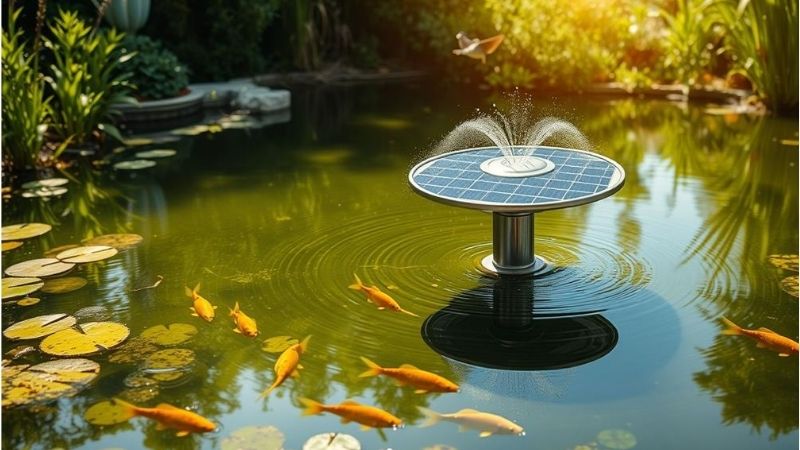
The first split is whether the system stores energy. A direct-drive solar aerator runs the pump straight from the panel, so it stops when the sun goes down or clouds pass. A battery-backed system charges during the day and runs into the night, which is a fundamentally different level of protection for the pond.
That choice drives everything else. If a pond needs continuous aeration, especially warm summer nights when oxygen is lowest, a daylight-only unit leaves the riskiest hours uncovered. Decide first whether you need night running, since it separates a decorative daytime bubbler from a system that can protect fish.
Runtime After Dark
For any battery-backed unit, the real question is how many hours it holds after sunset. Runtime depends on battery capacity, how much the panel banked that day and the pump’s draw, so a cloudy day can shorten the night’s coverage. Treat runtime as a variable to confirm.
Match the runtime you need to the pond’s risk. A pond with fish through a hot summer may need continuous night aeration a modest battery cannot guarantee. Because the brief verifies no specific model here, size battery and panel to your worst-case night, then test it.
Depth and Pressure Limits
Solar air pumps are often low-power, and pressure needs rise with depth, so many suit shallow ponds better than deep ones. A panel-driven pump may struggle to push air to the bottom of a deep pond. Confirm the system is rated for your depth rather than assuming solar matches a mains pump.
Depth also interacts with runtime. Pushing air deeper draws more power, shortening how long a battery lasts. For deeper water, a larger panel and battery, or a hybrid with mains backup, is usually needed; a small daylight-only kit is best kept to shallow, modest ponds.
CFM Is Not GPM
A common confusion is treating an air pump’s output like a water pump’s. Solar aerators move air, measured in CFM or similar, not water flow in GPM, and the two are not interchangeable. A high air figure does not mean strong water movement, so do not compare a solar air aerator against a solar fountain pump’s GPM.
Judge a solar aerator on air delivery at your depth, alongside its runtime and architecture. Mixing up air and water ratings leads to buying the wrong device entirely. Keep the metrics straight: you are choosing an air pump to oxygenate and circulate, not a water pump to create a visible flow or fountain effect.
Top Picks
Because the brief verifies no specific solar model, these are the four system types to choose between. Confirm any actual product’s runtime, battery and depth rating against these principles, since a full-sun airflow number alone will not tell you what a pond gets.
| Product | Best For | Key Spec | Watch Out For |
|---|---|---|---|
| Daylight-only direct-drive | Shallow, decorative ponds | Runs with sun only | No aeration after dark |
| Solar with battery backup | Some night coverage | Battery-limited runtime | Runtime varies by weather |
| Hybrid solar plus mains | Reliability priority | Mains fallback at night | Needs power access nearby |
| Larger panel and battery | Deeper or longer runtime | Bigger storage, more air | Still limited vs mains at depth |
Daylight-Only Direct-Drive — Shallow Ponds
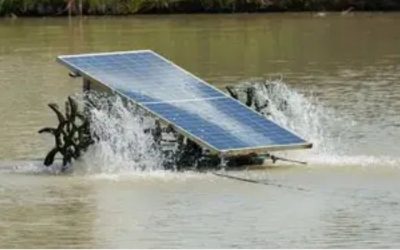
A direct-drive solar aerator runs the pump straight from the panel, so it bubbles in sunshine and stops when the light fades. As a system type it is the simplest and cheapest, and it suits shallow, decorative or lightly stocked ponds where daytime circulation is a bonus rather than a lifeline through the night.
Its defining limit is no night running, exactly when oxygen tends to drop in summer. Clouds also pause it. Do not rely on this architecture for fish that need continuous aeration, and confirm any unit’s depth rating, since a low-power panel-driven pump often cannot push air far below the surface of a deeper pond.
Solar With Battery Backup — Some Night Coverage
Adding a battery lets a solar aerator store daytime energy and run into the dark, which is the difference between a daytime bubbler and a system that helps overnight. As a type it is the sensible step up for a pond with fish, giving some coverage through the hours a direct-drive unit would leave unaerated.
The catch is that runtime varies with weather and draw. Confirm the battery capacity and expected hours for any actual product, and size them to your worst-case night rather than a sunny-day best case. Test the real overnight runtime before trusting it with sensitive fish.
Hybrid Solar Plus Mains — Reliability First
A hybrid pairs solar with a mains connection so the pump keeps running when sun and battery fall short. As an architecture it prioritizes reliability, using solar to offset power cost while mains guarantees continuous aeration, which suits a pond where a gap in oxygen is not an acceptable risk at any time of day.
It needs access to power near the pond, which pure solar avoids, and the solar side then acts as a supplement rather than the sole source. For fish-stocked ponds that cannot tolerate interruptions, this is often the most dependable route, trading some of solar’s independence for the certainty of a fallback supply.
Larger Panel and Battery — Deeper or Longer
Scaling up the panel and battery extends both runtime and the ability to push air a little deeper, making this the type to consider for a larger or deeper pond that still wants solar. More storage means more hours after dark, and more capacity helps a pump work against the higher pressure that depth demands.
Even scaled up, solar has limits against a mains pump at real depth, and cost rises with panel and battery size. Confirm the system is rated for your depth and target runtime rather than assuming bigger solves everything. For deep, heavily stocked ponds, a hybrid or mains pump may still be the safer choice.
Frequently Asked Questions
Solar buyers ask whether these run at night, if solar can aerate a deep pond, whether CFM equals water flow, and if a battery is necessary. Each answer leads with the practical call, then the condition that changes it, since architecture and runtime matter more than a full-sun airflow figure.
Does a solar aerator run at night?
Only if it has a battery. A direct-drive solar aerator runs straight from the panel, so it stops after dark and pauses under heavy cloud. A battery-backed system stores daytime energy to run into the night, so if you need overnight aeration, the presence and size of a battery is the feature that matters most.
Even with a battery, night runtime depends on the day’s sun, the battery capacity and the pump’s draw. Size the storage to your worst-case night and test it, especially for fish that need continuous oxygen through warm summer nights when a daylight-only unit would leave them uncovered.
Can solar aerate a deep pond?
It is harder, because solar air pumps are often low-power and pressure needs rise with depth, so many suit shallow ponds better. A panel-driven pump may not push air firmly to the bottom of a deep pond, and working deeper also draws more power, shortening any battery’s runtime and compounding the limitation.
For a deep pond that wants solar, a larger panel and battery, or a hybrid with mains backup, is usually needed to keep the diffuser fed reliably. Confirm the system is rated for your depth rather than assuming solar matches a mains pump, and be realistic that deep water is where solar struggles most.
Is CFM the same as water flow?
No. An air pump’s output is measured in CFM or similar air units, while water flow is measured in GPM, and the two are not interchangeable. A solar aerator moves air to oxygenate and circulate the pond, not water, so a high air figure does not translate into visible water movement or a fountain-like flow.
Keep the metrics straight when comparing products. Do not rank a solar air aerator against a solar fountain pump’s GPM. Judge an aerator on air delivery at your depth, its runtime and its architecture, and choose a water pump separately if what you want is visible flow.
Do I need a battery with a solar aerator?
If the pond needs aeration after dark, yes; a battery is what carries a solar system through the night and cloudy spells. Without one, a direct-drive unit only works in daylight, which may suit a decorative or lightly stocked pond but not fish that need continuous oxygen through the riskier overnight hours.
If daytime circulation is all you need, a batteryless direct-drive unit is simpler and cheaper. Match the choice to the pond’s risk: decide whether night running is essential first, then size a battery to your worst-case night if it is, or accept the daylight-only limit if the pond can safely tolerate it.
Final Thoughts
For solar, architecture decides suitability: a daylight-only unit suits shallow, decorative ponds, while fish that need night aeration require a battery, a hybrid, or scaled storage, and depth pushes you toward more capacity. The best solar powered pond aerator is the one whose power design and runtime match your pond’s real needs.
Best Pond Filter System for a 500 Gallon Pond: Strong Picks
Best Pond Filter System for a Koi Pond: Trusted Strong Picks