Last Updated: October 4, 2026
Similar sticker prices can hide very different device types, from a dedicated marine monitor to an expandable smart controller. The best pH and temperature monitor for aquarium use depends on whether you want a standalone display, remote logging or an ecosystem you can grow, since Hanna, Milwaukee and Apex Jr all sit near $300 yet work differently.
As an Amazon Associate we earn from qualifying purchases.
As an Amazon Associate we earn from qualifying purchases at no extra cost to you. Prices and availability are accurate as of the date shown and are subject to change.
By David Nguyen
Quick answer: For most people in 2026, the best ph and temperature monitor for aquarium is the Hanna HI981520 — our #1 rated choice. See the full ranked comparison, alternatives and buying advice below.
How to Choose a pH and Temperature Monitor
Start with measurement accuracy, decide between a local display and remote data, weigh smart-ecosystem expandability, and calculate recurring cost rather than purchase price alone. Several of these devices cluster around the same price but serve different jobs, so match the device type to how you want to monitor and grow.
Start With Measurement Accuracy
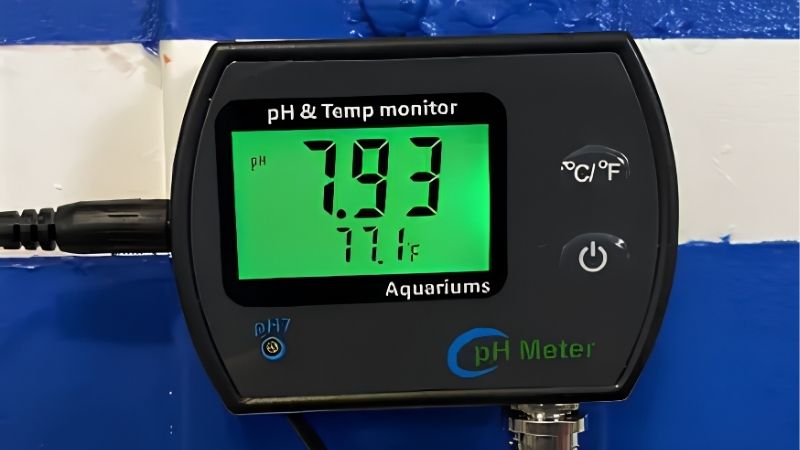
Hanna lists ±0.2 pH and ±0.5°C for the HI981520, while Milwaukee lists ±0.2 pH and ±0.3°C for the MC811 MAX. Both quote the same pH accuracy, so the difference sits in the temperature figure, which each maker publishes for its own device rather than a shared benchmark.
Do not turn that temperature-spec gap into a blanket verdict on long-term reliability. The two makers do not publish accuracy under fully identical conditions on the pages checked, so it is fairer to state each device’s spec on its own than to declare one monitor simply more accurate.
Decide Between a Local Display and Remote Data
Some units show numbers on a panel; others send data off-device. The Milwaukee MC811 is an always-on local display with 6.5 ft probe cables, while the Seneye Reef V6 logs data offline and to the web, suiting owners who want to check the tank remotely rather than at the stand.
Decide how you actually want to read the tank. A local display suits a spot you pass often, while remote logging suits checking from a phone away from home, so the monitor’s data model matters as much as its raw accuracy for how you will use it day to day.
Weigh Smart-Ecosystem Expandability
The Neptune A3 Apex Jr adds pH and temperature ports plus 2 FMM and 2 AquaBus connections over Wi-Fi, making it expandable into a wider Apex system. That growth path is its appeal, but out of the box it is a monitoring-first package without an included Energy Bar.
So it cannot switch equipment on its own until controllable power hardware is added. Choose the Apex Jr when you want a monitor that can grow into automation later, rather than expecting it to control a heater or pump directly the day it arrives.
Calculate Recurring Cost, Not Just Purchase Price
The Seneye Reef V6 is around $215, the lowest sticker here, but its pH and NH3 sensing relies on a disposable slide that lasts about 30 days, creating an ongoing consumable cost. Hanna’s HI981520 at about $300 does not use that kind of disposable pH slide.
So the cheapest device up front is not automatically the cheapest to own. Factor the recurring slide into Seneye’s total, and weigh it against the higher one-time cost of a monitor that uses refillable or standard probes rather than a timed consumable.
Top Picks
These four range from dedicated marine monitors to a smart-ecosystem base, with prices checked September 2026. Three sit close on price but differ in architecture, so use the table to line up accuracy, logging and expandability before matching a device to how you want to monitor.
| Product | Best For | Key Spec | Watch Out For |
|---|---|---|---|
| Hanna HI981520 | Dedicated marine monitoring | ±0.2 pH; ±0.5°C | No Apex-style equipment control |
| Milwaukee MC811 | Always-on local display | ±0.2 pH; ±0.3°C | EC 0-5 mS/cm not reef salinity |
| Seneye Reef V6 | Remote data + light functions | pH 6.4-9; 30-day logs | 30-day pH/NH3 slide |
| Apex Jr | Expandable smart aquarium | pH/temp + 2 FMM + 2 AquaBus | No Energy Bar included |
Hanna HI981520
The Hanna HI981520 covers 0 to 14 pH at ±0.2 and 0 to 50°C at ±0.5°C, and also continuously monitors marine salinity with alarms, priced around $300 as of September 2026. As a dedicated marine monitor, it is built to sit on a reef and track pH, temperature and salinity.
Its limit is that it does not offer Apex-style equipment control, so it monitors and alarms rather than switching gear. For an owner who wants a purpose-built marine display without an automation ecosystem, that focus is the point rather than a shortcoming.
Milwaukee MC811 MAX
The Milwaukee MC811 MAX reads 0 to 12 pH at ±0.2 with ±0.3°C temperature and 6.5 ft probe cables, priced around $300 as of September 2026. As an always-on local display, it keeps pH and temperature visible at the tank without relying on an app or cloud service.
The caution is its EC channel, which spans only 0 to 5 mS/cm, well below the roughly 53 mS/cm of reef saltwater, so it must not be sold as a reef salinity monitor. Use it for pH and temperature at the stand, and read salinity with a probe rated for marine conductivity.
Seneye Reef V6
The Seneye Reef V6 measures pH from 6.4 to 9 plus temperature and NH3, and adds PAR, LUX and Kelvin light functions, priced around $215 as of September 2026. Its remote logging and light readings suit owners who want data and lighting insight from a phone or the web.
The trade-off is the disposable slide that pH and NH3 sensing needs, lasting about 30 days, which is a recurring cost rather than a one-time buy. Factor that consumable into the total, since the low up-front price is offset by ongoing slide replacement over time.
Neptune A3 Apex Jr
The Neptune A3 Apex Jr offers 1 pH and 1 temperature port with 2 FMM and 2 AquaBus connections over Wi-Fi, priced around $300 as of September 2026. As a monitoring-first base, it can expand into a wider Apex system as your automation needs grow over time.
Its limit is that it does not include an Energy Bar like the full Apex or Apex Pro, so it monitors rather than switching equipment out of the box. Choose it for the expansion path, and budget controllable power hardware separately if you later want it to control gear.
Frequently Asked Questions
Owners ask how accurate a pH monitor should be, whether two-point calibration is needed, how often Seneye records, and what temperature a reef should run. The answers below stay with each device’s published spec and avoid inventing universal targets the makers do not state.
How Accurate Should an Aquarium pH Monitor Be?
Two current examples, the Hanna and Milwaukee monitors, both list ±0.2 pH. That is the published spec for those two devices rather than a universal minimum every monitor must meet, so treat it as a useful reference point instead of a fixed industry standard.
What accuracy you need depends on how tightly you manage pH and what you are watching for. Use the ±0.2 figure to compare these devices, and judge a monitor by its stated spec and stability rather than assuming a single number applies to every aquarium.
Do I Need Two-Point pH Calibration?
It depends on the device. Hanna calibrates with 7.01 and 10.01 buffers, Milwaukee uses a two-point manual method, and Seneye relies on a disposable slide lasting about 30 days, so the calibration routine differs by monitor rather than following one procedure.
Follow the process your specific device specifies. Two-point calibration brackets the reading range on the probe-based units, while the slide-based Seneye handles pH differently, so match the method to the monitor instead of applying one calibration approach across all of them.
How Often Does Seneye Record Data?
Offline, the Seneye Reef V6 records hourly and stores up to 30 days, while web results are saved every 30 minutes according to the current comparison page. That gives both a local log and a more frequent online record for tracking trends over time.
Those intervals suit spotting gradual drift rather than second-by-second change. If you need continuous real-time readings at the tank, a local display fits better, whereas Seneye’s logging cadence is built for reviewing data remotely across hours and days.
What Temperature Should a Reef Tank Run?
There is no single figure that applies to every reef, since the right target depends on your livestock, so this article does not assert one mandatory temperature. For device selection, what matters is that a monitor’s range covers normal aquarium temperatures with margin.
Both examples clear that easily: Hanna measures 0 to 50°C and Milwaukee measures -10 to 60°C, far wider than typical aquarium use. So focus on choosing a monitor whose range and accuracy suit your tank, and set your temperature target to your specific livestock’s needs.
Final Thoughts
The best pH and temperature monitor for aquarium use comes down to device type, not the closest price: pick Hanna or Milwaukee for a standalone display, Seneye for remote data and light functions, or Apex Jr for an expandable smart ecosystem. Weigh accuracy specs per device, account for recurring consumables, and keep a limited EC channel separate from true reef salinity.
Ready to decide? Our #1 pick for 2026 is the Hanna HI981520.
Live price & availability on Amazon.
Related Reviews & Guides

Best Pond Liner for an Irregular Shaped Pond: Top Compared
Best Python Water Changer Alternative: Top Top Picks