Last Updated: November 10, 2026
A science kit succeeds or fails in the first twenty minutes. If the first experiment works, a child asks for another; if the instructions are confusing or the supplies run out, the box ends up in a closet. The keyword “best kids science kits” therefore comes down to matching a kit to an age and an interest: chemistry reactions for a curious ten-year-old, a simple volcano and crystal set for a seven-year-old, or a gentle starter kit for a four-year-old who mostly wants to pour and stir. Budget, mid-range, and premium boxes differ mainly in how many refills and tools they include, so it pays to read the contents list before the cover.
This guide is for parents, grandparents, and teachers shopping for birthdays, homeschool projects, or the 2026 holiday season. Everything is judged from listing titles alone, so confirm age ranges, included chemicals, and adult-supervision notes on each page before buying. A pocket microscope and a duplicate Doctor Jupiter listing were left out, as was a National Geographic magic kit, to keep the comparison tight and avoid overlap between similar boxes.
Quick Picks

UNGLINGA 150 Experiments Science Kits for Kids Chemistry Lab S.T.E.MToys | Volcano, Crystal, Magic, Dig, Reation, Physics, Scientist Tools Set, Educational Project for Boys Girls Birthday Gifts Ideas
Included for '6 Best Kids Science Kits (November 2026)' as a representative consumer electronics in this roundup; selection reflects the product set returned for this topic.
View on Amazon
National Geographic Amazing Chemistry Set with 100+ Experiments Ages 8-12 | Crystal Growing, Chemical Reactions, STEM Projects, Hands-On Science Experiments, Science Kit, Birthday Gift
Included for '6 Best Kids Science Kits (November 2026)' as a representative consumer electronics in this roundup; selection reflects the product set returned for this topic.
View on Amazon
National Geographic Junior Chemistry Set with 50 Experiments for Kids | 20+ Lab Tools, Early Learning Lab, Hands-On Science Experiments, Chemistry Kit for Kids Ages 4-6, Birthday Gift
Included for '6 Best Kids Science Kits (November 2026)' as a representative consumer electronics in this roundup; selection reflects the product set returned for this topic.
View on Amazon
National Geographic Earth Science Kit with 100+ Activities for Kids 8-12 | Crystal Growing, Volcano Experiments, Rock Collection, Earth Science Activities, STEM Projects, Birthday Gift
Included for '6 Best Kids Science Kits (November 2026)' as a representative consumer electronics in this roundup; selection reflects the product set returned for this topic.
View on Amazon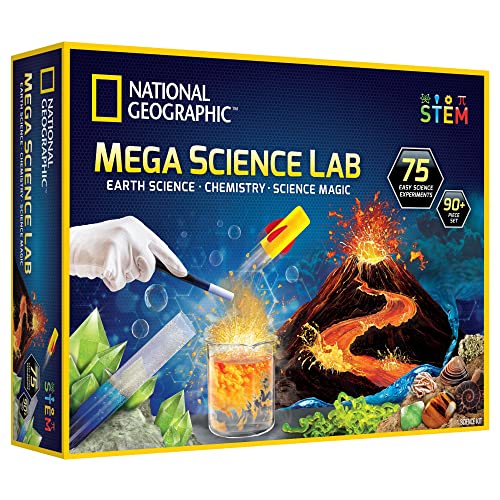
National Geographic Mega Science Lab with 75 Experiments for Kids 8-12 | Earth Science, Chemistry Set, Science Magic, Easy Experiments, STEM Projects, Science Kit for Kids, Birthday Gift
Included for '6 Best Kids Science Kits (November 2026)' as a representative consumer electronics in this roundup; selection reflects the product set returned for this topic.
View on Amazon
National Geographic Science Magic Kit with 100+ Experiments for Kids 8-12 | Magic Tricks, Chemistry Activities, Hands-On Science Experiments, STEM Projects, STEM Learning Toy, Birthday Gift
Included for '6 Best Kids Science Kits (November 2026)' as a representative consumer electronics in this roundup; selection reflects the product set returned for this topic.
View on Amazon| Product | Best for | Key spec from the title |
|---|---|---|
| UNGLINGA 150 Experiments Kit | Variety seekers | 150 experiments, volcano, crystals, physics |
| National Geographic Amazing Chemistry Set | Ages 8-12 chemistry fans | 100+ experiments, crystal growing, reactions |
| National Geographic Junior Chemistry Set | Younger beginners | 50 experiments, 20+ lab tools |
| National Geographic Earth Science Kit | Rocks and volcano lovers | 100+ activities, rock collection, ages 8-12 |
| National Geographic Mega Science Lab | Broad sampler | 75 experiments, earth science and chemistry |
| Doctor Jupiter My First Science Kit | Preschool-age starters | Ages 4+, first experiments |
How to Choose
Match the kit to the child’s age and reading level
Kits labeled for ages 4 and up focus on pouring, mixing, and observing, while ages 8 to 12 kits include written procedures, measuring steps, and more complex reactions. A child who struggles with reading will need adult help with an older kit, and a confident reader will outgrow a starter kit within weeks. Read the age range on the listing, not just the cover art.
Look past the experiment count
Big numbers such as 150 or 100+ sound impressive, but many experiments reuse the same supplies, and some only need household items. Check whether the kit includes enough consumables, such as baking soda or crystal-growing powder, to perform each activity more than once. A smaller kit with clear instructions often delivers more satisfaction than a giant one that skips steps.
Pick a topic that fits the child’s interest
Chemistry kits suit kids who like reactions, color changes, and fizzing. Earth science kits focus on rocks, minerals, and volcanoes, while physics and magic kits stress motion and tricks. A broad sampler is a good gamble when you do not know the preference, whereas a targeted kit works best for a child who already loves dinosaurs or rocks.
Check safety, supervision, and where budget kits cut corners
Many kits include small parts, chemicals, and glassware or plastic tubes that need adult supervision. Look for clear safety notes on the listing. Lower-priced kits sometimes use thin instruction booklets, flimsy tools, and limited refills, so scan the contents list and consider whether a mid-range option from a known brand justifies the extra cost for your child.
The 6 Best Options
UNGLINGA 150 Experiments Science Kit
UNGLINGA promotes 150 experiments covering a volcano, crystals, magic, digging, reactions, and physics, along with scientist tools, in a STEM toy format. It suits curious kids who like variety and parents who prefer a large catalog of activities over a deep dive into one topic.
- Strength: the 150-experiment claim spans several science areas, which keeps interest up.
- Strength: the included tools support pretend scientist play along with the experiments.
- Trade-off: the title is truncated and gives no age range, so it must be confirmed.
Skip it if you want a recognized educational brand or a very simple starter. Check how many consumable supplies are included on the listing, since 150 activities usually share a limited set of materials. For a child who likes to play scientist for the sake of the lab coat and gadgets as much as the results, the tool set is part of the draw.
National Geographic Amazing Chemistry Set
National Geographic offers a chemistry set for ages 8 to 12 with more than 100 experiments, including crystal growing and chemical reactions, framed as STEM projects. It suits upper-elementary kids who already enjoy fizz and color changes and who can follow written steps.
- Strength: 100+ experiments give a long runway for a child who loves chemistry.
- Strength: crystal growing adds a patient, long-term project beyond quick reactions.
- Trade-off: an 8 to 12 range means younger children will need real adult help.
Skip it if you want a gentle first kit or a topic other than chemistry. Review the listing for included supplies and safety notes. Crystal projects take days to grow, so the kit rewards a child who can wait, check progress each morning, and record what changed, which turns the box into a mini research project with a notebook rather than a one-afternoon toy.
National Geographic Junior Chemistry Set
The junior version lists 50 experiments and more than 20 lab tools, framed as an early learning lab. It fits younger or newer chemistry fans who want a friendly step into reactions and measuring without the heavier content of an older kit.
- Strength: 20+ lab tools let a child feel like a real scientist while measuring and mixing.
- Strength: 50 experiments are enough to explore without feeling overwhelming.
- Trade-off: the title does not state an age range, so verify it on the listing.
Skip it if your child has already done basic kitchen-science projects and wants a bigger challenge. Confirm the safety notes and how many reactions need adult help. Because the set stresses learning tools such as measuring and observing, it can also serve as a bridge into the larger set later, and siblings of different ages can share the box when the older one acts as lab assistant to the younger.
National Geographic Earth Science Kit
This earth science kit lists more than 100 activities for ages 8 to 12, including crystal growing, volcano experiments, and a rock collection. It suits rock hounds, nature lovers, and kids who prefer geology to chemistry and enjoy sorting and identifying specimens.
- Strength: the rock collection brings a tangible, collectible element to the kit.
- Strength: volcano experiments deliver the dramatic moment many kids hope for.
- Trade-off: the title is truncated, so the full contents need to be confirmed.
Skip it if your child wants fast, fizzing chemistry or magic tricks. Check the listing for how many specimens are included and what tools come in the box. A child who enjoys this kit may follow it with a walk in the yard or a park to hunt for real rocks, so a small magnifier and a notebook make a useful companion purchase that extends the learning outdoors.
National Geographic Mega Science Lab
The Mega Science Lab lists 75 experiments for ages 8 to 12, spanning earth science, a chemistry set, science magic, and easy experiments, as STEM projects. It suits families who want a sampler, since the child can discover which branch of science appeals before investing in a specialized kit.
- Strength: a mix of earth science, chemistry, and magic suits kids with broad curiosity.
- Strength: 75 experiments offer a manageable amount of variety.
- Trade-off: broad coverage means each topic gets less depth than a dedicated kit.
Skip it if your child already loves a single topic and wants a deeper dive. Verify the supplies list on the listing. The title is cut off after the STEM mention, so check whether any electronic or magnetic parts are included, and keep in mind that a sampler is a good gift when you are unsure, since the child can pick favorite activities and repeat only those.
Doctor Jupiter My First Science Experiments Kit
Doctor Jupiter is built for ages 4 and up, with a first experiments theme and gift ideas for children aged 4 to 8. It fits preschoolers and kindergartners who are ready for simple pouring, mixing, and observing with a grown-up nearby.
- Strength: a 4+ age label targets the youngest group on this list.
- Strength: a first-experiments focus keeps activities simple and quick to set up.
- Trade-off: older children may find it too easy within a short time.
Skip it if the child is already comfortable reading instructions. A second listing repeats this title, so treat them as one product, and confirm piece count on the page. Since preschoolers learn through repetition, a kit that allows the same simple experiment to be done several times can be a plus, provided you keep the work surface covered and the cleanup supplies close at hand.
Which One Fits Your Situation
For a preschooler or kindergartner
Doctor Jupiter’s first experiments kit is aimed at ages 4 and up, with simple activities and adult-friendly setup. Plan on sitting with the child through each activity, since preschoolers need help with pouring and with understanding what changed.
For an eight-year-old who loves reactions
National Geographic’s Amazing Chemistry Set offers over 100 experiments including crystal growing and reactions.
For a rock collector
The National Geographic Earth Science Kit adds a rock collection and volcano activities to its 100+ activities.
For a child with many interests
The Mega Science Lab mixes earth science, chemistry, and magic tricks, so a child can find a favorite branch. It also suits a classroom or a homeschool group, where several children can try different activities at once and share what they found.
Common Mistakes
- Choosing by experiment count alone, then running out of supplies after a few tries.
- Buying an older-age kit for a younger child and skipping adult supervision.
- Skipping the safety notes on chemicals, eye protection, and cleanup.
- Doing experiments on a surface that stains, without a tray or mat.
- Ignoring whether the kit needs household items that you do not have.
Related guides
- Popover Pan For Light And Airy Popovers
- Tennis Ball Machines For Home Practice
- Inverter Chargers For Off Grid Systems
Frequently Asked Questions
What age are science kits for?
Listings range from ages 4 and up for first experiments to 8 to 12 for chemistry and earth science. Always check the specific range on the product page.
Are chemistry sets safe?
They are designed for children when used as directed, but they still need adult supervision, eye protection, and a tidy work area. Read the safety notes before starting.
Do I need extra supplies?
Often yes. Many kits ask for water, vinegar, baking soda, or other household items, so scan the instructions first to avoid a mid-experiment trip to the store. Gather cups, spoons, and paper towels before opening the box, and keep a bin of kitchen items just for experiments.
How do I keep a child interested?
Do the first experiment together, then let the child pick the next one. Talking about why something happened turns a fun reaction into real learning. Asking the child to predict the result before starting, and to draw it afterward, makes even a simple fizz feel like genuine scientific work.
Ninja Creami Smoothie Bowl Recipes: 7 Thick, Spoonable Bowls With Toppings

Kombucha Flavors Ranked: Ginger, Citrus, Berry, Apple and More