

Last Updated: November 10, 2026
Buying a tennis ball machine for home practice is mostly a question of space, weight, and how much feeding you expect. A driveway or backyard court does not need a coach-grade hopper, but it does need something you can carry, store in a garage, and run for a decent block of time without refilling every few minutes.
This guide is for solo players, parents helping a junior, and recreational adults who want repeatable balls without a hitting partner. Eight machines are compared using the facts in their titles: weight, ball capacity, speed range, oscillation, app or remote control, and runtime. For 2026 the useful split is between light portable launchers and heavier machines with larger hoppers, so decide which of those fits your routine before looking at features.
Quick Picks

Fast Track Feedback System, Patented GEN2 Tennis Ball Machine for Practice 20 Feeds per min, Portable Tennis Machine with iOS Performance Tracking (Restocking Fee Applies to Returns)
Included for '8 Best Tennis Ball Machines for Home Practice (November 2026)' as a representative consumer electronics in this roundup; selection reflects the product set returned for this topic.
View on Amazon
TENNIIX Basic Tennis Ball Machine, 18.7LB Portable Tennis Robot, Black | 4H Runtime & 100+ Ball Capacity, Smart App & Voice Control, Multi-Training Mode, LED Display, 75MPH, Ideal for Beginner & Pro
Included for '8 Best Tennis Ball Machines for Home Practice (November 2026)' as a representative consumer electronics in this roundup; selection reflects the product set returned for this topic.
View on Amazon
L1 Tennis Ball Machine For Practice, 13.2lb Portable Tennis Robot(Black) | App & Pocket Remote Control, Up to 60 Tennis Balls, 10–60 km/h, 15°–55° Angle, Beginner to Intermediate Solo Practice
Included for '8 Best Tennis Ball Machines for Home Practice (November 2026)' as a representative consumer electronics in this roundup; selection reflects the product set returned for this topic.
View on Amazon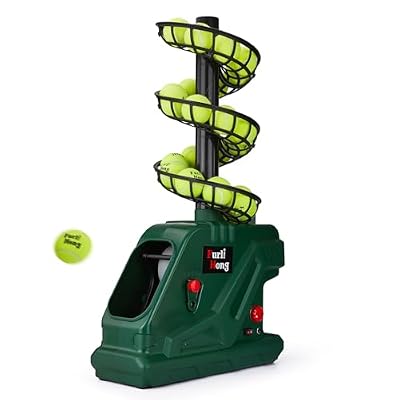
Furlihong 3819BH Portable Tennis Ball Machine | 5 Adjustable Angles, 2 Power Levels, 4 Serve Intervals, up to 30 MPH, for All Skill Levels Training
Included for '8 Best Tennis Ball Machines for Home Practice (November 2026)' as a representative consumer electronics in this roundup; selection reflects the product set returned for this topic.
View on Amazon
Tennis Ball Machine, Pusun PT-Mini Pro Tennis Serve Laucher for Beginner, Support App&Remote Control, Hold 65+Balls, 60km/h Max Serving Speed,Built-in Batter Last 3-5Hours, Portable and Easy to Use
Included for '8 Best Tennis Ball Machines for Home Practice (November 2026)' as a representative consumer electronics in this roundup; selection reflects the product set returned for this topic.
View on Amazon
Sports Tutor Tennis Twist. Tennis Ball Machine - for Beginners. Battery Powered. Adjustable Toss. Made in USA by #1 Tennis Machine Company
Included for '8 Best Tennis Ball Machines for Home Practice (November 2026)' as a representative consumer electronics in this roundup; selection reflects the product set returned for this topic.
View on Amazon
Furlihong 3807BH Tennis Ball Machine with Triangular Base | Adjustable Speeds, Oscillating Left & Right, Up & Down Swing Launch Port, for All Levels Training
Included for '8 Best Tennis Ball Machines for Home Practice (November 2026)' as a representative consumer electronics in this roundup; selection reflects the product set returned for this topic.
View on Amazon
Titan ACE Tennis Ball Machine for Coaches & Mobile Players | 150 Ball Capacity, Lightweight 39 lb Design with Invertible Hopper, Free App Control
Included for '8 Best Tennis Ball Machines for Home Practice (November 2026)' as a representative consumer electronics in this roundup; selection reflects the product set returned for this topic.
View on Amazon| Product | Best for | Key spec from the title |
|---|---|---|
| Fast Track GEN2 | Data-minded drills | 20 feeds per minute, iOS tracking |
| TENNIIX Basic | Long, smart sessions | 18.7 lb, 4H runtime, 100+ balls |
| L1 Tennis Robot | Light solo practice | 13.2 lb, 60 balls, 10-60 km/h |
| Furlihong 3819BH | Entry-level control | 5 angles, up to 30 MPH |
| Pusun PT-Mini Pro | Beginners with remote | 65+ balls, 60 km/h max |
| Sports Tutor Tennis Twist | Beginner battery use | Adjustable toss, battery powered |
| Furlihong 3807BH | Oscillating drills | Triangular base, left-right swing |
| Titan ACE | Coaches and mobile players | 150 balls, 39 lb, invertible hopper |
How to Choose
Weight and portability
The titles span roughly 13 pounds up to 39 pounds. A machine near 13 to 19 pounds is easy to move from garage to court in one hand, while a heavier unit usually buys a bigger hopper and a steadier base. Be honest about who will carry it and how far. A machine that is a struggle to lift tends to stay in storage, which defeats the purpose of owning one for regular home practice.
Ball capacity and runtime
Capacity ranges from about 60 balls to 150. Under 70 balls means frequent pauses to refill; 100 or more lets a feeding drill run for a while. Check the stated runtime too, since a battery that lasts about four hours covers several practice sessions between charges.
Speed, angle, and oscillation
Beginners rarely need more than the 30 MPH ceiling one title states, while stronger players want the roughly 60 km/h range other titles list. Look for adjustable launch angles and, if you want footwork drills, left-right and up-down oscillation. Fixed machines train one pattern only, which is fine for a beginner grooving a forehand but gets repetitive quickly for anyone preparing for match play against opponents who hit to every corner.
App, remote, and cheap-model compromises
App and pocket remote control save walking back to the machine, and tracking features add feedback for serious players. Budget machines usually cut hopper size, speed range, and build quality first. Ignore long feature lists and verify the three numbers you will actually use: capacity, speed, and runtime.
The 8 Best Options
Fast Track GEN2
The Fast Track GEN2 is positioned for players who like measurable practice. Its title mentions a patented feedback system, twenty feeds per minute, a portable design, and iOS performance tracking, so you can review a session instead of just hitting balls. It suits an improving player who wants to see progress on a phone, or a parent who likes to compare one week of drills against the next instead of guessing whether a junior is getting better.
- Strength: twenty feeds per minute supports a fast, rhythmic drill
- Strength: iOS performance tracking adds feedback beyond simple repetition
- Trade-off: the tracking is described for iOS, which leaves Android users guessing
Skip it if you only want a basic ball feeder, or if you use an Android phone and want full app support. Players working on very heavy pace should also look at machines with a higher stated speed range.
TENNIIX Basic
TENNIIX combines light weight with generous endurance. The title cites 18.7 pounds, a four-hour runtime, capacity for more than 100 balls, and smart app and voice control with multiple training modes. That is a lot of session length for a machine you can still carry to a park court or a neighbor’s driveway. Families who share one machine among several players will appreciate that the long runtime makes back-to-back turns realistic.
- Strength: a four-hour runtime covers long family practice days
- Strength: 100-plus ball capacity cuts down on refilling
- Trade-off: voice and app control add convenience but also another thing to learn and pair
Skip it if you prefer a fully manual unit, or if you want a coach-grade hopper above that capacity.
L1 Tennis Robot
The L1 is the featherweight of this group at 13.2 pounds, with a pocket remote and app control. It holds up to 60 balls and covers a 10 to 60 km/h speed range with 15 to 55 degree angles, so a beginner can start slow and raise the pace as timing improves. Its low weight also makes it a realistic choice for someone who stores gear in a closet or a car trunk rather than a garage with floor space to spare.
- Strength: very light weight makes setup quick for one person
- Strength: wide speed and angle ranges cover lobs through drives
- Trade-off: 60 balls means more frequent refills during long drills
Skip it if you want long uninterrupted feeding or plan to train several players back to back.
Furlihong 3819BH
This Furlihong is an uncomplicated, portable launcher built around choice rather than complexity. The title lists five adjustable angles, two power levels, four serve intervals, and speeds up to 30 MPH, which together cover beginner to intermediate drills without a lot of menus to navigate. It is a sensible pick for a casual player who wants to hit for thirty minutes after work and values knobs over screens, apps, or pairing steps.
- Strength: four serve intervals let you set a comfortable rhythm
- Strength: five angles give a range of heights from one machine
- Trade-off: the 30 MPH ceiling limits advanced pace work
Skip it if you are a strong player wanting heavy topspin balls, or if you need an app and remote. A tall, physically strong junior will outgrow the pace ceiling quickly, so consider it a starter machine.
Pusun PT-Mini Pro
The Pusun PT-Mini Pro aims at beginners who want some modern conveniences. It supports app and remote control, holds more than 65 balls, and tops out at 60 km/h, which is enough pace for most club-level rallies without feeling overwhelming for a new player. The title also mentions a built-in feature that is cut off, so it is worth opening the full listing to see what else the manufacturer includes before you commit.
- Strength: app and remote control let you adjust without walking over
- Strength: 65-plus ball capacity is a step above the lightest machines
- Trade-off: the title text is cut off, so confirm details like runtime on the listing
Skip it if you want oscillating feeds or a very large hopper for group sessions, since more than 65 balls is the stated capacity and coaches usually need far more.
Sports Tutor Tennis Twist
Sports Tutor describes the Tennis Twist as a battery-powered machine for beginners with an adjustable toss, made in the USA. That focused pitch is its strength: a straightforward feeder for someone learning basic strokes, rather than a feature-heavy robot. Parents introducing a child to the game, or adults returning after years away, will find a slow, forgiving feed more useful than a spec sheet full of speed settings they will never touch.
- Strength: battery power frees you from outlets on the court
- Strength: adjustable toss suits beginners building consistent contact
- Trade-off: the title offers no capacity or speed numbers, so research the specs
Skip it if you want app tracking or precise speed figures before buying, because the listing leaves out the numbers most buyers compare first.
Furlihong 3807BH
The 3807BH adds movement to the formula. Its triangular base, adjustable speeds, left-right oscillation, and up-down swing launch port mean balls arrive at varied spots, which forces footwork rather than standing still and hitting the same forehand. That makes it a better fit for a player who already controls the basic strokes and now wants to practice recovering, shuffling, and hitting on the run in a realistic way.
- Strength: oscillation in both directions builds movement drills
- Strength: a triangular base is intended to keep the machine steady
- Trade-off: the title lacks capacity and weight figures to compare directly
Skip it if you only want a fixed, predictable feed, or if the unlisted capacity worries you, since the title never states how many balls the hopper holds.
Titan ACE
Titan ACE is the heavyweight choice for coaches and mobile players. At 39 pounds with a 150-ball capacity, an invertible hopper, and free app control, it is meant for longer lessons and for hauling between courts when you need real volume. Club coaches running group clinics and traveling players who hit at different courts each week are the people this weight and capacity are designed to serve.
- Strength: 150-ball capacity supports long drills without refills
- Strength: an invertible hopper is designed to ease transport
- Trade-off: 39 pounds is noticeably heavier than the compact launchers
Skip it if you carry the machine alone every session or only practice for short stretches, where the extra hopper size would simply go unused and the weight becomes a nuisance.
Which One Fits Your Situation
You practice alone in a driveway
The L1 Tennis Robot at 13.2 pounds is easy to set up solo, and TENNIIX Basic is the step up if you want longer sessions.
You coach or train groups
Titan ACE offers the largest hopper in the list and is built with mobile coaches in mind. The invertible hopper and free app control also help when you move between courts during a busy lesson schedule.
You are teaching a beginner
The Sports Tutor Tennis Twist and Furlihong 3819BH keep controls simple, while the Pusun PT-Mini Pro adds remote convenience.
You want footwork work
The Furlihong 3807BH oscillates left-right and up-down, which is the closest thing to match movement in this group. Pair it with extra balls so oscillating drills do not stall.
Common Mistakes
- Buying a heavy machine and then leaving it in the garage because it is a chore to carry.
- Choosing by top speed when a slow, comfortable feed matters more at first.
- Ignoring ball capacity and spending practice time refilling.
- Skipping runtime figures and running out of battery mid-session.
- Forgetting to check that app features work with your phone.
Related guides
- Popover Pan For Light And Airy Popovers
- Inverter Chargers For Off Grid Systems
- Contact Paper For Kitchen Countertops
Frequently Asked Questions
How many balls do I need?
Machines hold anywhere from 60 to 150 balls. Buy extra balls beyond hopper capacity so collecting takes fewer trips.
Is a heavier machine more stable?
Often, yes, but it is also harder to move. A wide, triangular base helps lighter machines stay planted.
Do I need an app?
No. Apps and remotes are conveniences that save steps, not requirements for useful practice.
Can a beginner use a 60 km/h machine?
Yes, if speed is adjustable and you start slow. Look for a range that begins low, as several titles state.

Watermelon Margarita Recipe: Fresh Juice Method With Pitcher and Frozen Options
Dessert Board Ideas: 9 Sweet Boards for Parties and Holidays









