Last Updated: October 4, 2026
A filter that hums through the wall or splashes into the tank turns a quiet room into a nightly annoyance. If you are hunting for the best hang on back aquarium filter quiet enough for a bedroom or office, start by separating three noise sources, since no candidate here ships with a verified decibel measurement.
As an Amazon Associate we earn from qualifying purchases.
By David Nguyen
Quick answer: For most people in 2026, the best hang on back aquarium filter quiet is the Fluval AC30 — our #1 rated choice. See the full ranked comparison, alternatives and buying advice below.
How to Choose a Quiet Hang-on-Back Filter
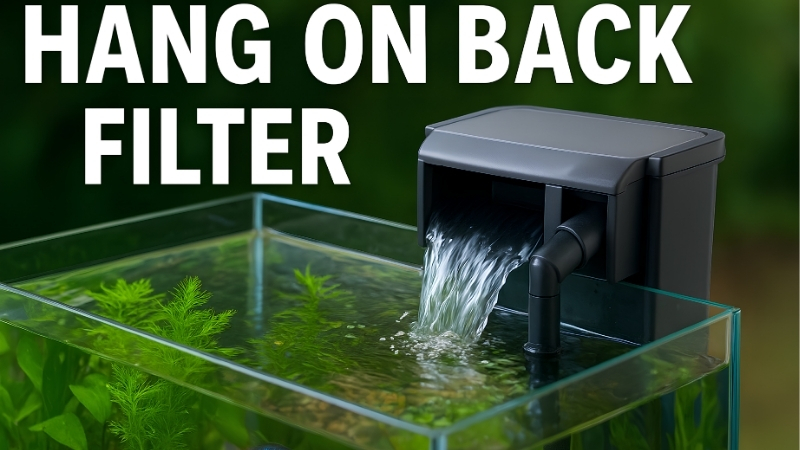
Hang-on-back noise comes from three places: the motor and impeller, vibration at the rim clip, and water returning to the surface. Each has a different fix, so treat a quiet HOB filter as adjustable variables, not one sealed rating on the box.
Check the Noise Evidence
Four models compete here, but none ships with a qualified acoustic dataset at matched distance, background and water height, so an advertised ‘under 40 dB’ claim is marketing, not a measurement. Fluval’s copy describes the AC30’s rotor and dampening lid, but that is a design note, not a tested figure.
Because these units run submerged electrical parts around the clock, prioritize a UL or ETL listing before chasing quietness, and confirm the current AC30 (SKU 19600) over the older AquaClear 30, whose wattage and media differ. Describe verifiable features, not an invented noise score.
Match the Outlet to the Waterline
Water-fall noise usually comes from too large a gap between outlet and surface. Fluval’s AC20/30/50 manual asks that the water sit no more than 16 mm below the outlet, keeping the return closer to a slide than a splash. That figure belongs to that range, not every hang-on-back filter.
Raising the water within the maker’s limit is the safe lever; dropping it below a device’s minimum to chase a waterfall risks running the pump dry and adding noise. If evaporation lowers the tank, top it off rather than let the gap grow, since that gap is often the loudest part.
Separate Flow Ratings from Filtration Results
The table lists a 150 US GPH maximum on the AC30 and 119 US GPH circulation on the C2 – max flow versus rated circulation – so you cannot line them up to rank cleaning power or quietness. A higher GPH number means more movement under the maker’s test, not cleaner water or a calmer motor.
Use flow ratings to check a model moves enough water, then judge filtration by the media it holds. More stages do not prove a quieter filter; the C2 splits five stages and the AC30 four, reflecting how each brand divides functions, not a performance gap.
Budget for Continuous Operation
A hang-on-back filter runs continuously, so power draw matters more than sticker price over a year. At full rated wattage around the clock, the AC30 at 7 W models to 61.32 kWh a year and the Tidal 35 at 6 W to 52.56 kWh; at an illustrative $0.15 per kWh that is roughly $10 and under $10, not a measured bill.
Electricity is only part of the cost. Cartridge systems like the Whisper IQ add a recurring bill, while reusable-media units let you rinse foam, so factor twelve months of consumables in. Wattage is a modeling input, not an amp rating, so do not divide watts by voltage on an AC pump.
Top Picks
These picks are grouped by what each filter does, not a measured noise ranking, since no data crowns a single quietest model. Match the design and flow control to your tank, then read the notes for where each unit needs attention.
| Product | Best For | Key Spec | Watch Out For |
|---|---|---|---|
| Fluval AC30 | Best for Updated HOB Design | 150 GPH max; 30 PPI foam, 4 stages | Must prime and hold the water level |
| Seachem Tidal 35 | Best for Self-Priming Convenience | 130 GPH; 0.7 L media | Self-priming still needs maintenance |
| Tetra Whisper IQ 20 | Best Budget Option | Adjusts down to 10 GPH | Cartridge cost; no measured noise data |
| Fluval C2 | Best for Separate Media Stages | 119 GPH circulation; 5 stages | More stages do not prove it is quieter |
Fluval AC30
The AC30 suits anyone wanting Fluval’s updated hang-on-back design in a community tank, with a 150 US GPH maximum flow, four stages and 30 PPI foam. It draws 7 W on the US 120 V build, priced around $50 at Petco as of September 2026, and the maker describes a rotor and lid meant to reduce vibration.
A dampening design does not silence noise from how you mount it; you still set the water within 16 mm of the outlet to avoid a splash. Confirm the current SKU 19600 over an older AquaClear 30, since replacement foam and impellers differ.
Seachem Tidal 35
The Tidal 35 fits users who want self-priming without hand-cupping water to start the pump. It moves 130 US GPH, holds a 0.7 L media basket and draws 6 W on the US build, priced around $50 at Reef Life Aquariums as of September 2026.
Convenience does not remove maintenance: the pump and impeller still need cleaning, and there is no standardized decibel figure to compare head to head. A dirty impeller is a common source of motor hum, so a monthly rinse does more for quiet running than any spec on the box.
Tetra Whisper IQ 20
The Whisper IQ 20 is the budget choice at around $35 at Petco as of September 2026. Its appeal is flow that adjusts from a 130 US GPH maximum to a published 10 US GPH minimum, softening the current. It takes the Large cartridge for the IQ 20, not the IQ 10 size.
The catch is the cartridge system: replacements are a recurring expense even when a multi-pack lowers the per-unit price. Its ‘under 40 dB’ claims arrive without the measuring conditions to trust them, so treat the low-flow setting, not the noise copy, as the advantage.
Fluval C2
The C2 is for people who want clearly separated media stages, publishing 119 US GPH of circulation across five stages, priced around $60 at Walmart as of September 2026. Splitting mechanical, chemical and biological media into layers eases selective maintenance when a stage clogs.
Two cautions: that 119 GPH figure is circulation, a different metric from the AC30’s max flow, so the numbers are not directly comparable; and more stages do not make a filter quieter. More compartments mean more parts to rinse, a time cost rather than a noise benefit.
Frequently Asked Questions
Buyers searching for a quiet hang-on-back filter ask the same questions about noise, water level, flow and cost. The answers below stay inside what the specs support and flag where a confident number is missing.
Which HOB Filter Is the Quietest?
There is no honest way to name one of these four the quietest, because none has a decibel figure at matched distance, background and water height. Marketing lines like ‘whisper-quiet’ describe intent, not a rankable test.
What you control matters more than the label: mount the unit on a foam pad, keep the water within the manual’s outlet gap, and clean the impeller monthly. Those steps affect real noise more than model choice.
How High Should the Water Level Be?
For the Fluval AC30, the manual asks that the water sit no more than 16 mm below the outlet, shortening the drop and quieting the return. That figure is specific to the AC20/30/50 family, not a universal setting.
Other filters publish their own minimums, so read the manual for the exact model rather than copying a number across brands. Never drop the level below a device’s lower limit to force a waterfall look, since running the pump toward dry adds heat and noise.
Can I Reduce Flow for a Betta?
Yes, within limits: the Tetra Whisper IQ 20 publishes a 10 US GPH minimum, low enough to ease the current for a betta or slow-water fish. Lowering the dial is a starting point, not a guarantee that flow is calm everywhere.
Watch the fish’s resting area, and add a sponge over the intake or a baffle if the surface churns. A published minimum describes the pump, not the flow your betta feels at its corner.
How Much Electricity Does a Quiet Filter Use?
For the two models with a locked calculation, continuous operation at rated wattage models to between 52.56 and 61.32 kWh a year – the Tidal 35 at 6 W and the AC30 at 7 W. That is a modeled range for these units, not the whole hang-on-back category.
At an illustrative $0.15 per kWh those are roughly $10 and under $10 a year, before cartridges or foam. Real cost depends on your utility rate, so treat these as planning numbers.
Final Thoughts
Choosing the best hang on back aquarium filter quiet enough for a shared room comes down to fit, not a decibel claim: set the water within the outlet gap, dial the flow down for the livestock, and keep the impeller clean. Weigh the modeled 52.56-61.32 kWh yearly draw and any cartridge cost, and let verified features guide the call.
As an Amazon Associate we earn from qualifying purchases at no extra cost to you. Prices and availability are accurate as of the date shown and are subject to change.
Ready to decide? Our #1 pick for 2026 is the Fluval AC30.
Live price & availability on Amazon.
Related Reviews & Guides

Fluval FX6 vs FX4 Which Canister Filter Is Best? Compared
Best Pond Filter System for the Money: Smart Value Picks