Last Updated: September 17, 2026
Sizing filtration for a 100-gallon aquarium is trickier than it looks, because a canister’s headline pump number and the water it actually circulates are two different figures. Finding the best canister filter for 100 gallon aquarium duty means comparing published circulation, real headroom and 24/7 power before you judge any single spec.
As an Amazon Associate we earn from qualifying purchases.
By David Nguyen
Quick answer: For most people in 2026, the best canister filter for 100 gallon aquarium is the Fluval 407 — our #1 rated choice. See the full ranked comparison, alternatives and buying advice below.
How to Choose a Canister Filter for a 100-Gallon Aquarium
A 100-gallon tank sits at an awkward point where one popular canister is at its rating ceiling and the next tier up has room to spare. These four criteria separate marketing flow from usable circulation and show where paying for headroom pays off, so the number you finally buy on is the one that actually governs turnover.
Use Filter Circulation, Not Just Pump Output
Fluval publishes two flow figures for the 407: a 383 GPH pump output and a 245 GPH filter circulation, the water actually moving through loaded media. For turnover math on a 100-gallon tank, the 245 GPH circulation is the honest number; using the 383 GPH pump figure would overstate how much filtration the unit really provides.
Makers do not all define these the same way, so compare like with like. The FX4 lists 450 GPH circulation and the OASE BioMaster2 600 a 345 GPH maximum flow, which is closer to a pump-style ceiling than a loaded-media figure, so lining those up without labeling the difference exaggerates the OASE and flatters any canister quoted at its peak.
Decide How Much Capacity Headroom You Want
Manufacturer ratings tell you how much tank each canister is meant to handle. The Fluval 407 is rated 50 to 100 gallons, placing a 100-gallon tank right at its ceiling, while the BioMaster2 600 reaches 155 gallons and the FX4 stretches to 250. Sitting at the very top of a rating leaves little margin for heavy stocking.
Headroom costs money and power, so the choice is a real trade-off rather than a free upgrade. Because a canister runs continuously, the extra capacity of an FX4 or BioMaster2 600 also means budgeting for its round-the-clock draw; buying more rating than a lightly stocked 100-gallon tank needs adds electricity cost without adding visible benefit.
Compare Media Capacity
Media volume decides how much biological and mechanical filtration you can pack in, and it scales with tank load. The Fluval 407 holds about 4.2 liters of basket volume, while the OASE BioMaster2 600 lists roughly 6.8 liters of total filter volume. More media generally means longer intervals between the maintenance that restores real flow.
Those figures are not measured identically, so treat them as maker-defined rather than a standardized yardstick. OASE has moved to the BioMaster2 generation, and mixing its current volume specs with the older BioMaster line produces numbers that no longer match a product you can buy, so confirm you are reading the current second-generation sheet.
Factor Power Consumption Into 24/7 Use
A canister filter never switches off, so wattage is a running cost, not a one-time number. Where published, the Fluval 407 draws about 23W, the FX4 about 30W and the OASE BioMaster2 600 about 23W. The gaps look small per hour but compound across every day of the year the filter spends circulating your tank water.
That steady draw is why oversizing has a price beyond the purchase. An FX4’s extra circulation on a 100-gallon tank buys headroom, yet it also adds to the 24/7 electricity bill that large aquariums already carry from heaters and pumps, so match the wattage to the tank you actually keep rather than the biggest canister you can justify.
Top Picks
Three canisters cover the 100-gallon range from just-enough to comfortable headroom, and the fourth entry compares them by load rather than adding a product. The table lists each pick’s role and headline spec, and the notes below attach the one caveat that matters most before you decide how much filter this tank size really needs.
| Product | Best For | Key Spec | Watch Out For |
|---|---|---|---|
| Fluval 407 | moderate-stock 100 gal | 245 GPH circulation | Exactly at rating ceiling |
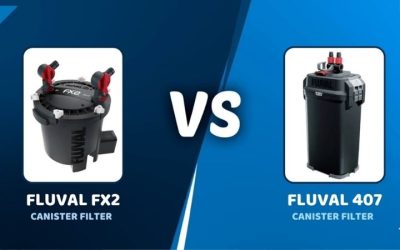
| Fluval FX4 | more circulation/headroom | 450 GPH circulation | Larger and pricier |
| OASE BioMaster2 600 | maintenance convenience | 345 GPH max; 155-gal rating | Max flow is not loaded circulation |
Fluval 407: Compact 100-Gallon Match
The Fluval 407 is the tidy fit for a moderately stocked 100-gallon tank, publishing 383 GPH of pump output but 245 GPH of filter circulation, drawing about 23W and listing near $256.99 on 17 Sep 2026. That 245 GPH works out to roughly 2.45 turnovers an hour, a sensible baseline for a community setup.
Its limitation is margin: a 100-gallon tank sits exactly at the 407’s rating ceiling, leaving nothing spare if you add messy or heavily fed fish. Because the 407 runs continuously, the practical answer to heavier loads is not to push it harder but to step up a size, since the unit is already working at the top of its intended range.
Fluval FX4: Higher-Circulation Option
The FX4 buys headroom, listing 700 GPH of pump output, 450 GPH of filter circulation, about 30W of draw and a 250-gallon rating for roughly $349.99. On a 100-gallon tank that circulation equals about 4.5 turnovers an hour, and it sits about 83.7% above the 407’s circulation rather than exactly double it as claims suggest.
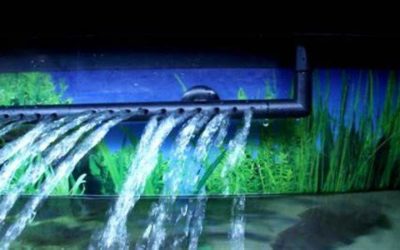
The cost of that headroom is size, price and power: the FX4 is a physically larger canister, runs about 36.2% dearer than the 407 at checked prices, and adds to a 24/7 electricity bill. A 4.5x turnover can also be brisk for calm-water species, so outlet placement and spray-bar setup matter as much as the raw flow figure.
OASE BioMaster2 600: Easy-Maintenance Option
The BioMaster2 600 leans on serviceability, with a 345 GPH maximum flow, a 155-gallon rating, about 6.8 liters of filter volume and a price near $334.99. Its integrated pre-filter is designed to be cleaned without opening the main canister, which keeps circulation steadier between full teardowns on a busy 100-gallon tank.
The number to watch is that 345 GPH is a published maximum, not loaded-media circulation, so it is not directly comparable to Fluval’s circulation figures. It is also priced in the premium-mid tier despite a lower peak flow than the FX4, meaning you pay for maintenance convenience and rating headroom rather than the highest circulation here.
Which One Fits Different 100-Gallon Loads?
Matching canister to load means reading the right flow for each unit: about 245 GPH circulation on the 407, a 345 GPH maximum on the BioMaster2 600, and 450 GPH circulation on the FX4. A lightly stocked planted 100-gallon tank rarely needs the FX4, while a busy cichlid or messy-fish setup benefits from its extra circulation.
None of those figures is a fixed requirement, because real turnover shifts with stocking, media loading, hose routing and head height. Treat the 2.45x, 3.45x-maximum and 4.5x numbers as starting points, then adjust toward more circulation for heavier bioloads and toward the quieter, lower-draw 407 when the tank stays moderate over time.
Frequently Asked Questions
Buyers sizing a canister for a 100-gallon tank keep asking whether one model is enough and another is overkill. The answers below use the published circulation figures and the turnover they imply, while noting where outlet setup and stocking, not the spec sheet alone, decide whether a given flow rate actually suits the tank.
Is the Fluval 407 enough for exactly 100 gallons?
The Fluval 407 is manufacturer-rated up to 100 gallons, so a 100-gallon tank falls within its intended range. Its published filter circulation is 245 GPH, about 2.45 turnovers an hour on that volume, which is a workable baseline for a moderately stocked community rather than a heavily loaded or particularly messy-fish setup.
The caveat is that 100 gallons is the ceiling, not the sweet spot, so the margin is thin. If your stocking is light to moderate the 407 handles it comfortably, but a busy bioload leaves little room to absorb extra waste, and stepping up a size is usually smarter than expecting the 407 to run beyond its rated range.
Is the FX4 too powerful for a 100-gallon tank?
The FX4’s 450 GPH of published circulation equals about 4.5 turnovers an hour on 100 gallons, which is brisk but not automatically too much. Whether it suits the tank depends on your outlet setup and the species you keep, since the same flow feels different behind a spray bar than through a single narrow return nozzle.
Calm-water fish and delicate plants can be pushed around by strong return flow, so the fix is directing and diffusing it rather than rejecting the filter. A spray bar, a wider outlet, or aiming the return along the glass tames a 4.5x turnover, letting the FX4’s extra media capacity and headroom work without turning the tank into a current.
How much bigger is the FX4 than the 407 in flow?
Comparing the honest circulation figures, the FX4 moves about 83.7% more water than the 407, roughly 450 GPH against 245 GPH. That is a substantial jump, but it is not double, and describing it that way would overstate the difference and misrepresent how the two canisters actually compare on a 100-gallon tank.
The extra circulation comes with about 36.2% more purchase cost and a higher continuous draw, so the gap is real but priced accordingly. For a moderately stocked tank the 407’s flow is usually adequate, and the FX4’s advantage becomes meaningful mainly as stocking climbs or when you want rating headroom for a future upgrade.
How much capacity headroom does the BioMaster2 600 have?
The OASE BioMaster2 600 is manufacturer-rated to 155 gallons, which gives 55 gallons of rating headroom over a 100-gallon target. That margin lets the canister run below its ceiling on a 100-gallon tank, a comfortable position for a moderately to heavily stocked setup that wants steadier long-term performance from its filtration.
Headroom is not the whole story, since the 345 GPH figure is a published maximum rather than loaded circulation, so real turnover sits lower once media is packed in. The practical benefit of that 155-gallon rating is running with margin and leaning on the accessible pre-filter to hold flow steady between the deeper cleanings a busy tank needs.
Final Thoughts
Picking the best canister filter for 100 gallon aquarium duty means buying on circulation, not pump output, then deciding how much rating headroom and 24/7 power you want to pay for. Let stocking and maintenance habits steer the choice between a 407 at its ceiling and an FX4 or BioMaster2 600 with room to spare, and confirm live pricing first.
Ready to decide? Our #1 pick for 2026 is the Fluval 407.
Live price & availability on Amazon.
Related Reviews & Guides


10 Best Aquarium Water Test Kits: Top Picks for 2026

Aquarium Stand Bracket