Last Updated: October 4, 2026
A clarifier only fixes one kind of cloudy water, so diagnosis comes before dosing. The best aquarium water clarifier for cloudy water clumps fine suspended particles into larger masses your filter can capture, which works for dust and silt haze but not for a bacterial bloom, green water, or an ammonia problem.
As an Amazon Associate we earn from qualifying purchases.
By David Nguyen
Quick answer: For most people in 2026, the best aquarium water clarifier for cloudy water is the Seachem Clarity — our #1 rated choice. See the full ranked comparison, alternatives and buying advice below.
How to Choose a Water Clarifier
Choosing well means identifying the cloudiness first, understanding the flocculation mechanism, accepting that physical removal is required, and matching dose to your tank. A clarifier is particle-management chemistry, not a purifier, so these four points keep you from dosing it at a problem it cannot solve.
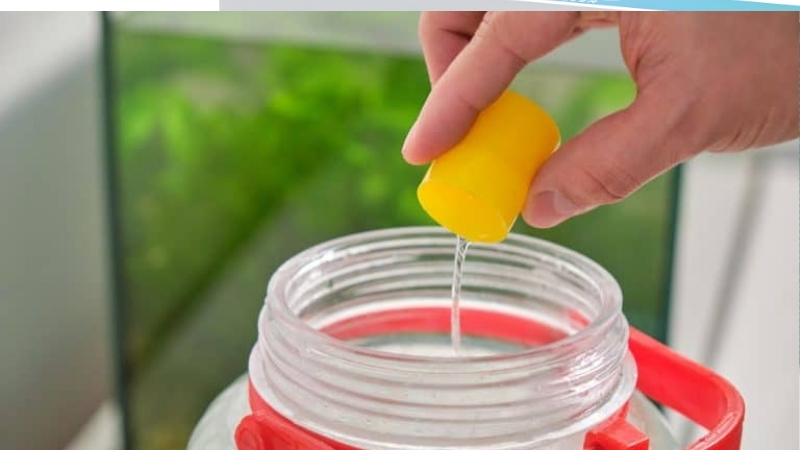
Identify the Cloudiness First
Not all cloudy water is the same, and a clarifier only addresses one type. Suspended dirt or silt gives a fine haze a clarifier can clump, but a white bacterial bloom and green water from algae are different problems with different fixes, so cloudy water does not automatically mean suspended dirt.
Diagnose before dosing: a new-tank haze or stirred substrate points to particles, while a persistent white cloud often signals a bacterial bloom and a green tint means algae. Using a clarifier on a bloom or green water wastes the product and delays fixing the actual cause.
How Flocculation Works
Clarifiers work by flocculation, binding tiny individual particles into larger clumps called flocs. Seachem Clarity, API Accu-Clear, Aqueon Water Clarifier, and Aqueon AquaPacs all share this basic mechanism, turning a diffuse haze into aggregates big enough to be caught or to settle out.
The key point is that flocculation only clumps the particles; it does not make them vanish. That is why you may see a brief increase in visible cloudiness as flocs form, before the water clears, which is normal and expected rather than a sign the product is failing.
Physical Removal Is Required
Because a clarifier only clumps particles, something must physically remove the flocs, so a running filter is essential. Seachem Clarity explicitly requires mechanical filtration, and Aqueon’s products call for filter capture or settling followed by a partial water change after at least 24 hours.
So do not expect Clarity or any clarifier to work without a filter, since the clumped particles will simply stay suspended or resettle otherwise. Plan to clean or rinse filter media afterward and siphon settled material, because the flocs go somewhere and need removing to actually clear the tank.
Dose and Coverage
Doses and coverage differ, so match the product to your tank size and habits. Clarity is 5 mL per 20 gallons, Accu-Clear is 2 mL per 10 gallons and may be repeated after 24 hours, Aqueon liquid is 5 mL per 10 gallons, and AquaPacs deliver one premeasured ball for up to 10 gallons.
Label coverage estimates put Clarity around 1,000 gallons per 250 mL, Accu-Clear near 1,180 gallons per bottle, and Aqueon around 946 gallons, but these are nominal calculations, not guarantees that one dose clears every haze. Treat them as rough value guides rather than performance promises.
Top Picks
Four clarifiers share the same flocculation mechanism, differing mainly in dose, coverage, and format, with the overall pick framed for tanks that have a working filter. Prices are relative and current as of 09/2026, and every one of them depends on physical removal to actually clear the water.
| Product | Best For | Key Spec | Watch Out For |
|---|---|---|---|
| Seachem Clarity | Best overall for filtered tanks | 5 mL/20 gal; clears in ~1-2 h | Requires mechanical filtration |
| API Accu-Clear | Best value per label coverage | 2 mL/10 gal; ~1,180 gal per bottle | May need a repeat after 24 h |
| Aqueon Water Clarifier | Simple freshwater liquid | 5 mL/10 gal; filter or settling | Partial water change after >=24 h |
| Aqueon AquaPacs Clarifier | Premeasured convenience | 1 ball per up to 10 gal | Sized in fixed 10 gal increments |
Seachem Clarity – Best Overall for Filtered Tanks
Clarity is the strongest all-round pick for a filtered tank, dosed at 5 mL per 20 gallons with typical clarification in about one to two hours, at around $15 for 250 mL as of 09/2026. It flocculates fine particles reliably when mechanical filtration is present to capture the resulting clumps.
Its one caveat is the requirement for filtration, so it is not a fix for a filterless setup, and its one-to-two-hour figure should not be read as a direct speed benchmark against products tested under different conditions. With a running filter, it is the dependable default for particle haze.
API Accu-Clear – Best Value per Label Coverage
Accu-Clear is the value pick on paper, dosed lightly at 2 mL per 10 gallons with label coverage working out to roughly 1,180 gallons per bottle at around $10 for 8 fl oz as of 09/2026. That low per-gallon dose stretches the bottle further than the higher-dose alternatives.
It may need a repeat treatment after 24 hours for stubborn haze, so factor that into the value calculation. As with any clarifier, coverage numbers are nominal rather than guarantees, so treat the strong per-gallon math as a reason to try it, not a promise it clears every tank in one dose.
Aqueon Water Clarifier – Simple Freshwater Liquid
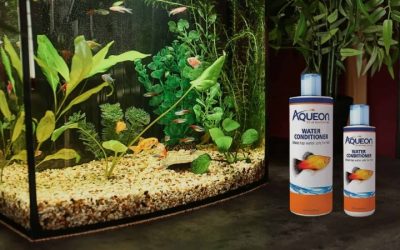
Aqueon Water Clarifier is a straightforward freshwater liquid dosed at 5 mL per 10 gallons, binding suspended dirt for filter capture or settling, at around $10 for 16 fl oz as of 09/2026. It is an easy, no-fuss option for typical new-tank or post-maintenance haze.
Aqueon recommends a partial water change after at least 24 hours to remove settled material, which is good practice with any clarifier. It sits between Clarity and Accu-Clear on dose and value, making it a reasonable middle choice for keepers who already use other Aqueon products.
Aqueon AquaPacs Clarifier – Premeasured Convenience
AquaPacs are the convenience pick, delivering one premeasured ball for up to 10 gallons at around $5 for a 4-pack as of 09/2026. The premeasured format removes any guesswork from dosing, which suits smaller tanks and keepers who dislike measuring liquids.
The trade-off is that dosing comes in fixed 10-gallon increments, so it is less flexible for odd tank sizes than a liquid you can measure precisely. For a small, standard tank it is a tidy, spill-free way to clump particle haze, still relying on the filter to finish the job.
Frequently Asked Questions
Clarifier questions focus on temporary extra cloudiness, bacterial blooms, ammonia, and whether the filter must run. Each answer leads with the direct call, then the mechanism or caveat that changes it for your particular tank and the type of cloudiness you have.
Why Did My Water Get Cloudier First?
Because flocculation clumps tiny particles into larger visible flocs before they are removed, so a brief increase in cloudiness right after dosing is normal. The clarifier is doing its job, aggregating a diffuse haze into masses big enough for the filter to catch or for gravity to settle out.
Give it the label’s time window, often an hour or two, and keep the filter running so the flocs get captured. If the water does not clear afterward, the cause may not be suspended particles at all, so reconsider whether you are dealing with a bloom or green water instead.
Will a Clarifier Fix a Bacterial Bloom?
Not reliably, because a white bacterial bloom is suspended microorganisms multiplying, which is a different problem from the inert dust and silt a clarifier is designed to clump. Dosing a clarifier at a bloom often disappoints, since the underlying cause is biological, not particulate.
A bloom usually resolves as the tank matures and the bacterial population stabilizes, helped by not overfeeding and by patience. Identify the cloudiness first, and reserve the clarifier for genuine particle haze rather than expecting it to clear a bloom it was not built to address.
Does a Clarifier Remove Ammonia?
No, a clarifier manages suspended particles and does not detoxify or remove ammonia, so it is the wrong tool for a water-quality emergency. Do not treat it as a purifier, because it clumps physical particles rather than neutralizing dissolved toxins like ammonia or nitrite.
If ammonia is your problem, use an ammonia remover or detoxifier and address the cause, not a clarifier. Clarifiers are particle-management chemistry only, so keep them for haze and rely on the right product and a working biofilter for actual water toxicity.
Do I Need to Keep the Filter Running?
Yes, because a clarifier only clumps particles and the filter is what physically removes the resulting flocs from the water. Seachem Clarity explicitly requires mechanical filtration, and running the filter throughout treatment is what actually clears the tank rather than just rearranging the haze.
Plan to rinse or clean the filter media afterward, since it will trap the captured flocs, and siphon any settled material during a follow-up water change. Without a running filter the clumped particles simply resettle, so a clarifier is not a solution for a filterless setup; in a bare or lightly filtered tank, add mechanical media or a fine polishing pad first so the flocs have somewhere to be captured.
Final Thoughts
The best aquarium water clarifier for cloudy water clumps fine suspended particles for your filter to capture, which is why Seachem Clarity leads for filtered tanks while Accu-Clear wins on per-gallon value and the Aqueon options add simplicity. Diagnose the cloudiness first, since a clarifier does nothing for a bacterial bloom, green water, or ammonia, keep the filter running to remove the flocs, and follow up with a water change.
As an Amazon Associate we earn from qualifying purchases at no extra cost to you. Prices and availability are accurate as of the date shown and are subject to change.
Ready to decide? Our #1 pick for 2026 is the Seachem Clarity.
Live price & availability on Amazon.
Related Reviews & Guides

Fish Gasping at Surface: Oxygen, Ammonia and Temperature
6 Best Big Fish Tanks With Stand 2026