Last Updated: October 4, 2026
Choosing between a sponge filter and an internal aquarium filter is less about finding the “best” filter and more about matching the filter to your room, fish, maintenance habits, and tolerance for noise. A sponge filter can be inexpensive, gentle, and highly useful for shrimp, fry, and bettas, but it needs an air pump and takes up visible space inside the tank. An internal aquarium filter usually creates stronger circulation and captures debris more visibly, though it may use more electricity and require more frequent media cleaning.
The right decision also depends on tank size. A small 5- or 10-gallon aquarium in a bedroom has different needs from a 55-gallon community tank in a busy family room. Below is a practical comparison for a home aquarium in 2026, including purchase price, upkeep, appearance, and five-year ownership costs.
As an Amazon Associate we earn from qualifying purchases at no extra cost to you.


Quick Verdict
Choose a sponge filter if you want gentle water movement, low operating costs, simple biological filtration, or a safe setup for shrimp, fry, and bettas. It is particularly appealing for small tanks and breeding tanks, provided you have room for an air pump outside the aquarium.
Choose an internal aquarium filter if you want stronger mechanical filtration, a tidier-looking setup, adjustable circulation, or a filter that can handle a larger fish load. Internal filters are often the more convenient all-purpose choice for community aquariums, turtles, and tanks where visible debris is a concern.
For many homes, the deciding factors are noise and appearance. Sponge filters are simple but can transmit air-pump vibration. Internal filters hide most equipment underwater but may produce a hum or water-flow sound.
Side by Side
| Factor | Sponge Filter | Internal Aquarium Filter |
|---|---|---|
| Comfort for fish | Very gentle flow; excellent for bettas, fry, shrimp, and weak swimmers. | Moderate to strong flow; often adjustable, but some fish may need a flow baffle. |
| Durability | Few moving parts; foam and air tubing eventually need replacement. | Durable pumps, but impellers, suction cups, and electrical parts can wear out. |
| Typical price range | About $7–$30 for the filter, plus roughly $10–$25 for an air pump and tubing. | About $16–$40 for many small and medium models; larger units can cost more. |
| Maintenance | Rinse the sponge in removed tank water; clean or replace airline parts as needed. | Rinse or replace mechanical media and clean the impeller and intake regularly. |
| Space needed | Uses tank space for a foam block and needs an external air pump. | Uses tank space for the housing, while the pump is contained inside the unit. |
| Look | Functional and visible; often softened by plants or aquarium décor. | Usually a cleaner profile, although the intake and power cord remain visible. |
| Resale and reuse | Easy to reuse in quarantine, breeding, and hospital tanks. | Useful for future tanks if the flow rate and mounting style are compatible. |
| Best for | Shrimp, fry, bettas, quarantine tanks, and low-cost nano aquariums. | Community tanks, larger aquariums, turtle tanks, and tanks needing stronger debris removal. |
| Power and noise | Filter itself has no motor; air-pump vibration can be noticeable. | One powered unit; hum and water noise vary by pump and water level. |
Where Sponge Filter Wins
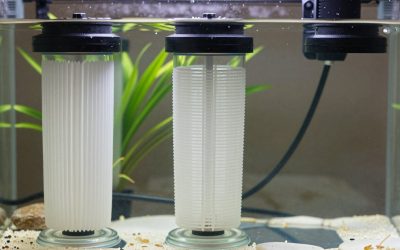
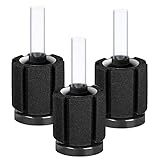
A sponge filter wins on gentleness and biological simplicity. Water is pulled through porous foam, where beneficial bacteria colonize and help process fish waste. The flow is usually mild, making this design a reliable choice for baby fish, shrimp, and bettas that may struggle with a powerful current.
It is also forgiving during maintenance. Instead of replacing all the foam at once, you can squeeze it gently in a bucket of removed aquarium water. That preserves more beneficial bacteria than rinsing it under chlorinated tap water. The foam also provides a grazing surface for shrimp and tiny fish.
Purchase cost is another advantage. A small AQUANEAT three-pack designed for tanks up to 10 gallons is listed for under $10, while a four-piece AQUANEAT model intended for tanks up to 60 gallons is listed for under $20. Those prices cover the sponge filters, not necessarily the air pump, airline, check valve, or rigid tubing needed to operate them. A complete setup commonly lands around $20–$55, depending on pump size and whether one pump runs multiple filters.
Sponge filters are especially useful when a tank needs to be temporarily repurposed. The same filter can move from a main tank to a quarantine tank, breeding tank, or hospital aquarium. There is no impeller to clog with floating plant pieces or fine debris, although the airlift tube can still need occasional cleaning.
The trade-offs are visible equipment and weaker mechanical filtration. Fine particles may remain suspended longer than they would with a powered filter and filter pad. The air pump can also create a buzzing sound, particularly when placed directly on a hard shelf or nightstand. A rubber mat and a little distance from the aquarium can reduce vibration.
Where Internal Aquarium Filter Wins
An internal aquarium filter is usually the more polished all-purpose option. It combines a submersible pump with mechanical and, in many cases, biological media. Water is drawn through an intake, passed through a pad or cartridge, and returned to the tank through an outlet. This circulation is better at collecting visible particles and distributing heat and dissolved oxygen throughout the aquarium.
Internal filters also make sense when the tank has a heavier waste load. Goldfish, turtles, messy eaters, and densely stocked community tanks can benefit from stronger turnover and a larger debris-catching surface. Match the filter’s stated flow to the aquarium size, but remember that advertised gallons-per-hour figures are not the same as guaranteed performance after media becomes dirty.
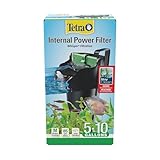
A compact option such as the Tetra Whisper 85 GPH Internal Power Filter is listed for under $20. That type of flow is more appropriate for a small aquarium than for a genuinely large tank, and the actual suitability depends on fish load and the manufacturer’s recommended tank range. At the other end, the Aulofee submersible model is listed for under $40 and is marketed for 50- to 150-gallon tanks, with features such as a fish guard and debris tray. Larger filters may be physically substantial, so check the available interior width and water depth before buying.
Internal filters are not automatically silent. The motor can hum, the outlet can splash when the water level drops, and suction cups may transfer vibration to the glass. Keeping the return outlet just below the surface, maintaining the correct water level, and cleaning the impeller can make a noticeable difference.
Mechanical media also requires disciplined care. Rinse reusable pads in removed tank water, and replace disposable cartridges when they are physically worn rather than replacing every piece of biological media on a rigid schedule. Replacing all media at once can remove too much of the established bacterial colony.
Cost Over 5 Years
A sponge filter can have the lower long-term cost, but the complete system includes more than the foam. A reasonable five-year estimate for a small tank is:
- Initial sponge setup: $20–$55 for one or more sponge filters, an air pump, tubing, and a check valve.
- Replacement foam and tubing: approximately $10–$35 over five years, depending on wear and stocking level.
- Electricity: a 2–5 watt air pump running continuously uses about 88–219 kilowatt-hours over five years. At $0.15 per kilowatt-hour, that is roughly $13–$33.
- Estimated five-year total: about $43–$123.
An internal filter may cost more upfront but does not require a separate air pump:
- Initial filter: approximately $16–$40 for many small and medium models, with larger units costing more.
- Replacement media and parts: about $15–$60 over five years, depending on whether the filter uses washable foam, cartridges, or specialty media.
- Electricity: a 5–20 watt filter uses about 219–876 kilowatt-hours over five years. At $0.15 per kilowatt-hour, that is approximately $33–$131.
- Estimated five-year total: about $64–$231.
These are planning ranges, not guarantees. Electricity rates, filter wattage, stocking levels, and media replacement habits can change the total substantially. A larger internal filter may still be the better value if it prevents repeated equipment upgrades.
Which One for Your Home
Small apartment
For a 5- to 10-gallon bedroom or living-room aquarium, a small sponge filter is often the practical choice. It has low energy use and gentle flow, but place the air pump on a vibration-dampening pad. If the aquarium is a prominent piece of décor and you dislike visible foam, choose a compact internal filter with adjustable flow instead.
Family with kids or pets
An internal filter can be easier to contain because the pump is inside the aquarium and there are fewer external components for curious hands or pets to disturb. Use a model with a protected intake, secure cord routing, and a lid. For a turtle or particularly messy tank, a larger internal unit with a debris tray can be more convenient than a sponge alone.
Rental
Both types avoid permanent installation, but a sponge filter may be easier to replace inexpensively if equipment is damaged during a move. Protect the floor and nearby furniture from water, secure the air tubing, and use a check valve to help prevent back-siphoning during a power outage.
Long-term home
In a permanent home, select based on the aquarium rather than portability. A sponge filter is ideal for a dedicated shrimp, fry, betta, or quarantine setup. For a larger display aquarium, an internal filter generally offers better circulation and a cleaner visual presentation. Some experienced owners use both: the internal filter handles mechanical filtration while the sponge provides gentle biological backup.
FAQ
Is a sponge filter better than an internal filter for a betta?
Usually, yes, if the sponge filter produces a gentle current. Bettas can also use an internal filter when its flow is adjustable or softened with a baffle. The important issue is water movement, not the filter category alone.
Can a sponge filter replace an air pump?
No. A standard sponge filter needs an air pump, airline tubing, and usually a check valve. The pump pushes air through the filter, creating the lift that draws aquarium water through the foam.
Which filter is easier to clean?
A sponge filter is generally simpler: remove it and squeeze it in old tank water. An internal filter has more parts, including an impeller and intake, but its media often captures debris more effectively. Neither filter should be cleaned with soap or chlorinated tap water.
Can I use both a sponge filter and an internal filter?
Yes. Using both can add biological capacity and provide backup circulation. Make sure the combined flow is comfortable for the fish, and avoid placing equipment so close together that one filter simply pulls in the other’s output.
Ready to decide? Our #1 pick for 2026 is the Comfort for fish.
Live price & availability on Amazon.
Related Reviews & Guides



All in One Saltwater Tank Setup Checklist: Step by Step
Red Root Floater Care: Color, Flow and Cover