Last Updated: October 21, 2026
The mistake with freshwater sumps is assuming any reef sump will do, when compatibility is the manufacturer’s call, not yours. The best aquarium sump for freshwater tanks is one the maker explicitly lists for freshwater, sized to your display range, with a layout that suits media, a heater, probes, and a return.
As an Amazon Associate we earn from qualifying purchases.
By David Nguyen
What a Freshwater Sump Actually Needs
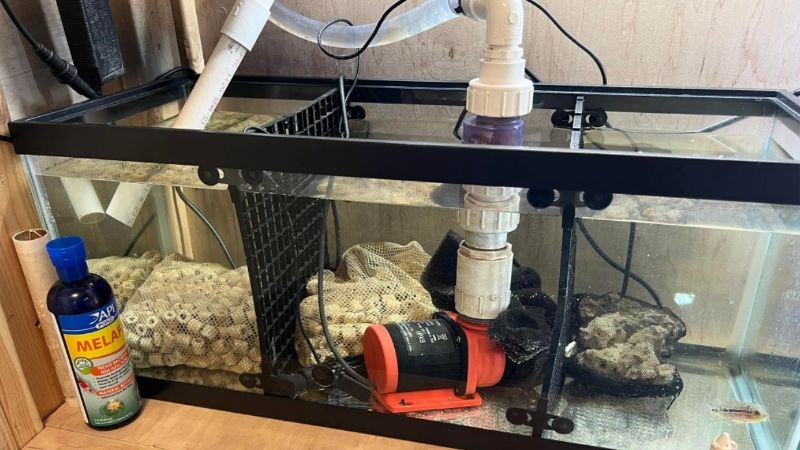
Freshwater compatibility comes first and must be maker-confirmed, then tank range and layout follow. A freshwater sump can run mechanical and biological media, a heater, probes, and a return pump; a protein skimmer chamber is not required, so judge a unit on stated freshwater use and fit above all.
Confirm Freshwater Use From the Maker
Compatibility must be stated, not inferred. The Bashsea Bio-Fuge line is listed for fresh and salt use, and the SS-30 is listed for fresh, salt, and reef, so each carries explicit freshwater wording, which is the gate a freshwater sump has to pass before any other feature matters before you weigh anything else.
Do not treat a reef sump as freshwater-safe by default. Materials and intended use are the manufacturer’s decision, so a saltwater-marketed unit without freshwater wording should be considered unconfirmed, since the safe assumption is that only stated compatibility counts, not a guess based on appearance.
Match Tank Range to Your Display
Freshwater or not, the maker range must cover your tank. The Bio-Fuge 24-10-14 is rated up to 75 gallons, the 30-10-14 up to 100, the 30-14-16 up to 125, and the SS-30 up to 120, so match your display to a stated range rather than to sump volume, which is a separate figure entirely from the display rating here.
A wider footprint often accompanies a higher range, but not proportionally. Stepping from the 30-10-14 to the 30-14-16 adds about 40% floor area while the maker upper range rises from 100 to 125 gallons, so read range and footprint as separate figures rather than assuming one scales cleanly with the other.
Plan the Layout Without a Skimmer
A freshwater sump frees the space a skimmer would use. You can stage mechanical media, biological media, a heater, and probes instead, so the useful question is main-section and chamber room for that gear rather than whether a skimmer chamber is present, which freshwater setups do not require.
Footprints scale with the range here: 240 square inches for the Bio-Fuge 24, 300 for the 30-10, 420 for the 30-14, and 450 for the SS-30. Match that floor area to the media and equipment you plan to run, and confirm the stand interior fits, since a slim 10-inch-wide body limits equipment width.
Fit the Cabinet and Budget the Steps
Footprint and price both step up across the range, so plan for the cabinet you have. The Bio-Fuge widths run from 10 to 14 inches, and a 10-inch-deep body slides into narrower stands but restricts equipment, so measure the interior and door before choosing a wider, deeper unit for your system.
Current price steps across the family run about plus $65, plus $60, then plus $90 as capacity rises, dated figures rather than permanent gaps. Freshwater and reef gear both see markdowns during major sale events, so timing can trim the step, but let confirmed freshwater use and fit lead the decision here.
Best Freshwater Aquarium Sumps
There is no universal best freshwater sump, since display size and cabinet depth differ. The four below are all maker-confirmed for freshwater, so each is eligible on the primary axis, and the right pick depends on your tank range, the equipment you will stage, and the width your stand can accept.
| Product | Best For | Key Spec | Watch Out For |
|---|---|---|---|
| Bashsea Bio-Fuge 24-10-14 | Narrow cabinets on a smaller tank | Fresh + salt; up to 75 gal; 24x10x14; 240 in2 | 10-inch width limits equipment room |
| Bashsea Bio-Fuge 30-10-14 | Slim body on a mid-size tank | Fresh + salt; up to 100 gal; 30x10x14; 300 in2 | Slim depth still limits chamber width |
| Bashsea Bio-Fuge 30-14-16 | Higher range with deeper chambers | Fresh + salt; up to 125 gal; 30x14x16; 420 in2 | Needs a deeper cabinet than the slim models |
| Bashsea SS-30 | Widest layout, reef-capable too | Fresh/salt/reef; up to 120 gal; 30x15x16; 450 in2 | Highest price; widest footprint here |
Bashsea Bio-Fuge 24-10-14 – Narrow-Cabinet Pick
This Bio-Fuge suits a smaller freshwater tank on a narrow stand. Listed for fresh and salt use up to 75 gallons, it measures 24 by 10 by 14 inches for about 240 square inches with a 4-to-8-inch operating depth, and runs around $325 as of 09/2026 at current retail pricing for the unit.
The strength is maker-confirmed freshwater use in a slim 10-inch-deep body that slides into cabinets a wider sump cannot. The trade-off is that same 10-inch width, which limits how much equipment you can arrange side by side, so it suits a lighter freshwater setup more than a heavily stocked one.
Bashsea Bio-Fuge 30-10-14 – Slim Mid-Size
The 30-10-14 fits a mid-size freshwater tank where cabinet depth is tight. Listed for fresh and salt up to 100 gallons, it measures 30 by 10 by 14 inches for about 300 square inches, and runs around $400 as of 09/2026, a modest step up in range from the slimmer 24-inch model here for buyers right now.
Its strength is a longer footprint that adds staging length while keeping the slim 10-inch depth for narrow stands. The catch is the same slim width, which still limits chamber room, so plan media and equipment around a narrow body rather than expecting to fit a wide skimmer-style layout you do not need anyway.
Bashsea Bio-Fuge 30-14-16 – Higher Range, Deeper Chambers
The 30-14-16 suits a larger freshwater tank wanting more chamber room. Listed for fresh and salt up to 125 gallons, it measures 30 by 14 by 16 inches for about 420 square inches with a 5-to-9-inch operating depth, and runs around $450 as of 09/2026 at current retail pricing today for this larger unit.
The strength is a higher tank range and deeper chambers, roughly 40% more floor than the 30-10-14 while the upper range rises to 125 gallons, giving real staging room. The trade-off is that it needs a deeper cabinet than the slim models, so confirm your stand accepts the 14-inch depth before ordering.
Bashsea SS-30 – Widest, Reef-Capable Layout
The SS-30 fits a freshwater keeper who may later run reef or wants the widest layout. Listed for fresh, salt, and reef up to 120 gallons, it measures 30 by 15 by 16 inches for about 450 square inches, the largest floor area here, and it runs around $500 as of 09/2026 at current retail.
Its strength is the most staging room plus reef capability if plans change, backed by confirmed freshwater use. The trade-offs are price and footprint: it is the costliest here and needs the widest stand, so it earns its spot when you want maximum layout room or the option to convert later.
Frequently Asked Questions
Freshwater keepers ask the same core questions before adding a sump. Each answer opens with the direct call, then the condition that changes it, so you can decide for your own tank and cabinet rather than assuming a saltwater sump transfers or that a skimmer chamber is something you must have.
Can I Use a Reef Sump on Freshwater?
Only if the maker confirms freshwater use. Several Bashsea models list fresh, salt, and reef compatibility, which makes them eligible, but a reef-only sump without freshwater wording is unconfirmed on this axis, so do not assume it is safe simply because it holds water and looks similar to a freshwater unit.
Compatibility is a materials and intended-use decision the manufacturer makes. Where a listing does not state freshwater use, treat it as unverified rather than inferring it, since the responsible approach is to rely on explicit maker wording instead of a guess that could affect the tank you are trying to protect.
Do I Need a Protein Skimmer Chamber?
No. A protein skimmer is a saltwater tool, so a freshwater sump does not require that chamber. You can use the space for mechanical media, biological media, a heater, and probes instead, which means the useful layout question is media and equipment room rather than skimmer provision on a freshwater build.
That frees you to choose on fit and staging space. Judge a freshwater sump by its main-section area and chamber room for the gear you actually run, and treat the absence of a skimmer chamber as normal rather than a shortcoming, since the freshwater workflow simply does not call for one at all in practice.
How Do I Size a Freshwater Sump?
Match the maker tank range to your display, then confirm cabinet fit. The Bio-Fuge line spans up to 75, 100, and 125 gallons across its several models, so pick the range that covers your tank rather than sizing by sump volume, which is a separate figure from the rated display range when you compare these models.
Then read footprint and depth against your stand. A slim 10-inch body fits narrow cabinets but limits equipment, while a 14- or 15-inch depth needs a deeper stand, so size the floor area to your media plan and confirm the interior and door before committing to a larger, deeper model.
Is a Bigger Freshwater Sump Better?
Not automatically. A larger footprint like the SS-30’s 450 square inches adds staging room, but the roughly 40% more floor from the 30-10 to the 30-14 buys arranging space, not a proportional filtration jump, so size to your media and equipment rather than to the biggest available shell.
Fit and reserve still gate the choice. A bigger sump you cannot fit through the cabinet door or fill usefully is not an upgrade, so confirm the stand interior, plan the waterline for drain-back at power-off, and choose the capacity that matches what you will actually run inside it inside the sump body itself.
Final Thoughts
Start with maker-confirmed freshwater use, then match the tank range, plan a skimmer-free layout for your media, and fit the footprint to your stand. The best aquarium sump for freshwater tanks is whichever verified freshwater-listed model matches your display and cabinet, so read the wording and measure first.
Fish Tank Filter
How to Prime a Canister Aquarium Filter (2026): Step-by-Step