Last Updated: October 4, 2026
The best aquarium smart plug with app control pairs remote scheduling with an honest electrical rating and sane wet-location handling. This guide compares four current plugs on amperage, certification and app features, and stresses that a smart plug is not a heater controller and no plug is submersible.
As an Amazon Associate we earn from qualifying purchases.
By David Nguyen
Quick answer: For most people in 2026, the best aquarium smart plug with app control is the Kasa EP25P4 — our #1 rated choice. See the full ranked comparison, alternatives and buying advice below.
How to Choose Aquarium Smart Plugs
Choosing an aquarium smart plug means respecting electricity and water: verify the amperage and wattage against your load, use the scheduling features, confirm 2.4-gigahertz Wi-Fi compatibility, and treat water exposure as a separate safety issue the plug does not solve.
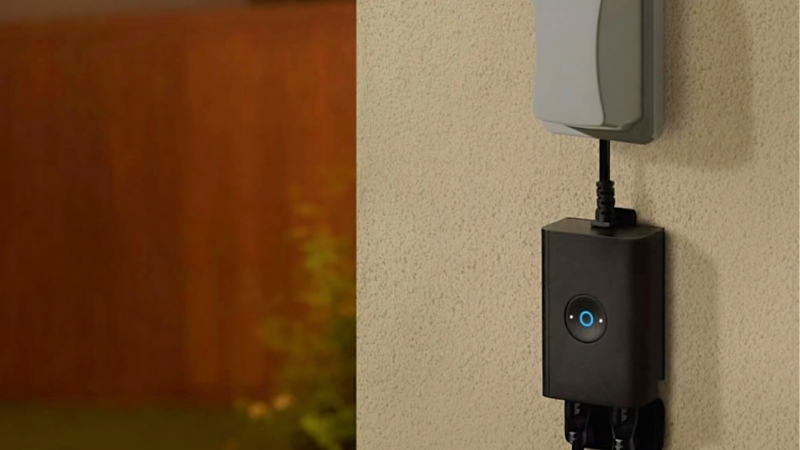
Verify amps and watts
Verify the plug’s amperage and wattage against what you are running. The Kasa EP25P4 is rated 15 amps and 1800 watts at 100 to 120 volts, which covers typical aquarium lights and pumps, but you must check the total load stays within that rating rather than assuming any plug handles anything.
The 15-amp times 120-volt figure gives 1800 watts as a maximum, but do not apply a resistive calculation to every load without the manufacturer’s rating, since motors and heaters behave differently. Add up your devices’ draw and keep it comfortably under the plug’s stated limit for safe, reliable operation.
Use schedules
Use the scheduling features, since automating on-off times is the main reason to buy a smart plug for a tank. The Kasa EP25P4 offers schedules, timers and energy monitoring, letting you run lights on a consistent daily cycle without manually switching them, which plants and fish both benefit from.
Consistent light timing reduces algae and supports healthy plant growth, so set a repeatable schedule and let the plug hold it. Energy monitoring, where offered, also flags a device drawing more than expected. Automating the routine is where a smart plug earns its place over a simple manual switch.
Check 2.4GHz compatibility
Check that your Wi-Fi offers a 2.4-gigahertz band, since these plugs, including the Kasa and Wyze units, connect on 2.4 gigahertz rather than 5 gigahertz. Many modern routers combine both bands, but some setups need the 2.4-gigahertz band enabled or separated for the plug to pair correctly.
If a plug will not connect, the 5-gigahertz-only network is a common culprit, so confirm the band before blaming the device. The longer range of 2.4 gigahertz also suits a plug behind a tank stand. Sorting out the band up front avoids the most frequent setup frustration with smart plugs.
Treat water exposure separately
Treat water exposure as its own safety issue, because a smart plug is an electrical device that must stay dry. An IP64 rating, like the Wyze Outdoor plug’s, means splash resistance, not submersibility, so no aquarium plug should ever sit where it could be submerged or soaked in water.
Do not let an outdoor plug’s ingress rating mislead you about an indoor model, which has no such protection. Keep receptacles dry, mount plugs above possible splash, and use drip loops on cords. The plug schedules your equipment; keeping water away from it is entirely on you as the keeper.
Top Picks
These four cover the best aquarium smart plug with app control, from a fully certified scheduling plug to budget and outdoor options. Compare them on amperage, certification and price per plug, remembering that a smart plug switches power and is not a thermostat for a heater.
| Product | Best For | Key Spec | Watch Out For |
|---|---|---|---|
| Kasa EP25P4 | Best Overall | 15A/1800W; UL; 2.4GHz; schedules + energy monitor | Indoor, keep dry; ~under $80/4 (~under $20 each) |
| Wyze Plug | Budget Indoor | 15A; ETL; 2.4GHz; indoor only | No outdoor rating; ~under $30/2 (~under $20 each) |
| BN-LINK U152T | Cheapest Per Plug | 15A; ETL; 4-pack | Basic, no energy monitor; ~under $30/4 (~under $10 each) |
| Wyze Plug Outdoor | Splash-Rated | 15A; IP64 outdoor/splash | Not submersible; ~under $30 (09/2026) |
Kasa EP25: Best Overall
The Kasa EP25P4 has the cleanest exact rating and features: 15 amps and 1800 watts at 100 to 120 volts, UL certification, 2.4-gigahertz app control, schedules, timers and energy monitoring, at about $80 for a four-pack, roughly $20 per plug. The full certification and energy monitoring set it apart.
For aquarium use, UL listing and a clear electrical rating matter more than a low price, since these plugs run pumps and lights unattended. Energy monitoring also helps spot a failing device. As an indoor plug it must stay dry, but for documented, certified app scheduling it is the standout here.
Wyze Plug
The Wyze Plug is the budget indoor option at about $30 for a two-pack, roughly $15 per plug, rated 15 amps with ETL certification and 2.4-gigahertz app control. It covers basic scheduling and remote switching for aquarium lights and pumps at a lower cost than the Kasa four-pack.
It is indoor only, so it carries no ingress rating and must not inherit the outdoor model’s IP64; keep it well away from water. For a keeper wanting affordable app control without energy monitoring, it does the core job. Just respect its indoor-only nature and use drip loops on the cords.
BN-LINK U152T
The BN-LINK U152T is the cheapest per plug at about $25 for a four-pack, roughly $5 each, rated 15 amps with ETL certification. For outfitting several outlets on a budget, it delivers basic app scheduling at the lowest per-plug cost in this lineup, which adds up across a multi-tank setup.
It is a no-frills plug without the Kasa’s energy monitoring, so you get scheduling and remote control and little else. As an indoor device, keep it dry and use drip loops. When you need many plugs and want to spend the least per outlet, it is the value pick, with the usual dry-location caveat.
Wyze Outdoor
The Wyze Plug Outdoor is the splash-rated option at about $30, rated 15 amps with an IP64 ingress rating for outdoor and splash resistance. For a pond pump or a plug near a splashy sump, its weather resistance is a genuine advantage over indoor-only plugs that have no such protection at all.
IP64 means splash-resistant, not submersible, so it still must never go underwater. Do not read its rating as a license to place it carelessly near a tank; keep it dry and elevated. For semi-exposed spots it adds a margin of safety, but the basic rule of keeping electrical gear dry still applies.
Frequently Asked Questions
These are the questions keepers ask most about aquarium smart plugs, from whether 15 amps is enough to whether they can control a heater. Each answer gives a direct response, then the safety caveat that matters when combining electricity with a water tank.
Is 15A enough for lights?
Yes, comfortably. Aquarium LED lights draw far less than a 15-amp, 1800-watt plug like the Kasa can handle, so a single plug easily runs a light or several. Even a bank of lights and small pumps stays well within that rating for a typical home aquarium setup at home.
Still, add up the actual draw of everything on the plug and keep it under the rating, especially if you also run pumps. Do not assume 1800 watts applies to every load, since motors differ from resistive devices. For lights alone, 15 amps is plenty, with margin to spare for a normal tank.
Can it control a heater?
It can switch a heater’s power, but a smart plug is not a thermostat, so do not use it to regulate temperature. The heater’s own thermostat controls the water temperature; the plug only turns the outlet on or off, which is a different and much cruder kind of control entirely.
Using a plug to cycle a heater on a schedule can cause dangerous temperature swings, so leave heating to the heater’s thermostat. Confirm the heater’s wattage stays within the plug’s rating if you plug it in at all. For temperature control, use a dedicated controller, not a scheduling smart plug.
Will it work on 5GHz?
No, these plugs use 2.4-gigahertz Wi-Fi, not 5 gigahertz, so you need a 2.4-gigahertz band available to pair them. Most routers broadcast both bands, but a 5-gigahertz-only network, or one that hides the 2.4-gigahertz band, will prevent the plug from connecting during setup.
If pairing fails, check that 2.4 gigahertz is enabled before assuming the plug is faulty, since this is the most common issue. The 2.4-gigahertz band also reaches farther, which helps behind a stand. Sorting the band out first makes setup smooth for the Kasa, Wyze and similar plugs.
Do cords still need drip loops?
Absolutely. A drip loop, where the cord dips below the outlet before rising to it, lets water run off rather than travel into the receptacle, and it is essential regardless of how smart the plug is. Smart features do nothing to stop water tracking down a cord into an outlet.
Keep receptacles dry and elevated, and never rely on a plug’s ingress rating in place of a drip loop, since even an IP64 outdoor plug is only splash-resistant. Basic wet-location safety around a tank is unchanged by app control. Drip loops and dry outlets remain the keeper’s responsibility with any plug.
Final Thoughts
The best aquarium smart plug with app control is a certified, correctly rated plug you keep dry: the Kasa EP25P4 leads with its 15-amp UL rating, scheduling and energy monitoring, with Wyze and BN-LINK for budget indoor use and the Wyze Outdoor for splash-prone spots. Never use a plug as a thermostat, remember IP64 is not submersible, use drip loops, and confirm current prices.
As an Amazon Associate we earn from qualifying purchases at no extra cost to you. Prices and availability are accurate as of the date shown and are subject to change.
Ready to decide? Our #1 pick for 2026 is the Kasa EP25P4.
Live price & availability on Amazon.
Related Reviews & Guides

Aquarium Fish Net Breeder Box
Best Fake Motion Aquarium Lamp: A Calming Decor Buyer Guide