Last Updated: October 4, 2026
Invertebrate is a broad label covering animals that may attack each other, so compatibility comes first. The best aquarium for snails and crustaceans is chosen around species that actually get along, with enough floor space and a secure lid, because some crayfish and crabs will injure or eat snails no matter the tank size.
As an Amazon Associate we earn from qualifying purchases.
By David Nguyen
Do Not Treat All Invertebrates as Compatible
Snails, shrimp and crustaceans are not one peaceful group, so the tank is chosen around who can safely share it. What matters is understanding snails, shrimp, and the predatory risk of crayfish and crabs, then providing floor space and hides. These four prevent the common mistake of mixing incompatible inverts.
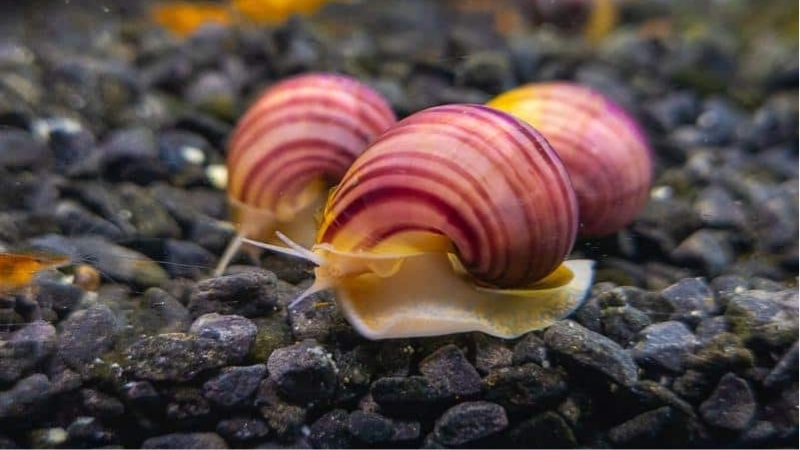
Snails
Freshwater snails are the gentle baseline, with a habitat minimum around 5-plus gallons and broad guidance of roughly one to two snails per 5 gallons (Petco, 2026). They tolerate a wide range, about 65 to 82°F and pH 7.0 to 8.0, which makes them easy, peaceful inhabitants of a community tank.
Treat the one-to-two-snails-per-five-gallons figure as a rough guide, not a universal law, since species and bioload vary. Snails are excellent, low-conflict inverts, but their peacefulness is exactly why tankmates matter: they cannot defend themselves against a predatory crustacean, which the next criteria address.
Shrimp
Dwarf shrimp are generally peaceful and coexist well with snails, grazing on biofilm and staying out of trouble. They share the calm end of the invertebrate spectrum with snails, making a snail-and-shrimp tank a classic, harmonious combination that suits nano and small community setups.
Shrimp do need intake protection and stable water, but they pose no threat to snails. This peaceful pairing is the safe core of an invertebrate tank, and it is where most keepers should start before considering larger or more aggressive crustaceans that change the compatibility picture entirely.
Crayfish and Crabs
Here is the compatibility gate: many crayfish and crabs are not peaceful cleanup crew and can attack snails and shrimp. Petco warns against housing aggressive crayfish or crabs with snails (Petco, 2026), because their claws and predatory behavior can injure or kill slower, defenseless tankmates.
Do not assume all crustaceans are gentle; some are active predators. If you want a crayfish or certain crabs, plan to house them separately or only with carefully chosen, robust tankmates. Species-specific compatibility research is essential before combining any crustacean with snails, since the risk is real and often fatal.
Floor Space and Hides
Bottom-dwelling inverts use floor area, so base footprint and hiding spots matter more than height. More floor space and plenty of hides reduce conflict and give animals room to forage and retreat, which is why a wide, low tank with structure suits an invertebrate community better than a tall, bare one.
Provide caves, plants and hardscape so animals can establish space and avoid each other, easing tension even among compatible species. Choose a tank with generous floor area and furnish it well, since a busy bottom with hides supports more inverts more peacefully than open, featureless glass.
Best Aquarium Sizes for Inverts
These three tanks are separated by floor space, matched to peaceful snail-and-shrimp communities of different scales, not to a single overall winner, since the category is too broad and compatibility rules everything. Furnish with hides and confirm current pricing and stand rating before buying.
| Product | Best For | Key Spec | Watch Out For |
|---|---|---|---|
| Aqueon Standard 10 | Snails and small shrimp | 20.25×10.5 in; ~213 in² | Modest floor for big colony |
| Aqueon 20 Long | Larger shrimp/snail display | 30.25×12.5 in; ~378 in² | Heavier; needs stand |
| Aqueon 40 Breeder | Large bottom-area setup | 36.375×18.25 in; ~664 in² | Heavy; ~455 lb filled |
Aqueon Standard 10
The Aqueon Standard 10 suits a peaceful snail-and-small-shrimp community, a 20.25 by 10.5 by 12.125-inch tank offering about 213 square inches of floor at around $35 at Petco as of 09/2026 (Aqueon, 2026). Its low cost leaves budget for plants, hides and a shrimp-safe filter.
It is an affordable, flexible base for a calm invertebrate tank at a stable volume. The floor is modest, so keep the colony sized to it and furnish well. For a first snail-and-shrimp setup, it delivers a workable footprint and stability without a large outlay, provided tankmates stay peaceful.
Aqueon 20 Long
The Aqueon 20 Long is the larger display option, a 30.25 by 12.5 by 12.75-inch tank with about 378 square inches of floor, nearly 78% more than the 10, at around $70 at Petco as of 09/2026 (Aqueon, 2026). The extra floor suits a bigger snail-and-shrimp community with more hides.
Its wider footprint gives bottom-dwellers more foraging space and holds water steadier than the 10. It is heavier at about 225 pounds filled, so it needs a stand. For a more substantial peaceful invertebrate display with room for plants and structure, the 20 long is the stronger middle choice.
Aqueon 40 Breeder
The Aqueon 40 Breeder is the large bottom-area setup, a 36.375 by 18.25 by 16.94-inch tank with about 664 square inches of floor at around $150 at Petco as of 09/2026 (Aqueon, 2026). Its wide, low shape maximizes the floor that bottom-dwelling inverts actually use.
That generous footprint suits a large peaceful community with abundant hides and planting. It is heavy at about 455 pounds filled and needs a solid stand. For keepers wanting the most floor space for snails and compatible shrimp, the breeder’s dimensions make it the roomiest choice here.
Frequently Asked Questions
Invert keepers ask the same things: whether snails and crayfish can share a tank, how many snails per gallon, whether all crustaceans are peaceful, what size suits snails and shrimp, and whether inverts need a lid. Short answers first, then the caveats.
Can I keep snails and crayfish together?
Usually not safely. Petco warns against housing aggressive crayfish or crabs with snails, because their claws and predatory behavior can injure or kill them (Petco, 2026). Many crayfish will attack slower, defenseless snails, so this is a compatibility problem no tank size solves.
If you want a crayfish, house it separately or research the specific species’ temperament very carefully before combining it with anything vulnerable. The safe default is to keep predatory crustaceans apart from snails and shrimp, since the risk of injury or death is high and often unavoidable in a shared tank.
How many snails per gallon?
Broad guidance suggests roughly one to two snails per 5 gallons (Petco, 2026), but treat that as a rough starting point rather than a fixed rule. Species size, waste output and the rest of your stocking all affect how many a tank can support without straining water quality.
Watch your water parameters as the population grows, since snails add to the bioload and some breed readily. Adjust stocking to what your filtration and maintenance can handle rather than filling to a formula, and understock if you are unsure, since a lighter load is easier to keep stable.
Are all crustaceans peaceful?
No. Dwarf shrimp are generally peaceful, but many crayfish and some crabs are active predators that can harm snails and shrimp. Assuming all crustaceans are a gentle cleanup crew is a common and costly mistake, since temperament varies enormously across the group.
Research each species before adding it, and separate predatory crustaceans from vulnerable tankmates. The peaceful snail-and-shrimp core is safe to combine, but adding a crayfish or aggressive crab changes everything, so verify compatibility rather than trusting the broad invertebrate label.
What tank size for snails and shrimp?
A peaceful snail-and-shrimp community works from about 5 to 10 gallons upward, with larger tanks holding water steadier and supporting bigger colonies. A 10-gallon is a comfortable, stable start, while a 20 long or 40 breeder gives more floor for a larger display with hides.
Match the size to how many animals you want and how stable you can keep the water, since small tanks swing faster. Furnish generously with plants and hides whatever the size, as floor space and cover matter as much as raw volume for bottom-dwelling inverts.
Do inverts need a lid?
Often yes, because some snails and many crustaceans can climb or escape. A secure lid keeps animals in the tank and reduces losses, which matters especially for crabs and certain snails that will leave the water. Check your species’ tendencies and cover the tank accordingly.
A lid also reduces evaporation and adds a little safety around the tank. For climbing or semi-terrestrial inverts, a tight-fitting cover is essential rather than optional, so confirm what your chosen animals do before assuming an open top is fine for an invertebrate setup.
Final Thoughts
The best aquarium for snails and crustaceans is built around compatible species first, with floor space and a secure lid, since some crayfish and crabs will attack snails regardless of tank size. The Aqueon 10 suits a small peaceful community, the 20 long scales it up, and the 40 breeder maximizes floor. Verify compatibility, furnish with hides, and never assume all inverts get along.
As an Amazon Associate we earn from qualifying purchases at no extra cost to you. Prices and availability are accurate as of the date shown and are subject to change.

Best Fish for Nano Aquarium: Options Compared by Numbers

11 Best Fish Food Pellets