Last Updated: October 4, 2026
- Step one: turn the shop name into an identity
- Build the bottom map before filling the tank
- Choose a social plan, then watch the fish invalidate it
- Match captive water to species and source
- Acclimation and quarantine deserve extra patience
- Feed for small mouths and bottom-level access
- Breeding changes the welfare equation
- Troubleshooting by category
- Sources
- Top Pick: Apistogramma Cacatuoides Mastery – Care and Breeding Essentials : A practical guide to healthy fish, stable tanks and reliable fry raising
- Best Value: Apistogramma Master Guide: Ecology, Behaviour, Care and Breeding of South American Dwarf Cichlids
- Premium Choice: Apistogramma Cichlids: The Complete Care, Breeding, & Info Guide
Apistogramma Care: Territory, Water and Species Choice
“Apistogramma care” cannot be reduced to one temperature, one pH and one social arrangement. Apistogramma is a diverse South American dwarf-cichlid genus, and a captive-bred A. cacatuoides from moderate tap water is not interchangeable with a wild-caught blackwater species. The useful question is therefore not “What does an apisto need?” but “Which species, origin and breeding goal am I planning for?” Answer that before selecting the aquarium or companions.
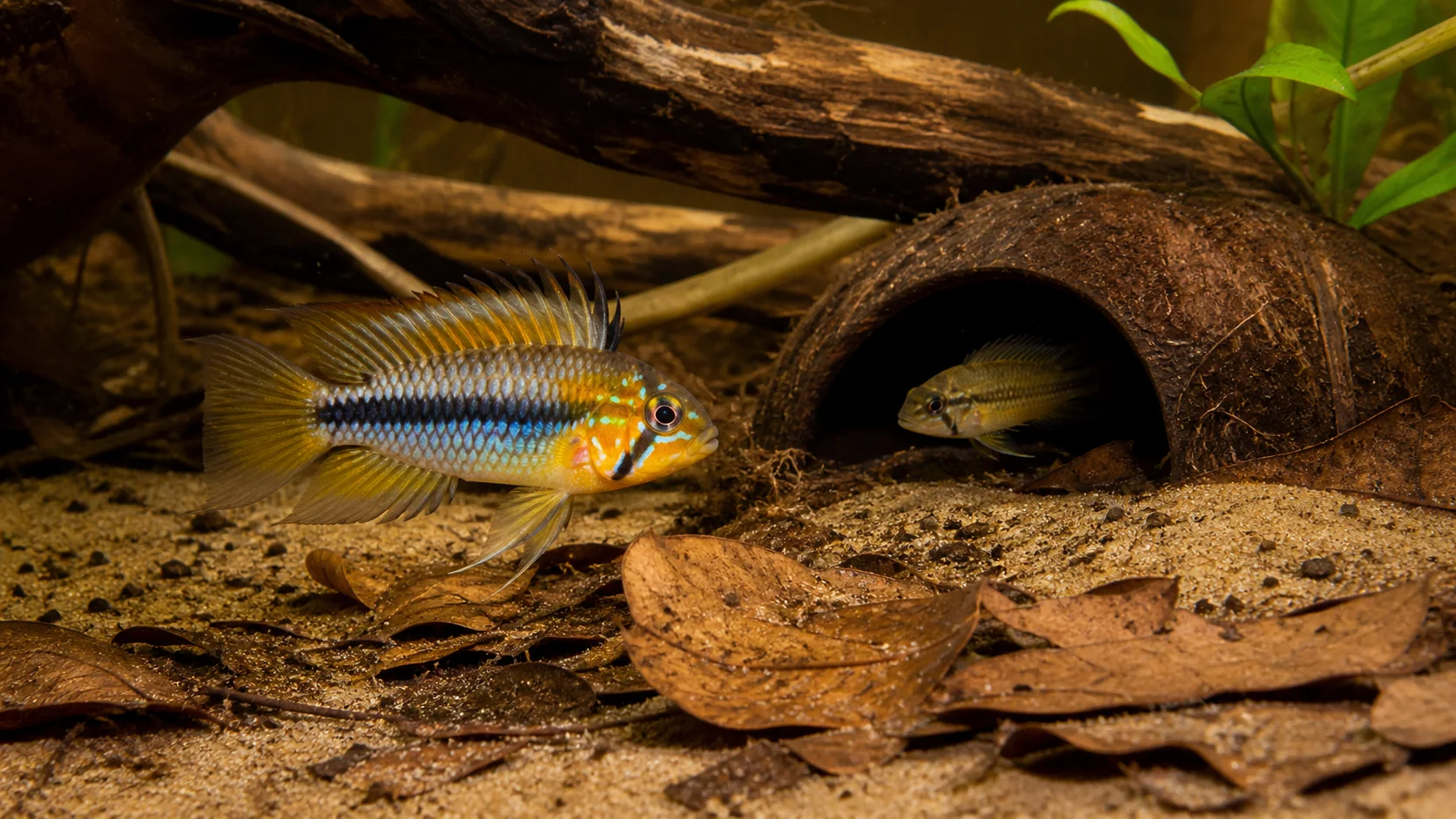
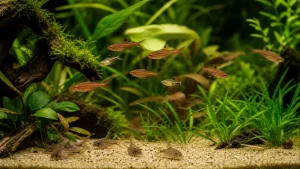
Editorial illustration; not evidence for species identification.
As an Amazon Associate we earn from qualifying purchases at no extra cost to you.


Step one: turn the shop name into an identity
Ask for the scientific name, collection or breeding origin, sex and adult size. Color morphs such as “double red” do not replace a species name, while immature fish can be difficult to sex. Check the name against the FishBase Apistogramma species list and the GBIF Apistogramma search. Those databases establish taxonomy and distribution; they do not tell you that every fish across a broad occurrence map should be kept at the same captive parameter.
Genus diversity creates meaningful differences. Some commonly bred species tolerate a moderate chemistry range after careful acclimation. Others are associated with very soft, acidic waters and may arrive thin or stressed after export. Some form pair-like bonds; in other species a male may range across several female territories. Responsible planning follows the particular species profile and breeder history, not the most convenient generic chart.
If a seller cannot identify the fish, postpone purchase. A photograph submitted to a reputable cichlid specialist may narrow the possibilities, but hybrids and locality forms can remain uncertain. In that case use conservative, stable husbandry and avoid breeding or distributing offspring under a confident species label.
Build the bottom map before filling the tank
Apistogramma live close to the substrate and structure. Litres alone poorly describe their usable space: a tall aquarium with one cave may provide less territory than a longer tank broken into several visual compartments. Create a floor plan with wood, leaf litter from aquarium-safe sources, plants, and caves whose entrances face different directions. Each fish should be able to leave another’s sight without being trapped in a dead end.
Fine sand supports natural picking and sifting behavior and is gentler than sharp gravel. Keep open feeding patches so food does not disappear entirely into leaves. A sponge prefilter protects small fry and reduces intake risk. Flow should provide oxygen and filtration without blasting the lower territories. Dimmer areas and floating cover can increase confidence, but never seal off surface gas exchange.
A carefully arranged low-tech planted tank can supply sight breaks, although plants do not compensate for an undersized footprint. Moveable caves are useful, yet rearranging territory after aggression starts can merely reset conflict. The better safeguard is a spare cycled tank or divider ready before fish are combined.
Choose a social plan, then watch the fish invalidate it
A single specimen avoids mating conflict and can still display normal foraging and environmental interaction. A male-female pair may work in a spacious, structured aquarium, but breeding can transform a previously tolerant female into an intense cave defender or provoke male harassment outside spawning. A harem arrangement is appropriate only for species known to use it and only when each female has a genuinely separate territory.
Do not buy “two females per male” as an automatic formula. Sexing errors, individual temperament and footprint change the result. Inspect daily for a fish confined to an upper corner, barred from food, faded, torn or breathing rapidly. That is not a harmless establishment of hierarchy. Separate early, because chronic pursuit can become fatal even without obvious wounds.
Community tanks add another layer. Small calm midwater schooling fish may act as confidence cues, but they can eat fry and compete for food. Corydoras and other bottom fish repeatedly cross cave boundaries, especially at night, and may be attacked during spawning. Large or predatory fish can consume an adult apisto. Our broader cichlid care overview explains family-level behavior, but the selected Apistogramma species remains the controlling reference.
Match captive water to species and source
Reported Apistogramma habitats often feature warm water with low hardness and acidic pH, but the genus spans many drainages and seasons. Consult a referenced species profile such as the Seriously Fish knowledge base, then ask the breeder for the water in which this individual was raised. A commonly kept captive-bred species may be maintained around the mid-20s°C in stable, clean water, while another species or a deliberate breeding project may require a narrower range.
Do not chase a low pH by pouring acids into mineral-rich water. Low-buffer systems can shift abruptly, and extreme softness changes how safely the aquarium can be managed. If species needs differ substantially from tap water, use measured reverse-osmosis blending or remineralization under experienced guidance, with calibrated tests for conductivity, hardness and pH. Stability is not an excuse for unsuitable chemistry, but suitability reached through rapid swings is not welfare either.
Keep ammonia and nitrite undetectable with a mature biological filter. Control nitrate and dissolved waste through appropriate stocking, restrained feeding and regular water changes. Match replacement water closely enough to avoid abrupt changes. Botanicals can add structure and tint; they are not guaranteed pH controllers or medicines.
Acclimation and quarantine deserve extra patience
Wild-caught fish and newly imported specimens may face transport stress, unfamiliar foods and different microbial exposure. Learn whether the fish is wild or captive bred before purchase. Prepare a quiet cycled quarantine tank with species-appropriate chemistry and shelter, following a deliberate new-fish quarantine process. Quarantine is observation and biosecurity, not permission to medicate prophylactically without a diagnosis.
Dim light on arrival, avoid repeated netting and introduce the fish slowly according to the difference between transport and tank water. Do not extend drip acclimation blindly when shipping water may contain accumulated waste; the seller and an experienced aquatic professional can advise for the actual transport conditions. Record appetite, feces, respiration and body condition. Delay community introduction until behavior and health are consistently normal.
Feed for small mouths and bottom-level access
Many apistos respond well to varied small frozen, live and prepared foods. Choose cultured foods from reliable sources rather than collecting invertebrates from waters that may carry pollutants or parasites. Offer a nutritionally complete prepared component where accepted, plus suitable variety. Food should sink or drift into lower territories without accumulating in caves.
Watch each fish eat. A dominant male may intercept midwater food while a female remains hidden, or fast schooling fish may clear the meal before it reaches the bottom. Use a pipette or feeding tube to place modest portions near separate territories, taking care not to jab or frighten fish. Remove leftovers and adjust quantity. No color-enhancing food corrects stress, incompatible water or intimidation.
Breeding changes the welfare equation
Most commonly kept species are cave spawners, with females tending eggs and young near the floor. Exact behavior varies. If breeding is the goal, research that species’ pair structure, water requirements and fry foods in advance. Prepare a plan for dozens of juveniles, including grow-out space, size separation and responsible homes. Do not distribute fish with uncertain identity as pure locality stock.
In a display community, eggs or fry may disappear and adults may become disruptive defenders. Decide whether to accept natural losses, remove companions, or dedicate a species tank; moving a cave full of eggs can also cause abandonment. Avoid repeatedly forcing spawning through parameter manipulation. Reproduction is not proof that every welfare need is met.
Troubleshooting by category
If fish hide constantly, first assess bullying, exposed layout, excessive light and traffic. If appetite falls, verify temperature, nitrogen waste and feeding access before changing foods repeatedly. If aggression rises, map who owns each cave and where the victim can escape; add a divider or transfer one fish to the prepared tank. If pH drifts, test source water, carbonate hardness and the timing of changes rather than dosing a quick correction.
The RSPCA fish welfare guidance provides a sound baseline for environment, stocking and observation. It cannot diagnose disease. Rapid breathing, swelling, ulcers, abnormal feces, loss of balance or deterioration despite corrected husbandry requires a qualified aquatic veterinarian. An aquatic professional can help audit filtration, water preparation and species identification; veterinary decisions and medication belong with a veterinarian. Bring records and photographs rather than trying unsupported treatments.
Sources
- FishBase Apistogramma species list — species identity and stable routes to size, distribution and environmental records.
- GBIF Apistogramma search — genus taxonomy and occurrence context.
- Seriously Fish knowledge base — species-specific husbandry syntheses with bibliographies.
- RSPCA advice on keeping fish — general captive-welfare baseline.
Related Reviews & Guides


8 Best Small Aquarium Siphons 2026
Best 1 Gallon Betta Tank: Best Proven Well-Researched Guide