Last Updated: September 27, 2026
The honest answer to what size calcium reactor do you need is that it depends on your daily alkalinity and calcium demand plus coral load, not a gallons-to-model lookup. Overlapping model ranges prove no single reactor maps to a tank size, so measured demand comes first.
As an Amazon Associate we earn from qualifying purchases.
By David Nguyen
Quick answer: For most people in 2026, the best what size calcium reactor do you need is the Low-demand mixed reef — our #1 rated choice. See the full ranked comparison, alternatives and buying advice below.
What Size You Need, By Demand State
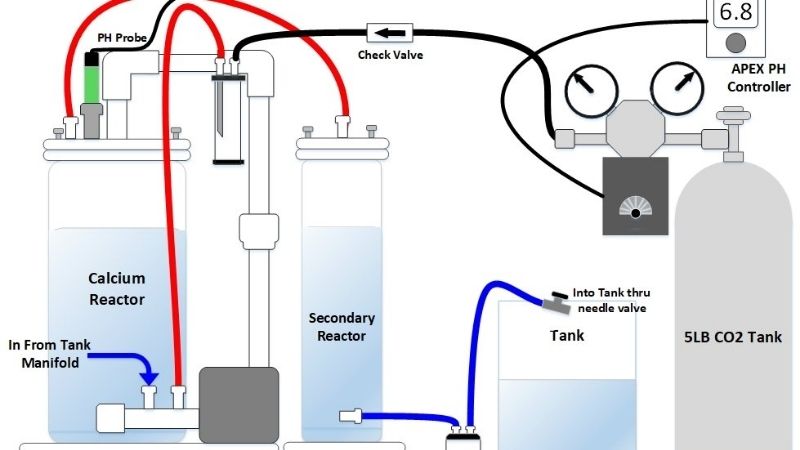
Sizing sensibly means starting from demand, not reading a gallon number off a chart, because model ranges overlap and no reactor maps cleanly to a volume. The table gives demand-state examples, each an illustration rather than a rule, so you can see where your measured draw sits before matching it to a body.
| Demand State | Typical Daily Draw | Example Reactor | Note |
|---|---|---|---|
| Low-demand mixed reef | Modest, steady | e.g. Reef Octopus CR-100 (69-120 gal, 1.5 L) | Example, not a sizing rule |
| Growing SPS-dominant | High, rising | e.g. Tunze 3171 (up to 317 gal, 1.85 L) | Example; rating depends on coral load |
| Large / heavy demand | Very high | e.g. Tunze 3172 (528+ gal, 10 L) | Example; do not infer output from media |
| Volume 106-120 gal | Overlap zone | CR-100 or CR-140 both list this | Proves no one-model-per-volume map |
The Real Answer: Size by Demand
The size you need is set by how much alkalinity and calcium your corals consume each day, which you establish by testing, not by your tank’s gallons. Two systems of identical volume can need very different reactors, so the measured daily draw is the figure that actually answers the sizing question for your reef.
Coral population is the other half of the answer, since a heavily stocked SPS tank draws far more than a lightly planted mixed reef of the same size. Combine measured demand with your coral load and growth plans, and that combination, rather than a volume number, is what points you toward the right capacity.
Why There Is No Gallons-to-Model Rule
Model ranges overlap, which is the clearest proof that no single reactor maps to a tank size. The Reef Octopus CR-100 lists 69 to 120 gallons and the CR-140 lists 106 to 211, so a 110-gallon system falls inside both, and the ratings alone simply cannot tell you which one you actually need.
This is why a two-times-volume rule or a gallons lookup fails, since eligibility is not the same as a match. Use the ranges to see which bodies could suit you, then let measured demand break the tie, because the overlap means several reactors are legitimately eligible for the very same aquarium at once.
How to Read the Table and Units
Read each row as an example of a demand state, not a prescription for a gallon count, since the labels describe consumption rather than tank size. The models shown illustrate where a body of that class tends to sit, and the parenthetical specs are eligibility references to confirm against your own measured draw.
Mind the units when comparing, because chamber volume in liters and media weight in pounds are not interchangeable without density. A larger media figure means longer runtime, not proportionally more output, so treat the numbers as capacity and runtime cues, not a direct measure of daily alkalinity delivered.
The Limits of Any Sizing Figure
Any size guide is a starting point, not a guarantee, because manufacturer ratings depend on assumptions about coral population and running conditions that may not match yours. A Tunze rating up to a given volume, for instance, is explicitly conditional on coral load rather than a fixed output you can simply bank on.
Treat sizing as a range to confirm, then verify on your own tank by watching the alkalinity trend once the reactor runs. Do not infer one model’s output from another’s media volume, such as reading a larger unit as some multiple of a smaller one, since capacity and delivered output are genuinely different measurements.
Adjust the Size for Your Situation
The demand-state examples get you close, but your specific setup shifts the answer, so adjust for coral mix, growth plans and format. Each situation moves the sizing up or down from the generic example, keeping the decision tied to measured consumption, not the tank’s volume or a single chart row.
Low-Demand Mixed Reef
A mixed reef leaning on softies and a few LPS often has modest, steady demand, so it sits toward the smaller end of the sizing range or may not need a reactor at all. Here a compact body such as the CR-100 class can suffice, provided your measured draw actually confirms the need for one.
The risk in this situation is oversizing, which leaves a large body running at its low end and harder to tune. Size to the modest demand you actually measure, and be open to the possibility that two-part dosing meets it more simply, since a reactor is only worthwhile once your consumption genuinely justifies it.
SPS-Dominant Tank
An SPS-dominant system draws heavily and its demand rises as colonies grow, so size upward from the generic example toward a body with real headroom. A reactor like the Tunze 3171 class, rated to a high volume but conditional on coral load, suits this state well when your measured draw is genuinely high.
The adjustment here is deliberate headroom, not blanket oversizing, since SPS demand climbs over time. Choose capacity that clears today’s measured draw with room to rise, and avoid converting a gallon ceiling into an assumed output surplus, since the rating is eligibility, not a promise of extra delivery.
Frag System
A frag system packs dense coral into modest water, so its demand can be far higher than its volume suggests and grows quickly as the rack fills in. Size to measured consumption and expected growth rather than the small gallon count, since a busy grow-out can consume like a much larger display reef would.
Favor a body with adjustment headroom so you can raise output as colonies develop, and weigh media capacity against how often you want to service the reactor. The frag format rewards a reactor sized for its trajectory, because a unit chosen only for today’s demand can be pinned within a single growing season.
Planning a Future Upgrade
If a larger tank is on the horizon, it can make sense to size for where you are heading rather than only where you are, buying a body whose range covers the future system. This avoids replacing the reactor soon, provided the larger unit can still be tuned gently on the current, smaller demand for now.
Balance that against running an oversized reactor now, which is harder to hold steady and costlier to operate. If the upgrade is near and concrete, sizing ahead is reasonable; if it is vague, size for present demand, since a reactor bought for a tank that never materialises is capacity paid for and left unused.
Frequently Asked Questions
Sizing questions tend to seek a precise rating or a one-size-larger safety margin that the specs cannot honestly provide. These answers keep demand and coral load at the center, since overlapping ranges and load-dependent ratings mean the right size is confirmed on your own tank, not read straight from a gallon chart.
Can I Just Match the Exact Gallon Rating?
Matching a rating to your gallons feels precise but misleads, because ratings are eligibility windows that overlap between models and assume a typical coral load. A body rated for your volume may still be wrong if your demand is unusually high or low, so the rating is a filter rather than the final answer.
Instead, use ratings to shortlist eligible bodies, then let measured demand and coral population decide between them. Because a 110-gallon tank can fall inside two models’ ranges, the exact-gallon approach cannot break the tie, and only tested consumption tells you which eligible reactor fits the reef.
Should I Size One Model Larger to Be Safe?
Going one size up can be reasonable on a growing SPS reef, but as a blanket safety habit it usually backfires. A larger body runs at its low end where tuning is hardest and uses more media and CO2, so the margin you buy for safety can actually make daily operation less stable rather than more.
Base the decision on your growth trajectory rather than caution alone, since real, rising demand justifies headroom while a stable modest reef does not. Reasonable margin above measured draw is sensible, but jumping a size purely to feel safe trades easy tuning and lower running cost for capacity you may never use.
What If the Reactor Is Too Large?
An over-large reactor is not dangerous, but it is harder to tune gently and more expensive to run, since it idles near the bottom of its range and consumes extra media and gas. On a modest reef, that mismatch shows up as fiddly low-output tuning and unnecessary ongoing cost month after month.
If you already own one, you can often run it successfully with patient, small adjustments, accepting the higher consumables. For a new purchase, though, avoid the situation by sizing to measured demand with only modest headroom, since a right-sized body is far easier to hold steady than an oversized one nursed along.
Does Bigger Media Volume Mean More Output?
No; media volume mainly sets how long the reactor runs between refills and how much buffer it holds, while output depends on effluent flow, CO2 and internal pH together. A bigger chamber helps a hungry tank run longer, but it does not automatically raise the daily alkalinity the reactor supplies to the system.
Avoid inferring one model’s output from another’s media figure, such as reading a much larger unit as a fixed multiple of a smaller one, because that assumption does not hold. Judge media by refill convenience and match output to your measured demand through tuning, not the chamber size on the spec sheet.
Final Thoughts
Deciding what size calcium reactor do you need starts with measured daily demand and coral load, then uses overlapping gallon ranges only as eligibility. Add headroom for genuine growth without oversizing, mind that media volume is runtime rather than output, and confirm the fit on your tank’s alkalinity trend.
Ready to decide? Our #1 pick for 2026 is the Low-demand mixed reef.
Live price & availability on Amazon.
Related Reviews & Guides



6 Best Saltwater Aquarium Water Change Kits 2026

Best Wireless Dosing Pump With App Control: Top Compared Guide