Last Updated: September 25, 2026
Vallisneria care guide advice needs two warnings up front: this plant spreads by runners far faster than most people expect, and it melts dramatically when moved. Both behaviours are normal, and knowing which variety you bought decides whether it fills a background or takes over a tank. Choose that variety carefully.
As an Amazon Associate we earn from qualifying purchases.
As an Amazon Associate we earn from qualifying purchases at no extra cost to you. Prices and availability are accurate as of the date shown and are subject to change.

Canton Aquatics Vallisneria Biawensis (Corkscrew) 3 Plants
Selected for "Vallisneria Care Guide: How It Spreads and What to Watch": this listing is aquarium equipment (Canton Aquatics Vallisneria Biawensis (Corkscrew) 3 Plants), matching the equipment this article covers.
View on Amazon
SubstrateSource Live Plant - Tall Grass, Vallisneria Gigantea - Easy Care, Moderate to High Light, Bright Green Accent, Freshwater Aquatic Plant for Aquascaping - Lead Bunch
Selected for "Vallisneria Care Guide: How It Spreads and What to Watch": this listing is lighting (SubstrateSource Live Plant - Tall Grass, Vallisneria Gigantea - Easy C), matching the equipment this article covers.
View on Amazon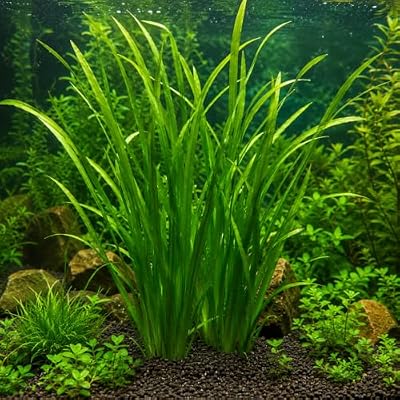
Jungle Vallisneria Freshwater Plant, 1 Bundle Live Aquarium, 4-7 Inch Tall
Selected for "Vallisneria Care Guide: How It Spreads and What to Watch": this listing is aquarium equipment (Jungle Vallisneria Freshwater Plant, 1 Bundle Live Aquarium, 4-7 Inch ), matching the equipment this article covers.
View on Amazon
Canton Aquatics 18 Lush Jungle Vallisneria Plants Bare Root
Selected for "Vallisneria Care Guide: How It Spreads and What to Watch": this listing is aquarium equipment (Canton Aquatics 18 Lush Jungle Vallisneria Plants Bare Root), matching the equipment this article covers.
View on AmazonBy David Nguyen
Quick answer: Our top pick in 2026 is the Vallisneria nana — our #1 rated choice. See the full ranked comparison, alternatives and buying advice below.
Runners, Hardness and How Fast It Spreads
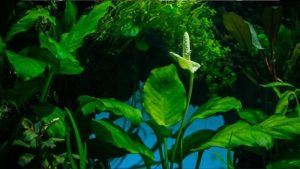
This vallisneria care guide starts with the growth habit, because it explains both the appeal and the problem. Vallisneria is a rooted rosette plant that reproduces by sending horizontal runners through the substrate, each producing a new plant that then sends runners of its own.
The Deciding Numbers: Variety, Height, Hardness and Tank Minimum
Vallisneria tolerates 68-82 F (20-28 C) and pH 6.5-8.0, and unusually among aquarium plants it prefers harder water, doing best at GH 6-20 dGH (107-358 ppm) with some carbonate hardness present. That makes it a natural fit for tap water many other planted tanks struggle with. Hard water is an advantage here.
Light demand is low to moderate at 20-40 micromoles of PAR, and no CO2 is required. Growth is fast once established: a settled plant can throw a new runner every one to two weeks in warm conditions, which is how a handful of plants becomes a wall of ribbons in a season. Speed is the point and the problem.
Mature height decides the tank. Vallisneria nana stays near 8-12 in (20-30 cm) and suits a 10-gallon (38 L) tank, spiralis reaches 16-24 in (40-60 cm) for a 20-gallon (76 L), and americana or jungle val runs to 36 in (90 cm) and belongs in tanks of 55 gallons (208 L) or more. Match height to tank depth.
Runners, Crowns and Why Depth Matters
The crown is the point where the ribbon leaves emerge from the roots, and it must sit level with the substrate surface. Buried crowns rot within a fortnight, which is the single most common reason a newly planted vallisneria fails while everything around it settles in without trouble.
Runners travel horizontally 2-6 in (5-15 cm) below the surface, so a bed of 2-3 in (5-7.6 cm) gives them room to spread. In coarse gravel above 4 mm (0.16 in) the runners struggle and daughter plants surface unanchored, drifting free until they lodge somewhere else in the tank instead.
Varieties, Sizes and Where Each One Belongs
Buying the wrong variety causes more disappointment than any care mistake, because a jungle val in a 20-gallon tank blocks the light for everything else within months. The table below sets out mature sizes so you can match the plant to the tank before it establishes itself. Removing it later is harder.
| Variety | Mature height | Tank minimum | Spread rate | Best use |
|---|---|---|---|---|
| Vallisneria nana | 8-12 in (20-30 cm) | 10 gal (38 L) | Moderate | Mid-ground in small tanks |
| Vallisneria spiralis | 16-24 in (40-60 cm) | 20 gal (76 L) | Fast | Background in community tanks |
| Corkscrew val | 12-18 in (30-45 cm) | 20 gal (76 L) | Moderate | Mid-ground texture contrast |
| Vallisneria americana | 24-36 in (60-90 cm) | 55 gal (208 L) | Very fast | Tall background, large tanks |
| Vallisneria gigantea | Over 36 in (90 cm) | 75 gal (284 L) | Very fast | Deep display tanks only |
Vallisneria in Real Tanks
The practical half of any vallisneria care guide is containment, because the plant does not stop at the boundary you had in mind. Runners cross a 12 in (30 cm) footprint in a couple of months, and daughter plants appear in the middle of carpets and around hardscape. Containment is the real work here.
Tank Size, Placement and Fit
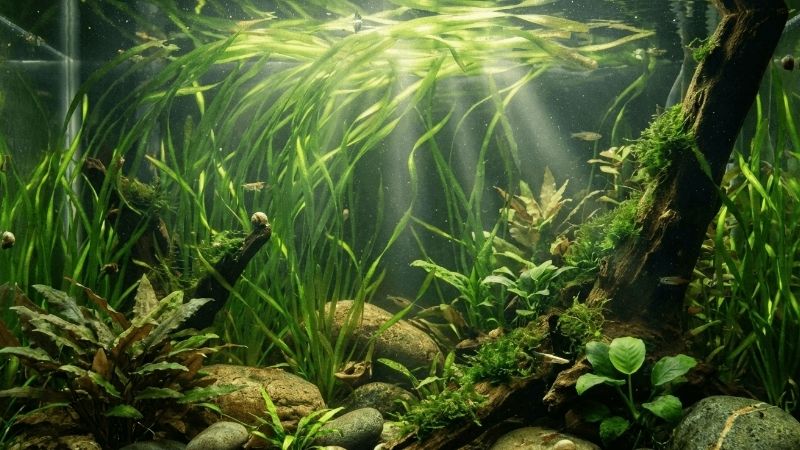
Plant vallisneria along the back and sides where its height works as a screen, keeping the crowns roughly 3-4 in (7.6-10 cm) apart so each rosette gets light. Expect the gaps to close within two months, at which point thinning becomes a routine maintenance task rather than an option.
Leaves reach the surface and then trail along it, which shades everything beneath. Measure the real numbers before you order: mature leaf length against tank height, and substrate depth against the 2-3 in (5-7.6 cm) the runners need to travel through freely. Both checks take a minute.
What Changes Between 10, 20 and 55 Gallon Tanks
In a 10-gallon (38 L) tank only nana is realistic, and even that needs thinning every couple of months. The alternative is planting into a buried pot or a divided section of substrate, which slows runner spread considerably without harming the parent plant in any way. Buried pots slow spread considerably.
In a 55-gallon (208 L) tank vallisneria comes into its own, forming the tall background it is actually built for. Three or four plants fill a 4 ft (120 cm) back wall within six to nine months, which is far faster and cheaper than buying a dozen specimens at the outset. Patience saves real money here.
Melt After Planting and How to Handle It
Vallisneria melts when moved, and it melts hard. Leaves go translucent and disintegrate within days of planting, which looks fatal but is a response to changed water chemistry. The roots and crown usually survive intact and push new leaves within two to four weeks. Do not pull the plant up.
Trim the melted leaves and leave the plant undisturbed. One specific caution: liquid carbon products based on glutaraldehyde are known to damage vallisneria badly, so avoid dosing them in a tank where this plant is the centrepiece of the layout you are building. Read product labels first.
Myths and Mistakes Worth Clearing Up
Three ideas cause most of the problems addressed in a vallisneria care guide, and each has a measurable correction. Two come from treating it like a stem plant, and the third comes from assuming that a fast-growing plant must also be a demanding one. Each has a measurable correction.
Myth: Vallisneria Needs Soft, Acidic Water
The opposite is closer to the truth. Vallisneria performs best in moderately hard water at GH 6-20 dGH (107-358 ppm) with pH from 6.5 up to 8.0, and it often struggles in the soft, low-KH conditions created by fresh aquasoil in a CO2 injected tank. Soft water is by far the harder case.
If your tap water is hard, this is one of the few large background plants that will thrive without any adjustment at all. Test GH and KH before assuming you need to change anything, remembering that 1 dGH is roughly 17.9 ppm of calcium carbonate. Test twice before adjusting anything.
Myth: Trimming the Tops Controls the Height
Cutting ribbon leaves across the middle leaves blunt brown ends that never regrow from the cut point, because vallisneria grows from the base rather than the tip. The plant keeps its height and simply looks damaged, which is a permanent cosmetic cost for a temporary gain. Cut whole leaves instead.
Control height by removing whole leaves at the crown instead, taking the longest ones first. If the plant is genuinely too tall for the tank, the honest fix is a smaller variety rather than ongoing trimming, since nana reaches only a third the height of americana. Variety choice beats trimming.
Myth: It Will Stop Spreading Once the Background Is Full
Runners keep travelling regardless of how full the background looks, moving into carpets, under hardscape and around filter intakes. Pulling stray plants breaks runners and often triggers a fresh round of melt in the parents, so cut runners with scissors instead of yanking daughters free.
Plan for the thinning from the start. Removing five to ten daughter plants a month is normal in a warm, well fed tank, and giving them away or composting them is a routine part of keeping this species rather than a sign that something has gone wrong. Budget a little time for it monthly.
Long-Term Care, Thinning and Twelve-Month Costs
Across years, the work in this vallisneria care guide is thinning rather than feeding. The plant is undemanding once established, but it converts a stable layout into a crowded one steadily, and the substrate underneath it slowly fills with roots and runners. Plan a rebuild eventually.
The Thinning and Feeding Schedule
Thin monthly by cutting runners and removing daughter plants at the crown, keeping parent plants spaced 3-4 in (7.6-10 cm) apart. Feed with root tabs every three to four months in inert substrate, since this is a root feeder despite also using the water column. Push tabs under the crown, 2 in (5 cm) down.
Iron matters more here than for many plants, and pale new ribbons with green veins point to a shortage. Dose a comprehensive micro mix aiming for 0.1-0.5 ppm iron, and give it a fortnight before judging, since new growth is the only part that responds to correction. Judge the newest ribbon.
What Degrades: Substrate, Light and Equipment
A dense mat of runners eventually fills a shallow bed, which slows spread and stunts new plants. Deep-cleaning the substrate under an established stand is disruptive, so most keepers thin regularly instead and accept a full rebuild every few years when growth stalls. Thinning delays that considerably.
Ageing equipment shifts the conditions around the plant. LED fixtures lose measurable output over several years, and heaters commonly drift 2-4 F (1-2 C) as their thermostats age. Vallisneria tolerates both, but the fish sharing the tank frequently do not. Check both once a year.
Twelve-Month Cost, Sourcing and Disposal
Costs are low: root tabs several times a year, a comprehensive liquid, and no CO2 or specialist lighting. Prices move constantly, so check them at the moment of purchase rather than budgeting from figures quoted in an article that may already be a year out of date. This vallisneria care guide avoids fixed prices.
Disposal matters with this species specifically. Vallisneria appears on restricted or prohibited plant lists in some states and countries, and those lists change, so check your local authority before buying or discarding it. Never release plants or trimmings into natural waterways.
Frequently Asked Questions
These come up during the first year, usually either when the plant melts immediately after planting or when it has spread through the tank far more thoroughly than anyone anticipated from a handful of starter plants. Most vallisneria care guide questions reduce to melt, height and runner control.
Why did my vallisneria melt right after planting?
Changed water chemistry, and it is normal. Leaves go translucent within days while the roots and crown survive, and new growth usually appears within two to four weeks. Trim the melted leaves, leave the plant in place, and avoid glutaraldehyde-based liquid carbon products. Patience is the whole treatment here.
Does this vallisneria care guide apply to jungle val?
Yes, with one adjustment: mature height. Jungle val and americana reach 24-36 in (60-90 cm) or more, so the tank minimum rises to 55 gallons (208 L). Everything else about hardness, crown depth, runner spread and light demand applies to every variety equally. Only the mature height changes.
How do I stop it spreading into the rest of the tank?
Cut runners with scissors monthly rather than pulling daughter plants, which damages the parents. Planting into a buried pot or a divided substrate section slows spread further, and choosing nana over americana reduces the pace considerably in the first place. Choose the variety first.
How deep should the substrate be for vallisneria?
Two to three inches (5-7.6 cm) is the working range, since runners travel horizontally 2-6 in (5-15 cm) below the surface. Shallower beds leave daughter plants poorly anchored, while deeper beds of fine sand need stirring during water changes to stay oxygenated and free of gas pockets.
Can vallisneria grow in sand?
Yes, and it often does better in sand than in coarse gravel because runners travel more easily through fine grains. Keep the bed at 2-3 in (5-7.6 cm), use root tabs since sand holds no nutrients, and stir the sand gently during water changes. Fine grains suit runner travel better than coarse gravel does.
See More:
Conclusion
The short version of this vallisneria care guide is that it wants hard water, a bed 2-3 in (5-7.6 cm) deep, crowns level with the surface, and 20-40 micromoles of PAR. Expect a melt after planting, then fast runner spread once the roots take hold. Both behaviours are entirely normal.
Choose the variety by mature height rather than by price, plan on monthly thinning, and cut runners rather than pulling daughters. Handled that way it delivers a tall, moving background more cheaply than any other plant, and it asks for very little in return. Hard water keepers should start here.
Ready to decide? Our #1 pick for 2026 is the Vallisneria nana.
Live price & availability on Amazon.
Related Reviews & Guides


10 Best Aquarium Substrates: Top Picks for Planted Tanks 2026

Aquarium Gravel Substrate Planted Tank