Last Updated: September 25, 2026
One of these fixtures costs a fraction of the other and covers more glass, which makes the cheaper option look obvious until you price the whole build. A popbloom rl180 vs kessil a360xe value comparison has to weigh coverage per dollar against control depth, coral color, and what happens when a part fails in year two.
As an Amazon Associate we earn from qualifying purchases.
As an Amazon Associate we earn from qualifying purchases at no extra cost to you. Prices and availability are accurate as of the date shown and are subject to change.
By David Nguyen
Quick answer: Our top pick in 2026 is the Fixture style — our #1 rated choice. See the full ranked comparison, alternatives and buying advice below.
How to Choose Saltwater & Reef Gear
Value is not the lower sticker; it is the cost of lighting your tank properly for several years. These four criteria expose where the budget fixture genuinely wins, where the premium one pays for itself, and which differences matter only to certain corals. Each criterion below carries a number you can total before checkout.
Coverage per Dollar
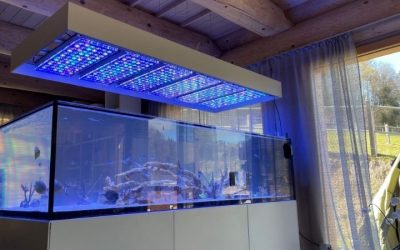
The Popbloom is a wide-body panel built around a roughly 180-watt class draw, so one unit often spans a 24-to-36-inch tank that would need two 90-watt point sources. That alone can halve the fixture count on a four-foot build. One panel also means one mount and one power cord instead of two of each, which shows on a rimless tank.
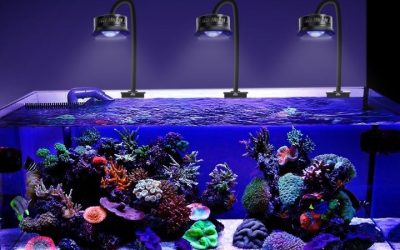
Point-source optics buy something different, concentrating output into a narrower, more intense column with visible shimmer. Compare total spend for full coverage rather than unit price, because two mid-tier Kessils and one budget panel can land within a similar range while producing very different light.
Control Depth and Hardware
The Popbloom schedules through its own app with multiple channels and no extra hardware, which keeps the entry price honest. Kessil needs a Spectral Controller X or a compatible controller via K-Link for ramped scheduling, an expense many buyers discover after the light arrives. Budget 10 to 20 percent of the Kessil’s price for that box.
App-native control depends on wifi and the maker’s servers staying healthy across years, while a physical controller keeps running its saved curve regardless. Weigh which failure mode you can live with, since both routes deliver the four-to-eight-week acclimation ramp corals need. A fixture that forgets its schedule on reboot is the real risk.
Spectrum Channels and Coral Color
Both fixtures offer multi-channel spectrum control, though Kessil’s dense cluster is the reason reefers cite it for SPS color and shimmer. Budget panels typically deliver plenty of usable light while rendering that glitter effect less convincingly on a shallow tank. Shimmer comes from beam density, not from channel count.
For softies and LPS sitting in the 50 to 150 band, the difference is largely aesthetic rather than biological. It becomes substantive on an SPS-dominant display, where fine channel control and beam density affect how tips color under sustained readings above 200. Softies and LPS rarely reward the extra spend on spectrum control.
Support, Warranty, and Parts
Value over five years depends on what happens when a driver or fan fails, so check warranty length, parts availability, and whether a dead unit is repairable or disposable. Established brands may offer an advantage in parts availability and resale demand, though this varies by model. Check whether fans and drivers are sold as parts at all.
Budget fixtures often cost less to replace outright than to repair, which is a legitimate strategy if you plan to upgrade in two years anyway. Add 12 months of running cost at your photoperiod, and verify UL or ETL marking on whichever driver ends up above the water. Run either driver through a GFCI, since both sit above water.
RL180 vs A360XE by Use Case
This popbloom rl180 vs kessil a360xe value comparison lands differently depending on whether you keep softies or Acropora, and on how long you plan to run the tank. The table sets the trade-offs out, and each case below names who should buy which. Both can grow the same corals; beam profile, coverage, and cost are what differ.
| Factor | Popbloom RL180 | Kessil A360XE | Best For |
|---|---|---|---|
| Fixture style | Wide panel, 180 W class | Point source, 90 W class | Wide tanks favor the panel |
| Control | Built-in app, no extra box | Needs Spectral Controller X | Entry budgets favor the panel |
| Shimmer and SPS color | Softer, panel-style light | Dense beam, strong shimmer | SPS displays favor Kessil |
| Price tier | Budget | Mid | Long-term builds favor Kessil |
RL180 for Budget Builds Needing Width
A reefer lighting a 36-inch softie or LPS tank on a tight budget gets the most from the panel, since one unit spans the footprint and schedules itself without a controller purchase. Corals in the 50 to 150 band never need the intensity a premium fixture holds in reserve. A 36-inch softie tank typically needs 50 to 100 PAR at the rock.
The compromise is long-term support, because budget fixtures are usually replaced rather than repaired when a fan or driver quits. Plan on that outcome, and put the difference toward a test kit and stable alkalinity, which affect coral health more than beam density does. Replacement usually costs less than a repair on this tier.
RL180 for App Control Without Extra Boxes
Buyers who want sunrise ramps, weather effects, and phone scheduling out of the box get them here at no additional hardware cost. That matters on a first reef, where a built-in acclimation mode makes the four-to-eight-week ramp easy to run correctly. Confirm the ramp runs in 5 to 10 percent weekly steps rather than daily jumps.
The risk sits with the app itself, since control depends on wifi and continued software support from a smaller brand. Check that the fixture holds its schedule locally during an outage, because a light that stops running when the router reboots is a hazard to corals. Corals left at full output overnight can pale within 48 hours.
A360XE for SPS Color and Shimmer
The 90-watt Kessil is the pick for a shallow SPS display where color rendition and that glitter line on the sandbed are the point. Its dense cluster holds strong central readings above 200 on tanks up to roughly 20 inches deep without running at maximum. Frag racks 10 to 14 inches down hold an even reading under it.
You pay twice at the start, once for the fixture and again for the controller that gives it a schedule. Coverage is also tighter, near 20 inches at SPS levels, so a 48-inch tank often needs three units rather than the two a panel build might use. Three goosenecks also mean three mounts to buy and clean.
A360XE for Long-Term Ecosystem Value
Reefers who keep a display for years benefit from an established platform: one controller drives several fixtures, mounts and spares stay available, and used units can retain resale value when you upgrade. That resale floor is a real part of the total cost nobody prices at checkout. Actual resale percentage varies with model and condition.
It only pays off if you actually stay in the hobby long enough to use it. Someone testing whether reefkeeping fits their life is better served by the cheaper panel, and can step up later once the tank has proven stable. New reefers who scale back their setup within the first year avoid sinking money into the pricier platform.
Frequently Asked Questions
Shoppers weighing a budget panel against a name-brand point source keep asking the same four things about coral growth, coverage, support, and whether either fixture fits their build. Each answer names the number or condition that decides it. Most hinge on whether your corals need more than 150 PAR at the rock.
When should I buy the RL180 instead of the Kessil?
Choose the panel when your corals live in the 50 to 150 band, your tank is wide, and you want app scheduling without buying a controller. One unit covering a 36-inch softie tank is the clearest value case in this entire matchup. One unit at roughly 180 watts covers that span for the price of a single mid-tier point source.
Flip to the Kessil when SPS color drives the build or when you want a platform that stays supported and resells. If you plan to add fixtures over time, one controller running three units changes the arithmetic in the premium brand’s favor. Mount and controller costs also spread across those units instead of repeating.
Can a budget light really grow SPS?
Yes, provided it delivers 200 or more PAR at the coral and holds a stable spectrum, which is a measurement question rather than a brand one. Plenty of reefers grow Acropora under value fixtures once they verify output with a borrowed meter. Verify 200 or more at rock height before adding the first Acropora frag.
Where budget units fall short is fine spectral control, long-term output consistency, and the shimmer that flatters stony coral. Expect growth but perhaps not the color pop shown in photos taken under premium fixtures with heavily blue-weighted settings. Ask what percentage blue a photo used before judging any fixture by it.
When is neither fixture the right choice?
Both are wrong for a deep display past about 24 inches, where a 90-watt point source thins out and a budget panel rarely holds SPS levels at the sandbed. That tank needs a higher power class, not a value debate. Past 24 inches, plan on a 185-watt class fixture or two panels rather than stretching either option.
Skip both as well on a 10-gallon softie nano, where a compact fixture covers the footprint for far less money and heat. Buying width or intensity a small tank never uses is the most common overspend in reef lighting. A 10-gallon softie tank rarely needs more than 30 to 60 watts to hold color at 50 to 100 PAR.
How should I compare warranty and parts?
Read the warranty length, then ask the harder question of whether fans, drivers, and mounts are sold separately, since a fixture that cannot be repaired is effectively a consumable. Check whether the current generation is still listed before buying, because reef lighting models refresh often. Discontinued models lose parts support first.
Also price the hidden extras: mounts and, for Kessil, the controller. Adding those to the sticker and to 12 months of running cost is the only way to compare two fixtures honestly instead of by their headline numbers. Adding a mount at 10 to 20 percent of fixture price changes which option is actually cheaper.
Final Thoughts
A fair popbloom rl180 vs kessil a360xe value comparison ends in two clear verdicts rather than one winner. Take the panel for wide softie and LPS tanks, budget builds, and app control with no extra box; take the Kessil for SPS color, zoned expansion, and years of parts support, and verify UL or ETL marking either way.
Ready to decide? Our #1 pick for 2026 is the Fixture style.
Live price & availability on Amazon.
Related Reviews & Guides
Best Reef Lighting Bundle with Controller: Top Expert Picks

Reef Calcium Supplement Additive Review