Last Updated: September 27, 2026
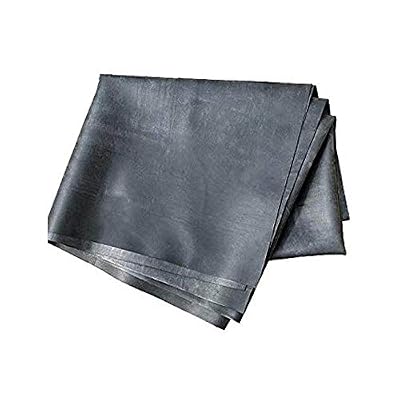
Firestone 45mil EPDM Rubber Pond Liner 15ft.x20ft.
Included for 'Pond Liner Buying Guide for Beginners: Best Expert Picks' as a relevant option in this category; details come from the product listing.
View on Amazon
Lifeguard 10 ft. x 15 ft. EPDM Pond Liner – 45-Mil Rubber
Included for 'Pond Liner Buying Guide for Beginners: Best Expert Picks' because the listing specifies 45-Mil Rubber, details this guide uses to compare options.
View on Amazon
Firestone 5 x 10 PondGard 45 Mil EPDM Pond Liner Fish Safe
Included for 'Pond Liner Buying Guide for Beginners: Best Expert Picks' as a relevant option in this category; details come from the product listing.
View on Amazon
10 x 15 Firestone 45 Mil EPDM Pond Liner
Included for 'Pond Liner Buying Guide for Beginners: Best Expert Picks' as a relevant option in this category; details come from the product listing.
View on AmazonMost first-pond problems begin at the ordering stage rather than on installation day. This pond liner buying guide for beginners gives you the numbers to check before spending anything, using published manufacturer examples rather than rules of thumb. Start with the table.
As an Amazon Associate we earn from qualifying purchases.
By David Nguyen
What a Beginner Needs Before Buying
Four figures cover the whole of this purchase: the sheet size your excavation demands, the overlap your edging consumes, the underlayment area required beneath, and whether a preformed shell suits the project better than flexible liner does at this particular scale of garden build.
| Input | Result | Note | Exception |
|---|---|---|---|
| 4 x 6 ft pond, 2 ft deep | 8 x 10 ft liner, 80 sq ft underlay | Aquascape kit example | Your hole may differ |
| Small first pond, 200 gal example | smartpond 7 x 10 HDPE, 49.99 USD | Example geometry only | Measure before ordering |
| Edge overlap | 12 to 18 in ideal | Minimum around 10 in | Rock edging needs more |
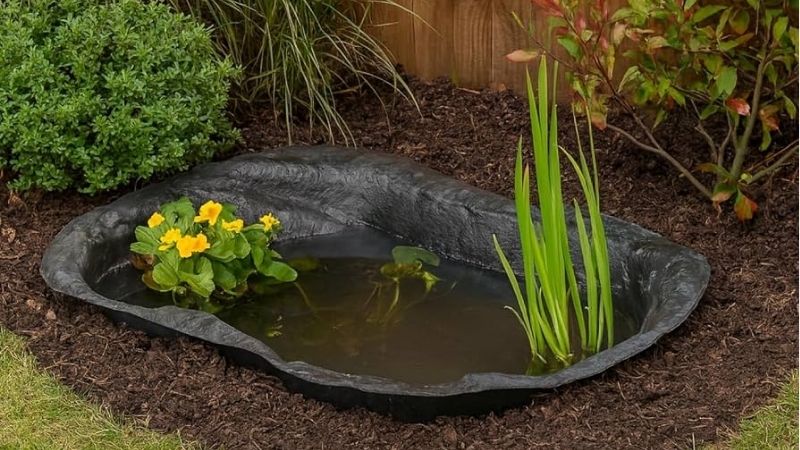
| Very small simple build | Preformed shell often easier | smartpond guidance | Not universally better |
The Short List a Beginner Actually Needs
Three items cover a straightforward first build: the liner itself, underlayment beneath it, and enough overlap around the rim to anchor everything under edging. Everything else, including patches and sealant, is useful rather than genuinely essential on a straightforward first garden pond.
Price all three together before comparing brands, since a cheaper sheet paired with omitted protection is not the saving it appears. Aquascape’s kit documentation pairs a small pond with 80 square feet of underlayment, which shows how much area protection actually has to cover underneath.
How to Read a Manufacturer Kit Example
Aquascape documents a 4 by 6 foot pond at 2 feet deep paired with an 8 by 10 foot liner and 80 square feet of underlayment. That example describes a single geometry with one particular edge treatment rather than a rule covering every pond that simply happens to hold a similar water volume.
Use it to sanity check your own arithmetic rather than as any substitute for measuring the hole properly. Where your excavation differs in depth or shape, the published pairing shifts accordingly, and depth in particular consumes extra liner on both of the pond walls at the same time.
Overlap Numbers Worth Remembering
smartpond suggests keeping at least ten inches of spare liner beyond the pond edge, while describing twelve to eighteen inches as the ideal range. That band anchors the sheet beneath the stone and prevents surrounding soil from washing in behind it during periods of heavy rainfall.
Heavier edging and ground sloping toward the pond will both push you toward the upper figure. Treat the overlap as structural rather than as decorative trimming, because a liner reaching exactly to the rim and no further will fail at the edge within the first season or two of use.
Preformed Shell Versus Flexible Liner
smartpond describes preformed units as generally easier for small first ponds to install, which reflects removed arithmetic rather than superior performance. A shell arrives at a fixed shape and depth, so nothing needs calculating, measuring or carefully pleating into final position.
That particular guidance is scale-specific rather than universal advice. Shells constrain the design permanently, cost more per gallon at larger sizes, and demand careful backfilling, since voids beneath a rigid shell allow it to flex and eventually crack apart under sustained water load.
Adjust for Your Situation
The table above gives a starting point, and four variables then move it: the size of the pond, whether fish are planned, what the ground contains, and how much you intend to spend. Each one shifts the answer in a fairly predictable direction that is genuinely worth knowing in advance.
Adjust for Pond Size
Small features forgive far less than large ones proportionally, because overlap consumes a far greater share of a compact sheet. A 7 by 10 foot liner covering 70 square feet loses a substantial portion to the rim, which is why careful measuring beats estimating at this particular scale.
Larger ponds shift the balance toward handling difficulty and cost per square foot. Once a sheet exceeds roughly 200 square feet in area, positioning it alone becomes impractical, so plan for assistance and check that your calculated size genuinely exists as a boxed product somewhere.
Adjust for Fish Plans
Livestock changes the material requirement rather than the sizing arithmetic itself. Fish-safe wording has to come from the manufacturer, and generic landscaping or construction sheeting sold at similar prices has never been assessed for continuous immersion alongside living pond fish.
Depth also becomes a deliberate design decision rather than a preference, since deeper water holds temperature more steadily through summer and winter. Deciding that depth before ordering matters, because every additional foot of depth adds a further two feet to both liner dimensions.
Adjust for Ground Conditions
What remains in the excavation base after clearing determines how much protection you actually need. Visible gravel, shale or roots will all concentrate pressure at single points, and that concentrated load causes the overwhelming majority of early liner failures on thinner pond sheets.
Old carpet and builder’s sand are common fallbacks, and neither performs like purpose-made underlayment. Old carpet holds moisture permanently against the liner while loose sand migrates down steeper walls, which is exactly where punctures usually begin on any steeply sloped pond excavation.
Adjust for Budget
Where money is genuinely tight, spend it on the correct sheet size and on proper underlayment before upgrading thickness. A correctly sized mid-range liner over good protection outperforms a thicker sheet that finishes short at the rim or else sits directly on loose gravel underneath.
Timing helps as well, since pond stock is seasonal and most of the discounting clusters ahead of spring installation season. Recording your required dimensions early on lets you buy whenever prices move without ever rushing the one measurement that ultimately determines everything else.
Frequently Asked Questions
Four questions come up constantly on first pond purchases: what to buy first of all, whether cheap liner works, whether underlayment can safely be skipped, and how much extra sheet to order. Direct answers below, together with the exceptions that are genuinely worth knowing beforehand.
What Should a Beginner Buy First?
Measure the excavation before buying anything at all. The excavation dimensions determine the sheet, that sheet determines the underlayment area, and both determine the budget, so a tape measure genuinely comes before any product page, any brand choice or any price comparison at all.
Once those measurements exist, order the liner and underlayment together in a single purchase. Splitting them across two separate orders is how protection gets dropped once the liner price turns out higher than expected, which is easily the most common compromise made on a first pond build.
Is Inexpensive Pond Liner Good Enough?
Frequently yes, at least on a straightforward first pond. A correctly sized sheet with fish-safe wording, laid over cleared ground with underlayment beneath it, performs reliably on garden ponds that see only limited disturbance from livestock, visiting wildlife or nearby tree roots.
That economy fails wherever the conditions are genuinely demanding, meaning rocky ground, established tree roots, large fish or severe freeze and thaw cycling. In those situations the eventual cost of draining and relining dwarfs whatever saving the cheaper sheet originally delivered to you.
Can You Skip Underlayment on a Small Pond?
Not sensibly at all, and small ponds actually offer very little advantage here. They frequently sit much closer to trees, hedges and fence lines in typical gardens, which means root pressure reaches the liner considerably sooner than it ever would out in the middle of a wide open lawn.
Aquascape’s kit documentation pairing a modest pond with 80 square feet of underlayment shows the sort of coverage expected, and the cost is genuinely small against the disruption of any later repair. Treat it as an integral part of the liner purchase itself rather than an optional accessory.
How Much Extra Liner Should You Order?
Enough for twelve to eighteen inches beyond the edge, taking the upper figure on a first attempt. Excavations very rarely finish exactly as they were drawn, and a beginner benefits from the margin that absorbs the small changes that inevitably get made while the digging progresses.
Surplus trims away with scissors once the pond has been filled and allowed to settle. Running short creates either an added seam, which becomes the likeliest future leak point, or an entirely new purchase, so generosity at the ordering stage is consistently the cheaper of the two errors to make.
Final Thoughts
Measure the hole, apply one single formula, keep twelve to eighteen inches at the rim, and budget the underlayment in the very same order. This pond liner buying guide for beginners exists to replace guesswork with four numbers that you can check for yourself before spending anything.
Best Energy Efficient Pond Pump: Well-Researched Top Picks

Best Energy Efficient Pond Aerator: Top Smart Buying Guide