Last Updated: October 21, 2026
There is no single winner for every tank, so how to choose a pH and ORP monitor is a short framework: define your use case, decide the measurements you need, confirm the physical ports and probes, choose monitoring versus control, and price the complete configuration.
As an Amazon Associate we earn from qualifying purchases.
By David Nguyen
How to Choose a pH and ORP Monitor Step by Step
Rather than crown one universal pick, work a repeatable sequence. Start from the use case and the measurements you actually need, confirm the physical ports and probes that support them, decide whether you want monitoring or control, and only then price the complete configuration for your tank.
Required Use Case
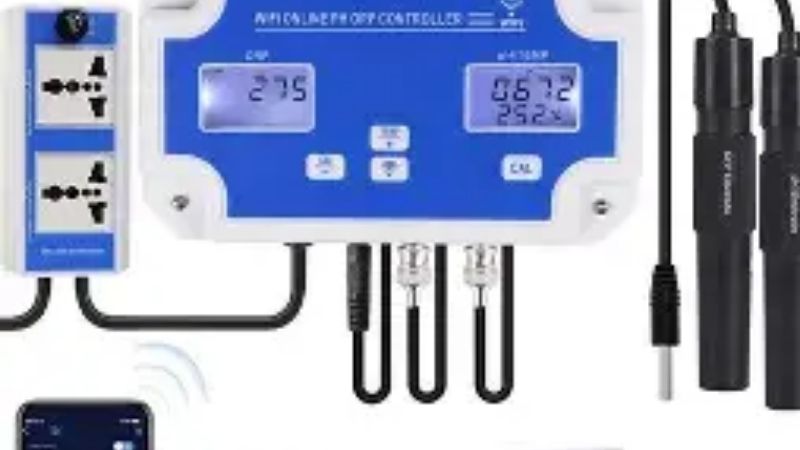
Begin with what the tank truly needs, including whether ORP has any defined role. ORP is a nonspecific redox metric, so if nothing in your system uses it, the best choice can be not buying an ORP monitor at all and spending the budget on pH, temperature or stability instead.
A reef running ozone, a freshwater tank chasing pH stability and a nano guarding space all point to different units. Name the job first, because the use case — not a headline spec — is the primary axis, and it quietly rules several products in or out before any number matters at all.
Required Measurements
Next, list the parameters you will genuinely act on. If you need pH and ORP together, confirm the unit reads them simultaneously; if temperature or salinity matter, a broader set like the Red Sea Deluxe or GHL ProfiLux covers more channels than a two-parameter controller ever does.
Resist adding parameters you will never use. Each extra channel adds cost and calibration, and a single ORP number is not a universal water-health score, so measure what informs a real decision on your tank rather than collecting readings for a fuller-looking dashboard you rarely consult.
Physical Ports and Probes
Now map measurements to hardware, because a feature list is not the same as physical capacity. One configurable pH/ORP input cannot hold two probes at once, so confirm separate ports: the HYDROS and Apex Pro each provide two, while some SKUs quietly share or omit an input entirely.
Check which probes are actually included, too. The HYDROS Starter omits ORP, and the standard A3 Apex drops a pH port and the ORP probe, so match the exact SKU’s ports and bundled probes to your parameter list before price is allowed to enter the decision at all.
Action: Monitor, Alert or Control
Decide what the unit should do when a reading moves. Pure monitoring needs only sensors and a display; alerting needs a notification path; and control needs switched outlets, like the HYDROS Starter’s four or the EB832’s eight, to cut or run equipment automatically on your rules.
Match this to real intent rather than defaulting to the most capable platform. Automation is not a goal in itself, so if observation is all you need, a monitor-only path avoids control complexity, while a tank that must react justifies paying for the outlets and logic you will actually configure.
Matching Picks to Each Need
With the framework set, these four pH and ORP monitors map to common answers rather than a single best. Each lists verified specs, a relative price tier, and the drawback to weigh, so you can match a unit to the use case and action your own tank actually calls for.
| Product | Best For | Key Spec | Watch Out For |
|---|---|---|---|
| HYDROS Control X4 + ORP | Best for a value entry | 2 pH/ORP ports; 4 outlets; under $600 | ORP probe is a separate add-on |
| Neptune A3 Apex Pro | Best for full control | 2 ports; leak + level; 8 outlets | Standard A3 differs from the Pro |
| GHL ProfiLux 4.1 Mega-Set 6E | Best for many parameters | pH, redox, conductivity, temp; LAN | Priciest; steeper setup |
| Red Sea ReefControl Pro Deluxe | Best for monitoring breadth | pH, salinity, ORP, leak; up to 7 sensors | Switching needs Power 8 (extra) |
HYDROS Control X4 + ORP
The HYDROS Control X4 + ORP fits a keeper whose framework lands on core readings with light control. Two pH/ORP ports, included temperature and four WiFi AC outlets cover monitoring and simple automation, making it the natural value entry for many freshwater and mixed setups today.
Configured with ORP it runs about $600 as of 09/2026, the low end of a ladder that tops out near under $1,100. The catch is the ORP add-on over the under-$600 Starter, so budget it if your measurements step decided you truly need both parameters logging at once.
Neptune A3 Apex Pro
The Neptune A3 Apex Pro suits a framework that ends in full control and protection. Two pH/ORP ports, leak, a 15-inch level sensor and the EB832’s eight outlets let it sense, alert and act, which fits a reef or a tank where equipment must react automatically to a reading.
At about $1,100 at BRS or under $1,200 direct as of 09/2026, it is the top of the ladder. Confirm the Pro, since the standard A3 has one pH port and no ORP probe and would fail the ports-and-probes step for anyone needing simultaneous readings behind the automation.
GHL ProfiLux 4.1 Mega-Set 6E
The GHL ProfiLux 4.1 Mega-Set 6E answers a framework that needs many parameters, reading pH, redox, conductivity and temperature with LAN, USB and WiFi connectivity. For a keeper tracking several channels, it consolidates them in one system rather than spreading them across separate meters.
Near under $1,100 at GHL USA as of 09/2026, that breadth carries a steeper setup curve and a separate Powerbar. It earns its cost only when the measurements step genuinely called for those extra channels, so avoid it if pH and ORP alone answer your tank’s real needs.
Red Sea ReefControl Pro Deluxe
The Red Sea ReefControl Pro Deluxe fits a framework centered on broad monitoring, covering pH, salinity, ORP and leak with room for seven sensors. For visibility across many parameters from one app, it gives the widest picture without stepping straight to full automation and switching.
At about $699 at BRS as of 09/2026 it is monitoring-first, so if your action step chose control, add the Power 8 near $319 for roughly $1,018 configured. Its place in the framework is broad observation; budget switching only if the tank must also act on a reading.
Frequently Asked Questions
Buyers working through how to choose ask a consistent set of questions about a pH and ORP monitor. Each answer opens with the practical call, then the condition that changes it, so the framework leads to a fitting unit rather than a default crown for every tank.
What spec should decide this purchase?
The required use case should decide it, not accuracy or price. Port count, precision and cost are secondary checks that only matter once the use case is clear, because the same controller can be ideal for one tank and pointless for another with different needs and goals.
So define the job first, then let the framework filter. A reef with ozone, a planted tank and a nano each land on different picks, and the complete configured price — from about $600 to under $1,100 here — is judged against that defined need, not in isolation on a spec sheet.
Which numbers are hard facts and which are heuristics?
Port counts, included probes and September 2026 prices are hard facts, and the price ladder from about $600 to under $1,100 is a solid planning anchor. Treat those figures as current snapshots, since retail pricing shifts through the year and around seasonal sale events.
ORP interpretation is the heuristic layer. It is a nonspecific redox metric, so a single value is not a universal water-health score; read it as a trend and follow your probe maker’s calibration guidance rather than applying one number or schedule across every different brand.
Is the highest headline number always better?
No, and treating it as the starting point is the mistake this framework exists to prevent. Port count, price and accuracy are secondary checks; the required use case is primary, and figures measured under different conditions do not compare cleanly across brands anyway in practice.
That is why a modest HYDROS can be the right answer for one tank while a GHL suits another with broader needs. Let the use case and your action step rank the options, then use numbers to choose between units that already fit, not to start the search from scratch.
When might the reader not need this?
The framework’s honest endpoint is sometimes no monitor at all. If ORP has no defined role and pH is stable, the best choice can be skipping an ORP monitor entirely and spending on husbandry that changes outcomes more than another reading ever would on the tank.
Likewise, a simple monitor-only unit can be enough when no equipment must react. Add ports, outlets and parameters only when a concrete use case calls for them, so the choice solves a real problem rather than buying capability the tank will never actually use.
Final Thoughts
How to choose a pH and ORP monitor comes down to working from need outward: define the use case, list the measurements, confirm the ports and probes, decide monitor versus control, and price the complete build. Let that sequence, not a crowned product or the boldest number, point to the unit that fits your tank.
Best Heavy Duty Washers in 2026: What to Know Before You Buy
Best Wireless Earbuds for Running