Last Updated: October 4, 2026
Here is the short answer to the hang on back vs canister filter which to choose question: a hang-on-back is simpler, cheaper and faster to access, while a canister adds an external, enclosed media system with more plumbing flexibility at a higher cost and maintenance complexity. The right pick depends on your tank size, cabinet and how you like to work.
As an Amazon Associate we earn from qualifying purchases.
By David Nguyen
Quick answer: For most people in 2026, the best hang on back vs canister filter which to choose is the 20-40 gal simple setup — our #1 rated choice. See the full ranked comparison, alternatives and buying advice below.
How Hang-On-Back and Canister Filters Work
Before choosing, it helps to see how each type moves and holds water. A hang-on-back clips to the rim and cycles a small volume through an open basket, while a canister pumps water out to a sealed external body packed with media. These four points explain the mechanics behind the choice.
Where the Filter Sits
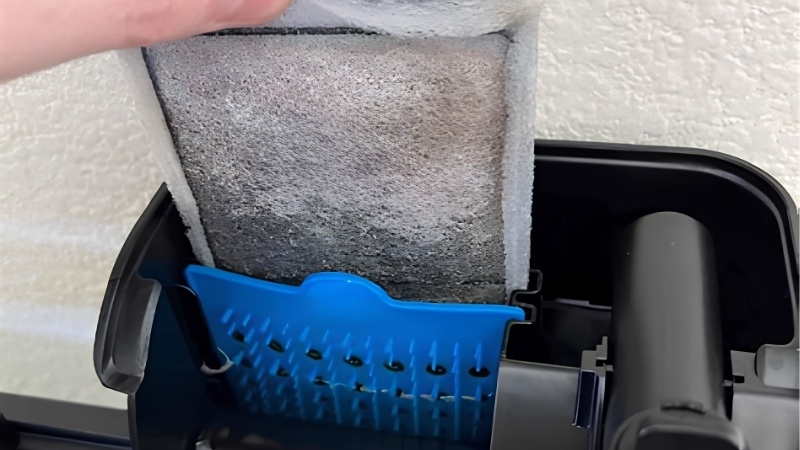
Placement is the first real difference. A hang-on-back like the Fluval AC50 clips onto the tank rim and sits partly in the water, keeping everything at the top edge and within easy reach for quick checks and rinses.
A canister like the Fluval 307 lives outside the tank, usually in the cabinet below, connected by intake and return hoses. That external body frees up rim space and hides equipment, but it adds plumbing you route, prime and maintain.
How Water Moves
The two report flow differently, which is easy to misread. The AC50 lists a maximum flow of 200 GPH, while the 307 publishes 303 GPH of pump output and 206 GPH of filter circulation, two distinct figures for the canister.
Because the AC50’s 200 GPH maximum and the 307’s 206 GPH circulation are different measurements, they are not interchangeable, and “almost identical performance” is not supported. Read each number in its own context rather than lining them up as equals.
How Media Is Arranged
Media capacity is where canisters usually pull ahead. The 307 holds 3.1 liters of media in stacked baskets, giving room to layer mechanical, biological and chemical stages, while a hang-on-back offers a smaller, more open basket.
More enclosed media is not automatically better filtration; it is more room and more control. A sealed canister inherently filters better is a myth, since results depend on the media you choose, how you maintain it and whether the filter suits the tank.
What Power Numbers Mean
Wattage measures electricity, not cleaning strength. The AC50 draws 7 watts and the 307 draws 16 watts, so the canister’s rated draw is roughly 129 percent higher, but that reflects a bigger pump and external plumbing, not a filtration-quality gap.
Do not read watts as cleaning power. A higher draw runs a larger system moving water through more media and up against head pressure; it says nothing about which filter produces clearer, healthier water in your specific setup.
What It Looks Like in Practice
In real setups the choice usually comes down to tank size, cabinet space and how much media control you want. The scenarios below map common situations to each filter type. Prices are display figures checked in September 2026 and move with retailer stock.
| Scenario | Hang-On-Back (AC50) | Canister (307) | Notes |
|---|---|---|---|
| 20-40 gal simple setup | AC50 fits the range | 307 starts at 40 gal | HOB is often simpler |
| 40-50 gal | Both overlap | Both overlap | Decide on maintenance/media |
| Cabinet limited | No external canister | Needs body and hoses | HOB saves space |
| More enclosed media | Smaller open basket | 3.1 L baskets | Canister wins on capacity |
Small, Simple Freshwater Tank
For a smaller, simple freshwater tank, the AC50 is the natural fit, covering 20 to 50 gallons at 200 GPH maximum for around $65 at Petco as of September 2026. It clips on, primes easily and is quick to open for rinsing.
At this size, a canister often adds complexity you do not need. The hang-on-back keeps setup and maintenance minimal, which suits a first tank or anyone who values fast access over maximum media volume.
The 40-to-50-Gallon Overlap
Between 40 and 50 gallons the two types overlap, since the AC50 reaches up to 50 gallons and the 307 starts around 40. Here the decision is about workflow and media rather than which one physically fits.
Choose by how you like to maintain a filter. If you want fast, top-of-tank access, stay with the hang-on-back; if you want more enclosed media and hidden equipment, the canister earns its place even in this shared range.
Cabinet and Hosing Constraints
Space under the tank can settle it. The 307 is an external body that needs room in the cabinet plus clearance for intake and return hoses, so measure before assuming it will fit and remain serviceable.
If the cabinet is shallow or crowded, the AC50 sidesteps the problem entirely by living at the rim. A canister you cannot reach to clean is worse than a simpler filter you can, so let real clearance guide the pick.
Budget-Conscious Build
Cost is a clear divider. The AC50 runs around $65 while the 307 lists around $225 at Petco as of September 2026, so the canister is roughly 235 percent above the hang-on-back, a gap near $153.
That difference buys external media capacity and plumbing flexibility, not guaranteed better water. If budget is tight and the tank is modest, the hang-on-back delivers solid filtration for far less up front and less to maintain over time.
Frequently Asked Questions
The same practical questions come up whenever keepers weigh these two types. The answers below stay with the published specs and avoid turning mismatched numbers into false equivalences.
Is a Canister Always Better?
No. A canister is not universally better; it offers more enclosed media and plumbing flexibility, which suits larger or more demanding tanks, but adds cost and maintenance a simple setup may not need.
For a modest freshwater tank, a hang-on-back can filter just as effectively with far less fuss. Match the architecture to the tank and your maintenance style rather than assuming the pricier, more complex option wins by default.
Is a Canister More Expensive?
Usually, yes. In this example the 307 lists around $225 against the AC50’s under $70 as of September 2026, a gap near $153, so the canister costs meaningfully more up front.
Factor in recurring media and power over time as well. The higher purchase price and 16-watt draw versus 7 watts reflect a larger system, so budget for both the initial cost and the ongoing running of a canister.
Can the AC50 Handle 50 Gallons?
Yes. The AC50’s manufacturer range includes 50 gallons, so it is rated for tanks up to that size. Stay within the range and match flow to your livestock’s tolerance rather than pushing past the ceiling.
At the top of its range, pair it with appropriate media and regular maintenance. A hang-on-back rated to 50 gallons can serve that size well, provided the stocking and bioload sit within what the filter is designed to handle.
When Should You Skip Both?
Skip both when your tank falls outside their rated ranges or the system needs a different approach, such as a sump, a dedicated sponge filter for fry, or specialized filtration a hang-on-back and this canister are not built for.
Very large or specialized setups often call for equipment beyond either type. Choose the filtration that matches the whole system, and step outside these two whenever the tank size or the plumbing demands it.
Final Thoughts
On hang on back vs canister filter which to choose, the answer stays practical: a hang-on-back like the AC50 wins on simplicity, access and cost, while a canister like the 307 wins on enclosed media capacity and plumbing flexibility at a higher price and more maintenance. Match the type to your tank size, cabinet space and how hands-on you want to be, and neither is universally right.
As an Amazon Associate we earn from qualifying purchases at no extra cost to you. Prices and availability are accurate as of the date shown and are subject to change.
Ready to decide? Our #1 pick for 2026 is the 20-40 gal simple setup.
Live price & availability on Amazon.
Related Reviews & Guides


Aquarium Bubble Wall Air Curtain Decor Review
Pond Liner Buying Guide for Beginners: Best Expert Picks