Last Updated: September 29, 2026
A controller that only works when the internet is up is a liability, so the best wifi enabled pH and ORP monitor is judged on its WiFi architecture, what still runs locally offline, how cloud remote access behaves, whether a wired fallback exists, and the complete pH and ORP price.
As an Amazon Associate we earn from qualifying purchases.
By David Nguyen
Quick answer: For most people in 2026, the best wifi enabled ph and orp monitor is the HYDROS Control X4 + ORP — our #1 rated choice. See the full ranked comparison, alternatives and buying advice below.
How to Choose a WiFi pH and ORP Monitor
WiFi-enabled does not mean cloud-dependent, so weigh these controllers by how they behave when the connection drops. Rank the WiFi architecture first, then what keeps running locally offline, how cloud remote access works, whether a wired fallback exists, and finally the complete pH and ORP price.
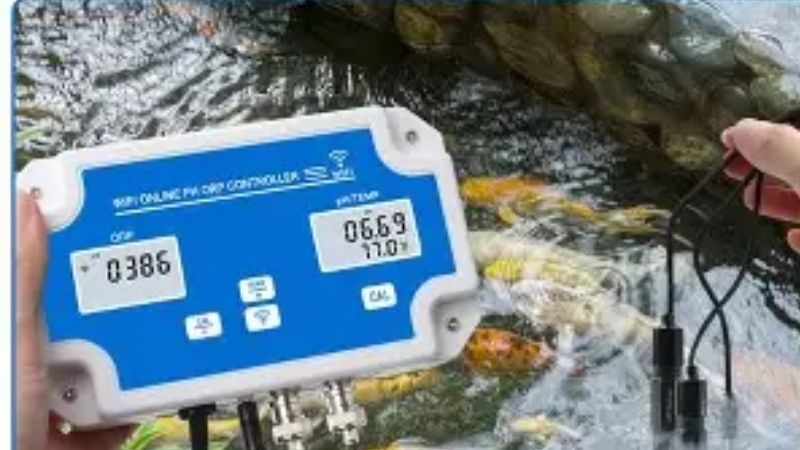
WiFi Architecture
Radio and network design differ more than the shared WiFi label suggests. The HYDROS Control X4 uses 2.4 GHz WiFi only, the GHL ProfiLux 4.1 adds LAN and USB beside WiFi, and the Neptune A3 Apex Pro offers WiFi plus Ethernet, so their paths onto your home network are far from equivalent.
The Red Sea ReefControl runs on the ReefBeat platform over 2.4 GHz as well. Confirm your router actually broadcasts a 2.4 GHz band, since several of these units require it, and match the controller’s connection type to a spot near the tank where that signal is genuinely reliable.
Local and Offline Operation
The real test of a WiFi controller is what it still does with the internet down. HYDROS runs its automation rules locally on the device, so outlets keep switching on schedule and set-points even when the cloud is unreachable, which matters far more than a slick app during an outage.
The GHL ProfiLux 4.1 goes further with a local webserver and GHL Connect, letting you reach the controller over your own LAN with no internet at all. Confirm that local capability rather than assuming every WiFi unit keeps full function offline, because remote access and local operation are genuinely different things.
Cloud Remote Access
Cloud access is what lets you check the tank from work, and every unit here offers it through its own app. The distinction is that cloud access is a convenience layered on top, not the mechanism that keeps equipment running, so treat it as remote visibility rather than core control of the system.
Reliability claims are hard to compare fairly. None of these makers publish matched uptime or reconnect testing, so it would be misleading to rank one cloud as more dependable than another. Judge cloud access on features you can verify, and lean on local operation for anything genuinely critical.
Wired Fallback
A wired path is the strongest fallback when WiFi is congested or flaky. The GHL ProfiLux 4.1 offers LAN and USB and the Apex Pro adds Ethernet, so both can run on a cable if the radio struggles, while the HYDROS X4 is 2.4 GHz WiFi only with no wired option at all.
One caution on generations: the LAN and over-the-air claims belong to the ProfiLux 4.1, not every earlier P4, so verify the exact model. If your tank sits far from the router or in an interference-heavy spot, a wired-capable controller removes a failure point a WiFi-only unit simply cannot.
Top Picks
These four WiFi pH and ORP monitors are ranked by how they connect and, more importantly, how they behave when the connection fails. Each lists verified specs, a relative price tier, and the drawback that matters most when your own network is the weak link in the whole setup.
| Product | Best For | Key Spec | Watch Out For |
|---|---|---|---|
| HYDROS Control X4 + ORP | Best overall | 2.4 GHz WiFi; local rules; 4 outlets; $587.38 | WiFi only; no wired fallback |
| GHL ProfiLux 4.1 Mega-Set 6E | Best for wired fallback | WiFi + LAN + USB; local webserver | LAN/OTA is P4.1-specific |
| Neptune A3 Apex Pro | Best for full-stack control | WiFi + Ethernet; leak + level; 8 outlets | Standard A3 differs from the Pro |
| Red Sea ReefControl Pro Deluxe | Best for monitoring breadth | ReefBeat 2.4 GHz; pH, salinity, ORP, leak | AC switching needs Power 8 (extra) |
HYDROS Control X4 + ORP
The HYDROS Control X4 + ORP is the WiFi overall pick because it pairs a low complete price with local automation that keeps running when the internet drops. Two pH/ORP ports, included temperature and four WiFi AC outlets let it switch equipment on stored rules rather than waiting on the cloud.
Configured with the ORP probe it lands about $587.38 as of 09/2026, the cheapest complete build here. The honest limit is connectivity: it is 2.4 GHz WiFi only with no wired fallback, so site it where that signal is strong and accept that a flaky router removes its remote access.
GHL ProfiLux 4.1 Mega-Set 6E
The GHL ProfiLux 4.1 Mega-Set 6E is the wired-fallback pick, adding LAN and USB to WiFi and exposing a local webserver through GHL Connect. That means full control over your own network with no internet at all, the most robust offline access of the four controllers gathered here.
Expect around $1,049.90 at GHL USA as of 09/2026, with the widest parameter set and a six-socket Powerbar. Confirm you are buying the 4.1 specifically, because its LAN and over-the-air features are generation-specific rather than shared by every earlier ProfiLux 4 at the same level.
Neptune A3 Apex Pro
The Neptune A3 Apex Pro is the full-stack choice, offering WiFi plus Ethernet alongside two pH/ORP ports, leak, a 15-inch level sensor and the EB832’s eight outlets. The wired Ethernet option gives it a dependable fallback that a WiFi-only controller simply cannot match on a busy network.
At about $1,099.88 at BRS or $1,169.99 direct as of 09/2026, it is the priciest here but the most connected and capable. Confirm the Pro rather than the standard A3, which drops the second pH port and the ORP probe you likely want logging over the network while away.
Red Sea ReefControl Pro Deluxe
The Red Sea ReefControl Pro Deluxe suits keepers who want broad monitoring on WiFi, running the ReefBeat platform over 2.4 GHz across pH, salinity, ORP and leak with room for seven sensors. For visibility of many parameters from one app, it covers the most channels out of the box.
At about $699 at BRS as of 09/2026 it is monitoring-first, so acting on a reading adds the Power 8 near $319. Like the HYDROS it leans on 2.4 GHz, so confirm that band reaches the tank, and budget the switching hardware if you want it to control equipment during an event.
Frequently Asked Questions
WiFi-focused buyers ask a familiar set of questions about a pH and ORP monitor before trusting it to a network. Each answer opens with the practical call, then the condition that changes it, so you can match connectivity to how your home network and tank location actually behave.
What spec should decide this purchase?
WiFi architecture should decide it, because it sets what the controller can and cannot do when the connection fails. Choose the unit whose connectivity matches your network — WiFi-only, or WiFi with a wired fallback — rather than assuming every model behaves the same once the internet drops.
After architecture, weigh local operation and remote access separately. A controller that keeps switching equipment on local rules protects the tank offline, while cloud access is a convenience on top, and the complete pH and ORP price should reflect the connectivity tier you actually need.
Which numbers are hard facts and which are heuristics?
Connection types, the 2.4 GHz requirement, and the September 2026 prices are hard facts. The complete-build totals from about $587.38 to $1,099.88 are equally concrete but move with the market, so read them as current snapshots rather than fixed figures printed once on a page.
Cloud reliability is where hard data runs out. No maker here publishes matched uptime or reconnect testing, so any ranking of one cloud over another would be guesswork. Judge remote access on verifiable features, and rely on local or wired operation for anything you cannot afford to lose.
Is the highest headline number always better?
No. More parameters or a slicker app do not help if the controller loses function the moment WiFi drops, and specs measured differently do not compare across brands. The right pick keeps the tank safe offline and connects in a way your network can actually sustain day and night.
That is why a wired-capable GHL or Apex can outperform a WiFi-only unit in a congested house, even at a higher price, while the value HYDROS wins where the 2.4 GHz signal is strong. Match connectivity to your environment, not to the longest feature list printed on the box.
When might the reader not need this?
If you are always home and check the tank in person, WiFi and cloud access add cost and a failure point you may not need. A capable offline controller or even a simpler local monitor can cover a stable tank without any network dependency at all to worry about.
WiFi earns its place once remote visibility or off-site alerts genuinely matter to you. When that is the case, prioritize local operation and a wired fallback over cloud polish, since the point is a tank that stays safe whether or not the internet happens to be up.
Final Thoughts
The best wifi enabled pH and ORP monitor keeps running locally when the internet drops, connects in a way your network can sustain, and offers a wired fallback if WiFi is unreliable. Weigh the complete pH and ORP price against the connectivity you need, and treat cloud access as convenience, not core control.
Ready to decide? Our #1 pick for 2026 is the HYDROS Control X4 + ORP.
Live price & availability on Amazon.
Related Reviews & Guides

Best Aquarium Chiller for Axolotl Tanks: Top Smart Picks
Best Pond Pump Maintenance Kit: Well-Researched Top Picks