Last Updated: October 4, 2026
Probes and calibration chemistry only work when matched to your exact controller, so the best probes and calibration kit for a pH and ORP monitor is chosen on controller compatibility, probe type, the correct pH-versus-ORP reference chemistry, and the recurring replacement cost over time.
As an Amazon Associate we earn from qualifying purchases.
By David Nguyen
Quick answer: For most people in 2026, the best probes and calibration kit for a ph and orp monitor is the GHL Calibration Fluids — our #1 rated choice. See the full ranked comparison, alternatives and buying advice below.
How to Choose Probes and Calibration Supplies
Replacement probes and reference fluids are ecosystem-specific, so a generic pick can be worse than useless. Weigh controller compatibility first, then the probe type you need, the correct calibration or reference chemistry for pH versus ORP, and the recurring replacement cost you will carry over time.
Controller Compatibility
Compatibility comes first because a probe built for one controller may not speak to another. The Red Sea ReefSense pH and Temperature Probe is a digital unit that stores calibration on the probe for the ReefControl ecosystem, while the GHL Redox Electrode uses a BNC connector and the ProfiLux menu.
Neptune and GHL calibration supplies likewise assume their own controllers and procedures. Confirm the probe and its connector match your system before anything else, since even a well-made electrode is the wrong buy if your controller cannot read it or guide its calibration through a menu.
Probe Type
pH and ORP are different measurements, so their probes are not interchangeable. A pH electrode and an ORP or redox electrode read different chemistry, which is why the GHL Redox Electrode is sold separately from any pH probe and uses its own BNC connection and a 3 m cable to reach the controller.
Digital probes like the Red Sea ReefSense bundle temperature and store their own calibration, while analog BNC electrodes rely on the controller for it. Match the probe type to what your unit expects, because mixing a digital ecosystem probe with an analog input, or the reverse, simply will not work.
Correct Calibration and Reference Chemistry
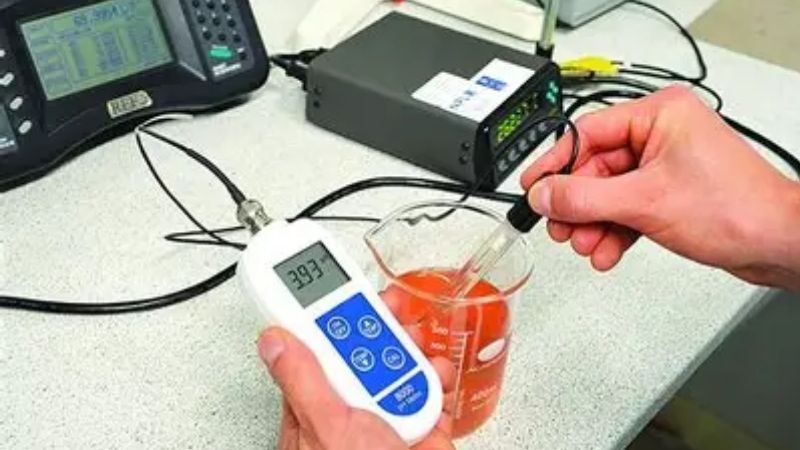
This is where a generic kit misleads, because pH calibration and ORP verification are not the same workflow. GHL calibration fluids come as specific 50 mL references — pH 4, 7 and 9.2 plus a 220 mV redox standard — and no single bottle among them calibrates both pH and ORP at once.
Neptune’s standard under $20 kit contains pH 7, pH 10 and salinity standards, which is a saltwater pH path, not a complete ORP kit; a 4 and 7 pair suits freshwater or a calcium reactor. ORP special recalibration uses a different chemistry, typically quinhydrone together with pH 4 and 7 buffers.
Replacement Cost
Probes drift and eventually fail, so recurring cost is part of the decision. Replacement pairs vary widely as of 09/2026: a Neptune pH plus ORP pair runs about $300, a GHL pH plus redox pair about $175, and a Red Sea pH/temp plus ORP pair about $238 across the two electrodes.
On that basis the Neptune pair sits about $125 above the GHL pair, roughly 76.7% higher using the GHL pair as the base, while the GHL pair is about 43.4% below the Neptune one using the Neptune base. Factor these repeat costs, not just the first probe, into the ecosystem you commit to.
Top Picks
Because probe compatibility is ecosystem-specific, there is no single best kit here; each pick is the right buy for a particular controller and task. Each lists verified specs, a price, and the drawback to know before matching it to your own pH and ORP system and its calibration procedure.
| Product | Best For | Key Spec | Watch Out For |
|---|---|---|---|
| GHL Calibration Fluids | GHL pH and redox references | 50 mL: pH 4/7/9.2 and 220 mV redox | One bottle per reference only |
| Neptune Calibration Kit | Neptune pH calibration | pH 7 + pH 10 + salinity standards | Not a complete ORP kit |
| Red Sea ReefSense pH & Temperature Probe | ReefControl pH and temp | Digital; ±0.05 pH; cal stored on probe | ReefControl ecosystem only |
| GHL Redox Electrode | GHL ORP readings | BNC; 3 m cable; ProfiLux menu cal | Use GHL/ProfiLux procedure |
GHL Calibration Fluids
The GHL Calibration Fluids are the pick for keeping a ProfiLux reading true, sold as specific 50 mL references: pH 4, 7 and 9.2 plus a 220 mV redox standard, at about $15 each as of 09/2026. Each bottle targets one reference point rather than serving as a general-purpose solution.
The limitation is inherent to calibration: no single fluid calibrates both pH and ORP, so a working set means several bottles. Two pH buffers plus one 220 mV redox reference come to about $40, which is the honest cost of covering both parameters correctly on a GHL system.
Neptune Calibration Kit
The Neptune Calibration Kit is the pick for routine pH calibration on an Apex, bundling pH 7, pH 10 and salinity standards for about $15 as of 09/2026. The 7 and 10 pairing is a saltwater pH path, well matched to a typical reef Apex owner’s needs on that platform.
Its limit is scope: this is not a complete ORP kit, and ORP special recalibration uses a different chemistry and procedure. For freshwater or a calcium reactor a 4 and 7 pair fits better, so match the buffer set to your water rather than assuming one kit covers every case you meet.
Red Sea ReefSense pH & Temperature Probe
The Red Sea ReefSense pH and Temperature Probe is the pick for a ReefControl owner replacing a pH sensor, at about $119 as of 09/2026. It is digital, cites pH accuracy of ±0.05 with 0.01 precision, and stores its calibration on the probe itself for a simpler swap when the time comes.
The constraint is ecosystem lock: it is built for the ReefControl system, so it is not a drop-in for an Apex, HYDROS or GHL controller. Confirm you run ReefControl before buying, since the on-probe calibration and digital interface only work within that particular platform’s hardware.
GHL Redox Electrode
The GHL Redox Electrode is the pick for ORP on a ProfiLux, a BNC electrode with a 3 m cable calibrated through the ProfiLux menu, at about $90 as of 09/2026. It handles the ORP side that pH buffers cannot, completing a two-parameter calibration plan on GHL hardware.
The requirement is procedure: it must be calibrated with the GHL and ProfiLux steps and the correct redox reference, not a generic method. Paired with the GHL pH electrode near under $80, a full pH-plus-redox replacement lands around $175, the recurring cost of staying accurate over time.
Frequently Asked Questions
Buyers replacing probes ask a recurring set of questions about a pH and ORP monitor’s supplies. Each answer opens with the practical call, then the condition that changes it, so you can match probes and chemistry to your exact controller and water rather than a generic combined kit.
What spec should decide this purchase?
Controller compatibility should decide it, because the finest probe is wasted if your system cannot read it. Confirm the connector, the ecosystem and the calibration method match your controller first, ahead of accuracy figures or price, since those matter only once the probe actually works with it.
After compatibility, weigh probe type and the correct chemistry. A pH electrode and an ORP electrode are separate purchases with separate references, so plan for both if you monitor both, and match buffers to your water rather than assuming one kit fits every setup you might run.
Which numbers are hard facts and which are heuristics?
The reference values — pH 4, 7, 9.2 and a 220 mV redox standard — the connector types, and the September 2026 prices are hard facts. So are the replacement-pair totals, about $300 for Neptune, under $200 for GHL and $238 for Red Sea, though those prices move over time with the market.
The percentage gaps between pairs are derived from those prices and stated against a base, so read the roughly 76.7% Neptune premium as relative to the GHL pair, not an absolute. Calibration frequency is not universal, so follow your controller’s procedure rather than a fixed schedule from elsewhere.
Is the highest headline number always better?
No. A tighter accuracy figure or a pricier probe helps nothing if it will not talk to your controller, and specs measured differently do not compare across brands. The right buy matches your ecosystem and calibration method first, then reads accurately within it over the probe’s working life.
That is why a ReefSense probe is ideal for ReefControl yet the wrong choice elsewhere, and why the cheaper GHL pair can beat the pricier Neptune one for a ProfiLux owner. Compatibility and correct chemistry decide value here far more than any single headline accuracy number does.
When might the reader not need this?
If your existing probes still calibrate cleanly and hold their readings, you may not need new ones yet; over-replacing healthy electrodes only adds cost. Verify against fresh reference fluid first, since a drifting reading sometimes just needs recalibration rather than a brand-new probe entirely.
A separate ORP purchase is also unnecessary if you only monitor pH, since a generic combined kit would mislead more than help. Buy the specific chemistry and probes your controller and parameters actually require, and skip the second electrode until you truly begin monitoring ORP as well.
Final Thoughts
For upkeep, the best probes and calibration kit for a pH and ORP monitor is matched to your exact controller, with correct separate chemistry for pH and ORP and a clear view of recurring cost. Follow the controller’s calibration steps, and treat a generic combined kit with caution, since the workflows differ.
Ready to decide? Our #1 pick for 2026 is the GHL Calibration Fluids.
Live price & availability on Amazon.
Related Reviews & Guides

Best Pond Pump for Winter: Well-Researched, Reliable Top Picks

Quick Picks: Best Submersible Aquarium Heaters