Last Updated: September 27, 2026
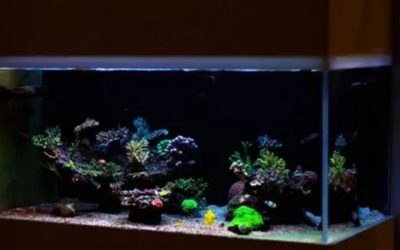
Frag systems pack dense coral into modest water, so growth and alkalinity draw can climb fast. The best calcium reactor for a frag system is one sized to measured demand and easy to nudge upward, because a crowded frag rack consumes far more than its gallon count suggests.
As an Amazon Associate we earn from qualifying purchases.
By David Nguyen
Quick answer: For most people in 2026, the best calcium reactor for a frag system is the AquaReady cTech T-1 — our #1 rated choice. See the full ranked comparison, alternatives and buying advice below.
How to Choose a Calcium Reactor for a Frag System
A frag system’s demand comes from coral biomass and growth rate, not the display volume, so sizing on gallons alone misleads. These four criteria keep the reactor matched to what your frags actually consume today, while leaving genuine room to raise output as the alkalinity draw rises with the coral load.
Size to Coral Demand, Not Water Volume
A frag tank often holds modest water but dense coral, so its alkalinity consumption can outrun what the gallon count suggests. Measure daily dKH draw and size the reactor to that figure, because two frag systems of the same volume can demand very different output depending on how heavily each one is stocked.
Gallon ratings are eligibility references, not standardized output tests, so use them only to shortlist bodies that qualify. Once a reactor clears your system on paper, let the measured daily consumption decide how much reactor you truly need, since a lightly loaded frag tank and a packed one sit far apart.
Leave Real Adjustment Headroom
Frag growth is not linear; a rack that is half full today can be crowded within months, and demand rises right along with it. Choose a reactor whose range and pump let you dial output up comfortably, so you are not pinned at the top of its capability the moment the coral load steps up yet again.
Headroom also protects tuning quality, since a reactor running near its ceiling has little slack to raise effluent when demand climbs. One with margin lets you make small, controlled increases instead, and on a frag system designed to grow, that adjustable reserve is worth more than a tight, exact fit today.
Compare Media Inventory Carefully
Media capacity sets refill frequency, but the specs are not interchangeable across brands. The GEO CR612 lists 8 pounds of media while the Reef Octopus CR-140 quotes a 3.8-liter chamber, and pounds and liters are non-comparable without knowing density, so weigh each figure in its own unit rather than side by side.
For a busy frag system, more media generally means fewer interruptions to service, which matters when you would rather tend corals than the reactor. Judge capacity against how often you want to refill and the space under the stand, not as a raw output figure, since output depends on flow, CO2 and internal pH.
Check the Service Footprint
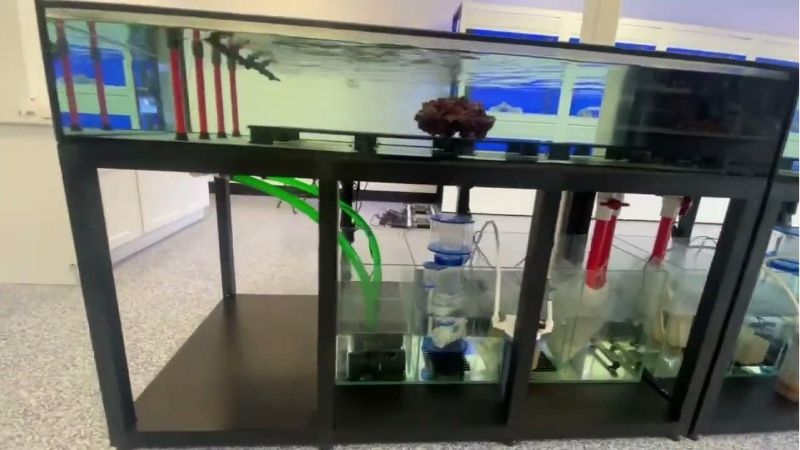
Frag systems often run on compact sumps or tight stands, so the reactor competes with a feed pump, regulator and a CO2 cylinder for room. Measure interior height and clearance first, because a taller body plus a cylinder can be the thing that stops the cabinet doors closing on an already crowded frag setup.
Access for maintenance matters as much as the initial fit here. You will clean the recirculation pump and refill media periodically, so leave working room around the body rather than wedging it in. A reactor you can service without dismantling plumbing keeps a frag system running steadily with far less downtime.
Top Picks
These four bodies suit frag systems at different scales and budgets, from a broadly adjustable value pick to a high-ceiling reactor for a room full of grow-out. Use the table to shortlist, then match the choice to your measured demand, since a light frag tank and a packed one point to opposite ends of this range.
| Product | Best For | Key Spec | Watch Out For |
|---|---|---|---|
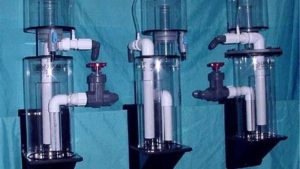
| AquaReady cTech T-1 | Best Overall value | 75-300 gal; 2.9 L chamber; ~$235 (Sep 2026) | Sold as a body; add CO2 gear |
| GEO CR612 GEN3 | Best for media runtime | Up to 150 gal; 8 lb media; ~$425 direct | Media in lb; not 1:1 with L bodies |
| Reef Octopus CR-140 | Best for a large frag system | 106-211 gal; 3.8 L chamber; 45 W AC pump | 45 W always-on; confirm current price |
| Tunze 3171 | Best for maximum headroom | Up to 317 gal; 1.85 L media; 25 W US; $579.99 | Priciest; rating depends on coral load |
AquaReady cTech T-1 — Best Overall Value
The AquaReady cTech T-1 is the flexible anchor for most frag systems. Its 75 to 300 gallon range and 2.9-liter chamber cover a wide span of coral loads, and at around $235 as of September 2026 it is the value choice here, with an included Sicce pump that trims one item off the parts list.
It ships as a body, so budget the regulator, bubble counter and pH controller alongside it rather than treating the price as finished. The broad range is an eligibility window, not a promise it will hold a very heavy grow-out steady, so lean on your measured demand as the frag rack keeps filling in.
GEO CR612 GEN3 — Best for Media Runtime
The GEO CR612 GEN3 suits a frag system where you would rather service the reactor less often. It is rated up to 150 gallons with 8 pounds of media capacity, so refills stretch out on a genuinely busy tank, and at about $425 direct as of September 2026 it buys runtime rather than a rock-bottom price.
Its capacity is quoted in pounds, which you cannot line up directly against liter-rated chambers without density, so compare it on its own terms. It also arrives as a body needing the full CO2 chain, and on a lightly stocked frag tank that media volume is money spent on runtime you will not actually use.
Reef Octopus CR-140 — Best for a Large Frag System
The Reef Octopus CR-140 is the pick for a large or fast-growing frag system, pairing a 106 to 211 gallon range with a 3.8-liter chamber driven by a 45-watt AC pump. That larger chamber means longer runs between refills, which is welcome when the rack is dense and demand is already climbing steadily.
The 45-watt pump adds to the always-on power that reef gear quietly accumulates, and you should confirm current pricing before buying. Its liter chamber cannot be compared straight across to the pound-rated GEO bodies without accounting for media density, so judge runtime by refill frequency on your own system.
Tunze 3171 — Best for Maximum Headroom
The Tunze 3171 is the headroom choice, rated up to 317 gallons with 1.85 liters of media and, in the US, a 25-watt pump at 115 volts and 60 hertz. On a frag system you expect to expand aggressively, that high ceiling leaves room to raise output for years without running the reactor near its limit.
At $579.99 it is the most expensive body here, and its gallon rating is conditional on coral population, not a fixed output test, so a lightly loaded tank will never use the reserve. Choose it when your growth plans are serious, and keep the region-specific 25-watt US figure in mind rather than other-market specs.
Frequently Asked Questions
Frag keepers tend to ask the same questions about whether a reactor is needed and how to size one for a tank built to grow. These answers stay on measured demand and verified specs, since a frag system’s real consumption, not its gallon label, is what decides how much reactor the build actually requires.
Does Every Frag Tank Need a Calcium Reactor?
No. A lightly stocked frag system with slow-growing corals may have modest demand that two-part dosing meets cheaply, so a reactor can add CO2 gear and tuning without solving a real problem. Not all frag tanks are high demand, and the honest first step is to measure your daily dKH draw before buying.
A reactor starts to earn its place once the rack fills with fast-growing colonies and dosing becomes a daily grind. The trigger is a rising, measured consumption trend, not the fact that the tank is labelled a frag system, so let your test log rather than the tank’s purpose decide when to add one.
How Do I Size a Reactor by Gallons for Frags?
You do not size by gallons alone, because a frag system’s demand is set by coral biomass, not water volume. Use the gallon rating only to confirm a body is eligible, then size to the daily alkalinity draw you actually measure, since a packed frag tank can consume like a much larger display reef.
Treat any published range as a window a reactor must clear, never as a target that matches your tank’s volume to a model. Two frag systems of identical gallons can need different reactors, so the measured demand and your growth plans, not the number on the aquarium, are what belong at the center of sizing.
Do SPS Frags Demand More Than the Rating Suggests?
They can, because a gallon rating is an eligibility ceiling rather than an output test, and dense SPS frags consume alkalinity quickly as they grow. A body that looks generous on gallons may still run hard once a rack of SPS colonies is putting on tissue, so the rating alone can understate real demand.
The reliable guide is your own testing, not the spec sheet. Track daily dKH draw as the SPS frags develop, and if consumption is climbing toward the reactor’s comfortable limit, favor a body with headroom. Do not convert extra gallon coverage into a fixed percentage of extra output, since the two do not equate.
What Should I Monitor as the System Grows?
Watch your aquarium’s alkalinity trend first, since that is what the reactor exists to hold steady. Also track effluent flow, internal pH and how quickly you go through media, because a shortening refill interval or a slipping alkalinity reading is the early sign that demand has outgrown the current settings.
Adjust in small, single steps and confirm several days of stability before changing anything else, as targets are model and media specific. When a frag system’s demand keeps rising and the reactor is near its ceiling, the monitoring data, not a guess, is what tells you it is time for more capacity.
Final Thoughts
The best calcium reactor for a frag system is the one sized to measured consumption and your growth trajectory, not the tank’s gallon count. Confirm eligibility, then choose for headroom and easy adjustment: the AquaReady cTech T-1 fits most builds, with larger bodies waiting for genuinely heavy grow-out.
Ready to decide? Our #1 pick for 2026 is the AquaReady cTech T-1.
Live price & availability on Amazon.
Related Reviews & Guides

Live Rock vs Dry Rock: Cost, Cycling Time and Pest Risk
Best Kessil AP9x Setup for Mixed Reef: How to Plan Coverage