Last Updated: September 27, 2026
A calcium reactor holds alkalinity and calcium rock-steady, but the sticker price scares many reef keepers off. The real trick to finding the best budget calcium reactor is separating the cheap reactor body from the pumps, CO2 gear and media that turn it into a working system.
As an Amazon Associate we earn from qualifying purchases.
By David Nguyen
Quick answer: For most people in 2026, the best budget calcium reactor is the AquaReady cTech T-1 — our #1 rated choice. See the full ranked comparison, alternatives and buying advice below.
How to Choose a Budget Calcium Reactor
Choosing a budget calcium reactor means looking past the headline number on the reactor body. What matters is total installed cost, whether a unit fits your actual demand, and whether it drops into your cabinet. These four criteria keep a low upfront price from becoming an expensive, half-finished project.
Weigh Total Setup Cost, Not Body Price
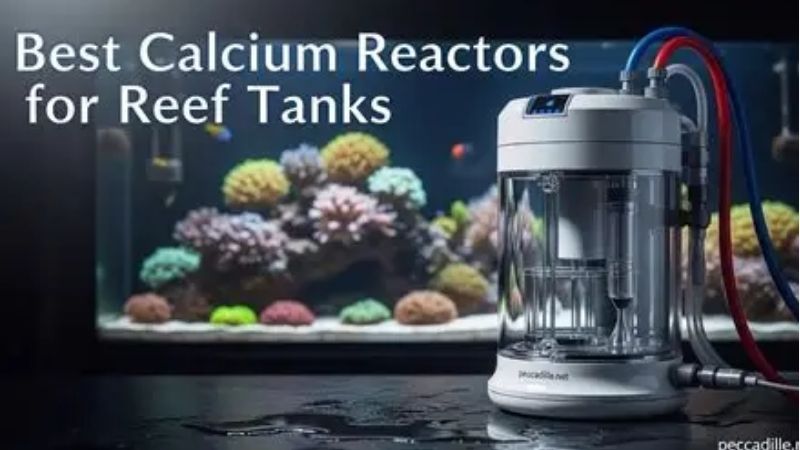
The reactor body is only the down payment. A working system usually adds a feed pump, a CO2 regulator with solenoid, a bubble counter and a pH controller, so a roughly $235 body can more than double once those parts are in. Budget the whole chain, not the shelf price, before any model looks cheap.
Running costs matter just as much. Reactor media and CO2 are recurring buys, and a media refill plus a CO2 fill every few months is a genuine line item. Across twelve months, consumables and the occasional pH probe often cost more than the price gap between two competing reactor bodies.
Match Demand, Not Just Tank Gallons
Manufacturer gallon ratings are eligibility references, not standardized output tests. The AquaReady cTech T-1 lists a 75 to 300 gallon range, while the GEO CR612 GEN3 is stated up to 150 gallons, yet two 120-gallon reefs can post very different alkalinity demand depending on coral load.
Size to consumption, not the tank label. Measure how many dKH your system burns each day, then pick a reactor whose published range sits comfortably above that draw. A lightly stocked softie tank may never need a reactor at all, while an SPS-heavy build can outrun a small unit surprisingly fast.
Chamber Size and Cabinet Footprint
Chamber volume sets how much media a reactor holds and how often you refill. The T-1 uses a 2.9-liter reaction chamber, and larger bodies stretch the runs between top-ups. Media capacity in pounds and chamber volume in liters are non-comparable without density, so weigh each spec on its own terms.
Footprint is the quiet dealbreaker. The reactor, its feed pump and a CO2 cylinder all share the stand, and a compact body beside the sump beats a taller unit you cannot close the doors on. Measure interior height and clearance first, since a CO2 cylinder adds more height than people expect.
Check Included Controls and Extras
Read the box contents line by line. Some reactors ship as a bare body and expect you to supply the feed pump, regulator and bubble counter, while others bundle a recirculation pump. Two reactors at the same price can differ by a couple hundred dollars once you add the missing core parts.
Core control features are where budget cuts hurt most. A pH controller with a decent probe keeps effluent stable and protects livestock, and running submerged and CO2 gear through a GFCI outlet is basic safety. Cut the decorative extras long before you cut the controller from the build.
Top Picks
These four picks span a real budget ladder, from a verified low-cost body to a higher-capacity reactor worth stretching for. Only two carry fully verified spec sheets in our source data, so the other two are framed on what their makers state, with the gaps flagged plainly in the table just below.
| Product | Best For | Key Spec | Watch Out For |
|---|---|---|---|
| AquaReady cTech T-1 | Best Overall (budget) | 75-300 gal range; 2.9 L chamber; ~$235 (Sep 2026) | Sold as a body; add pump and CO2 gear |
| GEO CR612 GEN3 | Best for Verified Capacity | Up to 150 gal; 8 lb media; ~$425 direct (Sep 2026) | Priciest here; overkill on small reefs |
| Reef Octopus CR-100 | Best Value Entry | Compact single-chamber body; branded support | Body-only; confirm current gen and price |
| AquaReady cTech T-2 | Best for Demand Headroom | Larger cTech sibling for high-demand reefs | Range, chamber and price unverified here |
AquaReady cTech T-1 — Best Overall
The AquaReady cTech T-1 is the value anchor here. At around $235 as of September 2026, it pairs a manufacturer 75 to 300 gallon range with a 2.9-liter chamber, so it suits everything from a stocked 90-gallon mixed reef to a demanding smaller SPS build without forcing oversized hardware on you.
The catch is that the low price buys a body, not a system. You still add a feed pump, CO2 regulator and controller, and its broad gallon range is an eligibility window, not a promise it will hold a heavy 300-gallon load steady. Confirm the current price, since reactor pricing shifts month to month.
GEO CR612 GEN3 — Best for Verified Capacity
The GEO CR612 GEN3 is the pick when your demand is real. GEO states coverage up to 150 gallons and 8 pounds of media capacity, and at about $425 direct as of September 2026 it costs more than the T-1, but that media volume stretches the interval between refills on a genuinely busy reef.
It is the most expensive body in this lineup, and on a lightly stocked tank that capacity is money you will not use. Treat the gallon figure as an eligibility reference tied to coral load, not a performance test, and note the 8-pound media rating is not directly comparable to a chamber measured in liters.
Reef Octopus CR-100 — Best Value Entry
The Reef Octopus CR-100 is the compact entry from an established reef brand, built around a single recirculating chamber for smaller systems. It is one of the more affordable branded reactor bodies, which makes it a natural first step for keepers moving off two-part dosing on a modest tank.
Because it ships as a body, the budget still has to cover a feed pump, CO2 regulator and controller before it runs. Its exact current range, chamber size and price were not verified in our source data, so confirm the live spec sheet and generation on the maker’s page before you commit any money.
AquaReady cTech T-2 — Best for Demand Headroom
The AquaReady cTech T-2 is the larger sibling in the cTech line, aimed at reefs whose alkalinity draw outpaces the T-1. If you run a heavily stocked SPS system or plan to scale up, stepping to the bigger body buys headroom so the reactor is not pinned at the top of its range every single day.
That headroom costs more, both up front and in the CO2 and media it burns, so it is wasted on a light load. Its specific range, chamber volume and current price are not verified in our source data here, which means it earns a shortlist spot only after you confirm those numbers directly.
Frequently Asked Questions
A budget calcium reactor raises the same handful of questions for nearly every buyer, and most of them come back to true cost and whether the device is even the right tool. These answers stay on the numbers and trade-offs that decide whether a low upfront price actually saves you money.
What Does a Full Calcium Reactor Setup Actually Cost?
Plan for well beyond the body price. A reactor body might run $235 to $425, but a feed pump, CO2 regulator with solenoid, bubble counter and pH controller commonly add a few hundred dollars more, so a realistic first setup often lands in the mid-hundreds and can pass $700 with quality parts.
The way to shrink that total is to reuse gear you already own, such as a spare pump or an existing controller, instead of buying the cheapest body and pairing it with all-new accessories. Prices move month to month, so price each part as of your own purchase date rather than trusting old guides.
Is a Larger Calcium Reactor Worth the Extra Money?
Only when your demand justifies it. A bigger reactor like the GEO CR612 GEN3, with 8 pounds of media capacity, stretches refill intervals and holds output steady on a heavy SPS load, but on a lightly stocked reef that capacity sits idle while you still pay for every gram of CO2 it uses.
Match the reactor to measured consumption rather than the biggest number you can afford. If your daily dKH draw is modest, a smaller body such as the T-1 keeps both purchase and running costs down, and you can upgrade the reactor later as the coral load and daily demand actually grow.
What Components Come Included, and What Do I Add?
Most budget reactors ship as a body plus a recirculation pump, and little else. You usually supply the feed pump, the CO2 regulator with solenoid, a bubble counter, CO2 media and, ideally, a pH controller, so read each listing closely because two units at one price can include very different parts.
Before checkout, list what the box actually contains against that full parts chain and price the gaps. A body that looks $100 cheaper can cost more overall once you add a regulator and controller it leaves out, which is exactly how a cheap reactor quietly becomes the expensive one.
When Is a Calcium Reactor Worth It Over Two-Part Dosing?
A reactor earns its keep once two-part dosing turns expensive or tedious, usually on larger or coral-heavy systems. If you are hand-dosing large daily volumes or refilling dosing containers constantly, a reactor automates alkalinity and calcium together and often costs less per unit of supplement over time.
On a small, lightly stocked or brand-new tank, two-part is cheaper, simpler and safer to learn on. There is little benefit to forcing a reactor onto a system with low, easily dosed demand, and the CO2 handling adds complexity a beginner reef rarely needs during its first year or two.
Final Thoughts
The best budget calcium reactor is the one whose total installed cost, not its body price, fits your reef. The AquaReady cTech T-1 is the strongest verified value, the GEO CR612 GEN3 rewards real demand, and the two remaining picks belong on your list only after you confirm their live specs and pricing.
Ready to decide? Our #1 pick for 2026 is the AquaReady cTech T-1.
Live price & availability on Amazon.
Related Reviews & Guides


Best 75 Gallon Aquarium Kit for a Small Apartment: Top Smart

Quick Picks: Best Cleanup Crew Options for Freshwater Tanks