Last Updated: October 4, 2026
The best aquarium decor for shrimp hiding spots gives dwarf shrimp real refuge and grazing surfaces without creating holes that trap larger tankmates. This guide compares four current shrimp hides by verified size, aquarium-safe material and price, and flags the fish-safety check that decides whether a small-opening cave is right.
As an Amazon Associate we earn from qualifying purchases.
By David Nguyen
Quick answer: For most people in 2026, the best aquarium decor for shrimp hiding spots is the Aquarium Co-Op Shrimp Cave — our #1 rated choice. See the full ranked comparison, alternatives and buying advice below.
How to Choose Shrimp Hides
Choosing shrimp hides means thinking at shrimp scale: small openings sized for tiny bodies, aquarium-safe ceramic, terracotta or natural wood, and surfaces shrimp can graze biofilm from. The catch is that shrimp-scale holes can trap curious fish, so tankmate safety belongs in the decision from the start.
Use small, shrimp-scale openings
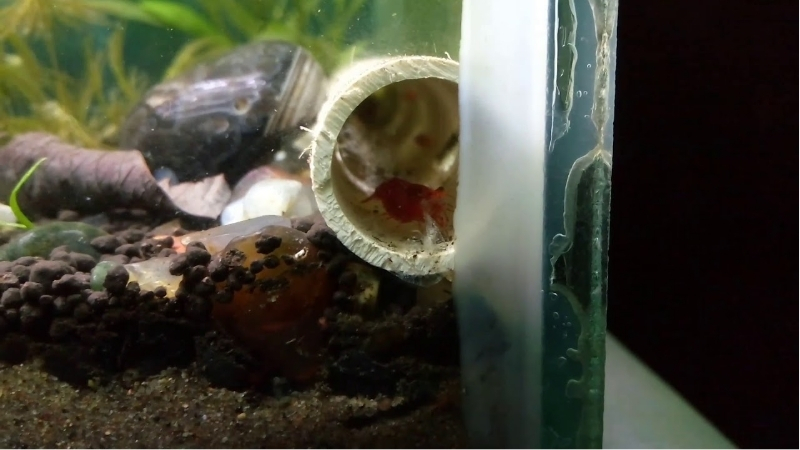
Dwarf shrimp are tiny, so their hides need small, shrimp-scale openings and tight spaces where they feel secure. A purpose-built piece like the Aquarium Co-Op Shrimp Cave, a half-dome about 2 inches wide and 1.5 inches tall, gives shrimp the enclosed refuge they instinctively seek.
Small openings suit shrimp precisely because they exclude bigger animals, but that same feature is a risk with the wrong tankmates. Size the shelter to the shrimp, not to fish, and remember that a hide built for shrimp is not automatically appropriate for a tank that also houses larger fish.
Prefer ceramic, terracotta or wood
Stick to materials proven safe in aquariums: fired ceramic, terracotta clay and natural wood like cholla. The Co-Op Shrimp Cave uses terracotta the seller calls livestock-safe, and Imagitarium’s ceramic domes and tubes are made for aquarium use, so all resist leaching under constant water contact.
Natural cholla wood adds a hide and a grazing surface at once as it softens in water. Avoid craft or unverified materials, which may not be safe submerged. Aquarium-specific ceramic, terracotta and wood cover the shrimp-hide need without the risk of leaching that untested decor can introduce.
Add grazing surfaces
Shrimp do more than hide; they graze biofilm constantly, so texture matters as much as shelter. Porous terracotta, unglazed ceramic and cholla wood all grow the microfilm shrimp feed on, turning a hide into a food source and giving shrimplets somewhere safe to forage as they grow.
Cholla wood in particular becomes a favorite grazing spot as it breaks down slowly over weeks. Combining enclosed hides with textured, grazeable surfaces supports a shrimp colony better than smooth decor alone, since it feeds natural behavior while still providing the security shrimp need to breed and molt.
Check fish entrapment risk
Shrimp-scale openings can trap fish, so check tankmates before adding small-hole hides. Aquarium Co-Op explicitly warns that bettas can try to enter the cave’s small holes and become stuck, which is a genuine hazard rather than a rare edge case in a mixed shrimp-and-fish tank.
Exact hole diameters are not published, so do not assume a hole is safe for a given fish. In a shrimp-only tank this is a non-issue, but with bettas or other curious fish, choose hides whose openings clearly exclude the fish or keep small-hole caves out of that tank entirely.
Top Picks
These four picks cover the best aquarium decor for shrimp hiding spots, from a purpose-built terracotta cave to natural cholla wood. Note that different pieces are measured on different axes, so width, height and length are not interchangeable, and more openings do not simply mean more shrimp capacity.
| Product | Best For | Key Spec | Watch Out For |
|---|---|---|---|
| Aquarium Co-Op Shrimp Cave | Best Overall | 2 W x 1.5 H in half-dome; terracotta | Small holes risky with bettas; ~under $10 (09/2026) |
| Imagitarium Ceramic Dome | Budget Dome | 2.3 W x 1.3 H in; aquarium ceramic | X-small; ~under $10 (Petco, 09/2026) |
| Imagitarium Ceramic Tube | Tube Hide | 1.5 W x 2.9 H in; aquarium ceramic | Different axis than dome; ~under $10 (Petco, 09/2026) |
| Imagitarium Cholla Wood | Natural Grazing | ~6 in length; natural wood | Softens/breaks down over time; ~under $10 (09/2026) |
Co-Op Shrimp Cave: Best Overall
The Aquarium Co-Op Shrimp Cave is the strongest purpose-built pick, a terracotta half-dome about 2 inches wide and 1.5 inches tall designed specifically for shrimp. The livestock-safe clay is porous enough to grow grazeable biofilm, so it works as both a refuge and a feeding surface at about $10.
The one caveat is its small openings, which Co-Op warns bettas can enter and get stuck in. In a shrimp-only tank it is close to ideal, but in a mixed tank you must verify your fish cannot force into the holes. Judge it on tankmates, not just on how well it suits shrimp.
Ceramic Dome: Budget Dome
The Imagitarium Ceramic Dome is the budget option at about $5, roughly 30% below the Co-Op cave. Listed as an X-small at 2.3 inches wide and 1.3 inches tall, it gives shrimp a simple enclosed hide in aquarium-safe ceramic for the lowest price in this lineup of four.
Its listed width is about 15% greater than the Co-Op cave’s 2 inches, but that does not translate to 15% more usable shelter, since interior shape and opening drive that. Treat it as a cheap, effective dome hide, and compare it to the Co-Op cave on shape and fit rather than width alone.
Ceramic Tube: Tube Hide
The Imagitarium Ceramic Tube offers a different shape, an X-small tube 1.5 inches wide and 2.9 inches tall, also around $5. The tube form gives shrimp a tunnel-style hide and extra vertical surface, which some shrimp prefer over a dome for the enclosed, pass-through feel it provides.
Because it is measured on a different axis than the dome, you cannot compare the two on a single dimension; height and width describe different things. Choose the tube for tunnel-style shelter and added grazing wall, and pair it with a dome if you want to offer shrimp a variety of hide shapes.
Cholla Wood: Natural Grazing
Imagitarium Cholla Wood, about 6 inches long and around $10, is the natural option, prized as much for grazing as for shelter. As it softens in water it sheds a biofilm shrimp graze constantly, and its hollow, porous structure gives shrimplets crevices to shelter in while they grow.
Its length is a different measure than the ceramic hides’ width and height, so it is not comparable on shelter volume. Cholla breaks down over weeks and needs occasional replacement, but few decor items support shrimp behavior better, making it a strong complement to a solid ceramic or terracotta cave.
Frequently Asked Questions
These are the questions shrimp keepers ask most, from why shrimp need hides to whether bettas can use shrimp caves. Each answer gives a direct response, then the fish-safety or sizing caveat that decides how it applies to your particular tank and its mix of livestock.
Why do shrimp need hides?
Shrimp are prey animals, and hides give them the security to feed, breed and molt. A freshly molted shrimp is soft and vulnerable, so enclosed shelter reduces stress and predation risk. Without hides, shrimp stay skittish and hide in plants or equipment instead, which stresses the colony.
Hides also create grazing surfaces when made of porous material, doubling as feeding stations. A colony with plenty of refuge is more active, colors up better and breeds more readily. So hides are not just decoration; they directly support the behaviors that keep a shrimp population healthy and growing.
How many caves per shrimp?
There is no fixed ratio, and more holes do not simply mean more shrimp capacity. Shrimp share hides and cluster together, so a few well-placed caves plus some plants or wood provide plenty of refuge for a sizable colony without needing one opening per shrimp in the tank.
Aim for varied shelter, mixing caves, tubes and natural wood so shrimp of different sizes and molt states all find cover. Adding endless identical holes does little; variety and grazing surface matter more. Let the colony’s behavior guide you, adding hides if shrimp seem crowded or overly exposed.
Is cholla wood safe?
Yes, natural cholla wood is a popular, aquarium-safe shrimp hide and grazing surface. It softens in water and releases a biofilm shrimp feed on, and its hollow structure shelters shrimplets. Cholla sold for aquarium use is a staple in shrimp tanks for exactly these reasons.
It does break down over weeks and can release light tannins, tinting water slightly, which is harmless. Replace pieces as they decay, and rinse before use. As a natural item it is one of the safest and most beneficial additions to a shrimp tank, pairing well with ceramic or terracotta hides.
Can bettas use shrimp caves?
This is a caution, not a feature. Aquarium Co-Op warns that bettas can try to enter the Shrimp Cave’s small holes and become stuck, so shrimp caves are not designed for bettas and can be dangerous in a betta tank. The small openings that suit shrimp are the exact risk.
Since exact hole diameters are not published, do not assume a hole is too small for a betta to attempt. In a betta-and-shrimp tank, choose hides whose openings clearly exclude the betta, or give the betta its own appropriately sized cave and keep tiny shrimp holes out of its reach.
Final Thoughts
The best aquarium decor for shrimp hiding spots is a purpose-built terracotta cave like the Aquarium Co-Op Shrimp Cave, backed by ceramic domes or tubes and natural cholla wood for grazing. Match hide size to shrimp, not fish, verify small openings are safe for any tankmates like bettas, and confirm current prices before buying.
As an Amazon Associate we earn from qualifying purchases at no extra cost to you. Prices and availability are accurate as of the date shown and are subject to change.
Ready to decide? Our #1 pick for 2026 is the Aquarium Co-Op Shrimp Cave.
Live price & availability on Amazon.
Related Reviews & Guides



Best pH and ORP Monitor for the Money: Trusted Value Picks
5 Best Aquarium Water Conditioners and Dechlorinators