Last Updated: October 7, 2026
- How to Choose a 3D Target: The 4 Decision Criteria
- Top 3 Picks Compared: Specs and Best Use Case
- Decision Matrix: Which Target Fits Your Situation?
- Cost Per Shot: Why a Replaceable Insert Pays for Itself
- Durability and Ownership: What Wears First and How to Make It Last
- Setup for Backyard vs. Course Practice
- FAQ
The best 3D archery targets for most backyard and course practice are the Rinehart Woodland Buck, Delta McKenzie Big Shooter Buck, and GlenDel Buck, because they balance realistic deer vitals sizing, self-healing foam durability, and replaceable core systems without requiring a full target replacement every season.
Quick answer: For most people in 2026, the best 3d archery targets for practice is the Type & Foam — our #1 rated choice. See the full ranked comparison, alternatives and buying advice below.
How to Choose a 3D Target: The 4 Decision Criteria
Not all 3D targets are built for the same type of shooting. Before comparing models, match the construction to your bow and practice goals:

Rinehart Signature Coyote 3D Archery Target, Replaceable Vital Insert
Included for 'Best 3D Archery Targets for Practice' because the listing specifies Replaceable Vital Insert, details this guide uses to compare options.
View on Amazon
Rinehart 1/3 Scale Woodland Elk 3D Archery Target, Replaceable Vital Insert
Included for 'Best 3D Archery Targets for Practice' because the listing specifies Replaceable Vital Insert, details this guide uses to compare options.
View on Amazon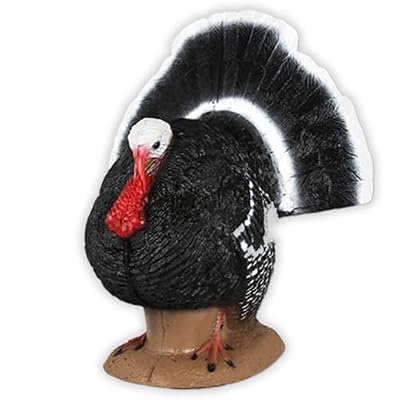
Delta McKenzie Strutter Turkey Archery Target - Lifelike 3D Self-Healing Foam Design, Durable Bow & Crossbow Practice Target for Field Points & Broadheads, Realistic Strutting Turkey for Bowhunting
Included for 'Best 3D Archery Targets for Practice' because the listing specifies Lifelike 3D Self-Healing Foam Design and Realistic Strutting Turkey for Bowhunting, details this guide uses to compare options.
View on Amazon
BIGSHOT Pro Hunter 3D Doe Deer Archery Target - Self-Healing Foam for Broadheads & Field Points - Weather Resistant with Replaceable Core - Competition Grade for Compound Bow & Crossbow Practice
Included for 'Best 3D Archery Targets for Practice' because the listing specifies Self-Healing Foam for Broadheads & Field Points and Weather Resistant with Replaceable Core, details this guide uses to compare options.
View on Amazon- Target Size and Scoring Area: A true-to-life whitetail deer target is typically 32-36 inches tall at the shoulder and 45-50 inches long. Mid-size or “backyard” versions are scaled to 75-80% to save space and weight. If you are training for 3D tournaments or hunting, a full-size target gives you correct yardage estimation and vital-zone muscle memory. For close-range form work in a small yard, a compact target is easier to move and store.
- Foam Construction: Three foam types dominate the market. Solid self-healing foam (like Rinehart’s Solid FX) closes around arrow channels and lasts longest with broadheads and field points. Layered foam is cheaper and stops arrows well but layers can separate and show wear faster. Polyethylene/soft foam blends (common on budget bag-style 3D targets) are light but degrade quickly in UV and with high-poundage bows.
- Replaceable Inserts / Cores: This is the biggest long-term cost factor. A target with a replaceable vital insert lets you shoot out the high-wear heart/lung area and replace just that section for $40-$90, instead of buying a whole new $150-$400 target. Targets without a core need to be retired once the center is shot out.
- Weather Resistance: For targets left outside, look for solid, closed-cell foam with UV inhibitors. Closed-cell foam does not absorb water, so it won’t gain weight, freeze, or grow mold after rain. Open-cell or layered foam will soak up water if left uncovered, which increases arrow penetration and shortens lifespan.
Top 3 Picks Compared: Specs and Best Use Case
These three models represent the most common and proven options for backyard practice and realistic course setups in 2026. All handle field points, fixed-blade broadheads, and expandable broadheads when used at the recommended draw weights.
| Feature | Rinehart Woodland Buck | Delta McKenzie Big Shooter Buck | GlenDel Buck |
|---|---|---|---|
| Type & Foam | Solid self-healing Solid FX foam, solid body | Layered body with replaceable PolyFusion core | PolyFusion 4-sided insert in molded body |
| Overall Size (L x H) | ~48″ x 34″ (full-size whitetail) | ~46″ x 33″ (full-size) | ~45″ x 36″ (full-size with broadside + quartering faces) |
| Weight | ~32 lbs | ~28 lbs | ~35 lbs |
| Scoring / Vital Area | Universal scoring rings, ~10″ x 12″ replaceable insert | ~11″ x 12″ replaceable core, IBO scoring | ~13″ x 14″ 4-sided insert, 2x larger vital area total |
| Replaceable Core | Yes – locking insert | Yes – front-loading core | Yes – 4-sided, rotate for fresh face |
| Weather Resistance | Excellent – closed-cell, UV resistant, can be left outdoors year-round | Good – closed-cell core, layered body should be covered for long-term outdoor storage | Very Good – solid body, best when stored under cover between sessions |
| Recommended Bow | Up to 70 lbs, up to 350 FPS | Up to 65 lbs, up to 320 FPS | Up to 70 lbs, up to 330 FPS (crossbow compatible on insert) |
| General Market Range | $300 – $400 | $180 – $280 | $250 – $350 |
1. Rinehart Woodland Buck – Best for Durability and Year-Round Outdoor Use
The Woodland Buck uses Rinehart’s one-piece solid self-healing foam. There are no layers to delaminate, so arrows pull cleanly and holes close up. The locking replaceable insert sits directly over the vital zone where 90% of shots land. This is the target most 3D courses use because it can take thousands of shots from compounds, recurves, and crossbows and stay outdoors in rain, snow, and direct sun without swelling. The tradeoff is weight and price – it is heavier to move around the yard and costs more upfront, but the foam lasts 2-3x longer than layered alternatives before needing a new insert.
2. Delta McKenzie Big Shooter Buck – Best Value for Backyard Form Practice
The Big Shooter series is the entry point to a full-size deer target. It uses a layered foam body with a denser PolyFusion replaceable core in the vitals. For archers shooting 40-60 lb bows with field points at 20-40 yards, it stops arrows reliably and provides clear IBO scoring rings for practice. It is lighter than solid foam targets, so it is easier to carry to different yardages. For long-term outdoor storage, cover it or store it in a garage between sessions, as the layered body will absorb water over time if left uncovered.
3. GlenDel Buck – Best for High-Volume Shooting and Broadhead Tuning
GlenDel’s advantage is its large 4-sided insert. Instead of one shooting face, you get four fresh sides to rotate through – effectively quadrupling the life of the insert. Each side presents a slightly different angle (broadside, quartering away), which is useful for realistic hunting practice. The target body is molded polyethylene that is very stable on uneven ground. Archers who shoot daily or tune broadheads frequently get the lowest cost-per-shot from this design because you wear out the insert evenly before replacing it.
Decision Matrix: Which Target Fits Your Situation?
| Your Situation | Best Match | Why |
|---|---|---|
| Small backyard, shoot 3-4x per week, need to move target easily | Delta McKenzie Big Shooter Buck | Lightest weight, lowest upfront cost, sufficient durability for field points under 60 lbs |
| Leave target outside year-round, shoot broadheads + field points | Rinehart Woodland Buck | Closed-cell solid foam resists water, freezing, and UV without a cover |
| High-volume shooter, tuning broadheads, want lowest long-term cost | GlenDel Buck | 4-sided insert spreads wear; one insert lasts as long as 3-4 standard inserts |
| Limited space or budget under $200, recurve / low-poundage compound | Compact 75% scale deer or turkey 3D target (Rinehart or Delta McKenzie mid-size) | Smaller footprint, easier storage, still offers replaceable core on most models |
| Training for ASA/IBO 3D competition | Rinehart Woodland Buck or GlenDel Buck | Full-size anatomy and IBO scoring rings at correct scale for yardage judging |
Cost Per Shot: Why a Replaceable Insert Pays for Itself
A 3D target without a replaceable core typically lasts 1,500-2,500 shots in the vital area before pass-throughs start. A target with a replaceable insert can last 4,000-6,000 shots on the body, with only the insert needing replacement. Here is a practical calculation:
Example: You shoot 50 arrows, 3 times per week = 150 shots per week = ~7,800 shots per year. Assume 80% hit the vital insert.
- Non-replaceable target at $200 lasting 2,000 vital hits: You would need ~3 targets per year = ~$600 per year.
- Replaceable-core target at $320 + $65 per insert (each insert lasts ~2,000 vital hits): Body lasts 2+ years. Year one = $320 + (2 inserts x $65) = $450. Year two = 3 inserts x $65 = $195. Two-year total = $645 vs $1,200 for non-replaceable.
Even at lower volume (75 shots per week = ~3,900 per year), one insert per year keeps the annual cost to $65 after the initial purchase, while a solid budget target would need full replacement. If you shoot broadheads, divide those lifespan estimates by roughly 30-40%, which makes the insert system even more economical.
Durability and Ownership: What Wears First and How to Make It Last
Foam targets fail in predictable ways. Knowing what to expect helps you avoid common mistakes that shorten lifespan:
- The vital insert always goes first. Rotate a 4-sided insert every 250-300 shots. On single-face inserts, flip or replace when arrows start to push deeper than 2-3 inches past the fletching or when you see daylight through the hole.
- Don’t shoot the same spot repeatedly. Even self-healing foam has a limit. Aim at different scoring rings to spread wear. Using small dot stickers and moving them extends insert life by 25% or more.
- Pull arrows straight. Yanking at an angle tears foam. Use arrow lube on carbon shafts and pull straight back in line with the arrow. This is especially important with broadheads in solid foam.
- UV and water are the silent killers. Closed-cell solid foam can stay out, but even it fades and chalks in direct sun over years. Layered foam acts like a sponge. If you cannot store indoors, use a breathable target cover or tarp and keep the target off bare ground on a pallet or stand. Never wrap a wet target in plastic, which traps moisture.
- Over-bow the target. Shooting a 70-lb compound at 10 yards into a target rated for 60 lbs will cause deep penetration and accelerated wear. Add 10 yards distance or choose a target rated for higher kinetic energy. For crossbows over 350 FPS, use a dedicated crossbow-rated 3D target or a high-density block behind the 3D target as a backstop.
Cleaning is simple: brush off dirt and seeds with a stiff brush, pick out foam boogers around the insert, and let the target air dry before covering. Do not use solvents or heat to repair holes – they break down foam chemistry.
Setup for Backyard vs. Course Practice
For backyard practice, place the target with a safe backstop (earth berm, dense woods, or a layered block target behind it) and at least 20 yards of clear downrange. Angle the target slightly quartering to mimic hunting shots and to reduce direct pass-through risk. On a 3D course, vary height – place the buck on a slight incline or with legs on uneven ground. Practicing uphill and downhill shots changes your effective vital window and is the main advantage of 3D over a flat bag.
FAQ
Can I shoot broadheads into any 3D target?
Only targets labeled broadhead-compatible with self-healing or PolyFusion-type cores should be used with broadheads. Layered or soft foam bag-style 3D targets will shred and may not stop a broadhead safely. Even with compatible targets, use field points for most form practice and reserve broadheads for final tuning to extend target life.
How far should I shoot from a 3D deer target?
Follow the manufacturer’s minimum distance, usually 20 yards for compounds and 30+ yards for crossbows. At close range under 15 yards, arrow energy is highest and foam wear increases dramatically. If you need to practice at 10 yards, use a low-poundage bow or a dedicated close-range block.
Do I need to replace the whole target when arrows pass through?
No, if your target has a replaceable insert and the body foam is still firm. Replace the insert first. If arrows pass through the body outside the insert, or if the body is soft, cracked, or waterlogged, the structural foam is spent and the whole target should be retired.
Ready to decide? Our #1 pick for 2026 is the Type & Foam.
Live price & availability on Amazon.
Related Reviews & Guides



Best Dual Fuel Generators

Best Heavy Duty Sewing Machine in 2026: Buying Guide