Last Updated: October 4, 2026
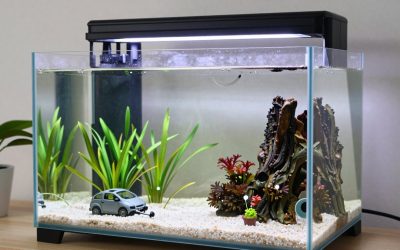
Choosing a filter is not only a matter of matching gallons per hour (GPH) to tank capacity. The filter must also fit the aquarium rim, leave room for tubing or cartridges, and sit securely without crowding lights, lids, or decorations. This aquarium filter dimensions for standard tanks guide compares common tank sizes, practical filter clearances, and the measurements shoppers should check before buying.
The Short Answer
For most freshwater aquariums, choose a filter rated for about four to six times the tank’s actual water volume per hour. A 10-gallon aquarium commonly needs approximately 40 to 60 GPH, while a 20-gallon tank generally suits 80 to 120 GPH. Heavily stocked tanks, messy fish, or aquariums with live plants may need more filtration, although fish that prefer gentle currents may require a flow control or spray bar.
As an Amazon Associate we earn from qualifying purchases at no extra cost to you.


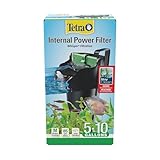

Dimensions matter just as much as flow. A compact internal filter may occupy only about 2.5 to 4 inches (6.4 to 10.2 cm) of tank width and 6 to 10 inches (15.2 to 25.4 cm) of vertical space. A hang-on-back, or HOB, filter usually needs about 5 to 8 inches (12.7 to 20.3 cm) of clearance behind the aquarium, plus enough room above the rim to lift out the cartridge.
Common small power filters cost approximately $13 to $25. Larger-capacity models, canister filters, and specialty units cost more. For example, compact internal and HOB filters in the Tetra Whisper range are often listed from roughly $13 to $24, depending on flow rating and features.
Standard Sizes
The table shows common nominal aquarium sizes, typical exterior dimensions, and a practical filter envelope. Exact measurements differ by manufacturer, glass thickness, trim, and lid design, so measure the individual aquarium before ordering.
| Tank size | Typical tank dimensions (L × W × H) |
Approx. dimensions in cm | Typical filter flow | Filter space to allow |
|---|---|---|---|---|
| 5 gallons | 16.25 × 8.5 × 10.5 in | 41.3 × 21.6 × 26.7 cm | 20–30 GPH | Internal: 3 × 3 × 7 in minimum; HOB: 5 in behind tank |
| 10 gallons | 20.25 × 10.5 × 12.625 in | 51.4 × 26.7 × 32.1 cm | 40–60 GPH | Internal: 3.5 × 3.5 × 8 in; HOB: 5–6 in behind tank |
| 20 gallons high | 24.25 × 12.5 × 16.75 in | 61.6 × 31.8 × 42.5 cm | 80–120 GPH | Internal: 4 × 4 × 10 in; HOB: 6 in behind tank |
| 20 gallons long | 30.25 × 12.5 × 12.75 in | 76.8 × 31.8 × 32.4 cm | 80–120 GPH | Internal: 4 × 4 × 10 in; HOB: 6 in behind tank |
| 29 gallons | 30.25 × 12.5 × 18.75 in | 76.8 × 31.8 × 47.6 cm | 120–175 GPH | Internal: 4.5 × 4.5 × 12 in; HOB: 6–8 in behind tank |
| 40-gallon breeder | 36.25 × 18.25 × 16.9 in | 92.1 × 46.4 × 42.9 cm | 160–240 GPH | Internal: 5 × 5 × 14 in; HOB: 8 in behind tank |
| 55 gallons | 48.75 × 12.75 × 21 in | 123.8 × 32.4 × 53.3 cm | 220–330 GPH | HOB: 8 in behind tank; canister preferred by some owners |
| 75 gallons | 48.75 × 18.5 × 21.1 in | 123.8 × 47 × 53.6 cm | 300–450 GPH | HOB: 8–10 in behind tank; canister space below |
Filter ratings are maximum advertised pump capacities and may be lower once media becomes dirty or water must pass through dense cartridges. A filter rated for 105 GPH or 130 GPH is not automatically appropriate for every tank in that range; check both the manufacturer’s aquarium rating and the physical dimensions.
How to Measure Your Space
- Measure the tank rim. Record the inside length and width of the top opening, not just the glass dimensions. Internal filters and intake tubes must fit below the rim without pressing against the lid.
- Check the rear clearance. Measure from the wall to the back edge of the aquarium. Most HOB filters need at least 5 to 8 inches (12.7 to 20.3 cm) behind the tank, including room for the power cord and water-level adjustment.
- Measure the lid opening. A glass or plastic canopy may have a narrow filter cutout. Confirm that the intake tube, return lip, and cartridge compartment can pass through the opening.
- Measure usable water depth. Internal filters often require the pump to remain fully submerged. Leave enough depth for the unit’s minimum water line while accounting for evaporation.
- Check the stand or cabinet. For a canister filter, measure the height and width of the compartment below the aquarium. Leave space to remove the lid, disconnect hoses, and replace media.
- Plan electrical space. Keep a drip loop in every power cord and avoid placing power strips directly under the aquarium. A small aquarium filter commonly uses about 3 to 10 watts; larger units may use more.
- Confirm the mounting method. Suction cups, magnets, clips, and hang-on brackets each need different clearances. A filter that fits the tank width may still fail if the rim is unusually thick.
By Room or Use Case
Bedroom or Office Aquariums
Noise and footprint usually matter more than maximum flow in a bedroom or office. A small internal filter can avoid the rear clearance required by an HOB unit, but it occupies visible tank space. Look for adjustable flow and a compact body approximately 3 to 4 inches wide. Models marketed with quieter operation may be more comfortable near a bed or desk, but placement on a level, vibration-resistant surface also affects perceived noise.
Living Room Display Tanks
For a 20- to 40-gallon display aquarium, an HOB filter provides useful mechanical and biological filtration without equipment inside the aquascape. Allow at least 6 inches behind a smaller tank and about 8 inches behind a 40-gallon breeder. Check the lid design before buying: a filter lip may require a rear section of the canopy to be removed or replaced.
Small Apartments and Narrow Furniture
When the aquarium sits close to a wall, an internal filter is often easier to install than a HOB model. Choose a vertical unit that fits below the waterline and does not block the main viewing area. For a 5- or 10-gallon tank, verify that the filter does not take up more than roughly one-quarter of the tank’s short-side width.
Community and Heavily Stocked Tanks
A 29-, 40-, or 55-gallon community aquarium may benefit from a filter rated above the tank’s nominal capacity, provided the outlet can be diffused. Canister filters are useful when visual clutter is a concern, but they need cabinet space, two hose paths, and enough clearance to remove the motor head. Measure the canister body separately from the hose-bend space.
Betta, Shrimp, and Gentle-Flow Setups
These aquariums need filtration without a strong current. A small internal filter with a sponge prefilter, adjustable outlet, or spray bar is usually easier to control than an oversized unit. Do not select a filter solely because its GPH is high; an adjustable 40 GPH filter may be more suitable than a fixed 100 GPH model for a small, low-flow habitat.
Common Sizing Mistakes
- Using tank gallons as the only measurement. The aquarium rating does not confirm that the filter fits the rim, lid, or wall clearance.
- Ignoring actual water volume. Gravel, rocks, wood, and decorations reduce water volume. A nominal 10-gallon aquarium may hold less than 10 gallons after setup.
- Buying the highest GPH available. Excessive current can stress slow-moving fish and push floating plants around the tank.
- Forgetting maintenance access. Leave room to remove cartridges, rinse sponges, and lift out the motor. A filter that technically fits may be impractical to service.
- Overlooking water-level changes. Evaporation can expose an internal pump or make a waterfall HOB filter louder. Mark the normal fill line and top off regularly.
- Measuring the tank but not the trim. Thick plastic frames can prevent a bracket from seating fully, even when the glass opening seems wide enough.
FAQ
What size filter do I need for a 10-gallon tank?
Start with a filter rated around 40 to 60 GPH. A compact internal model may need about 3.5 inches of width, while a HOB filter commonly needs 5 to 6 inches behind the aquarium. Choose adjustable flow if the tank contains a betta, shrimp, or other fish that prefer calm water.
How much space does a hang-on-back filter need?
Most small HOB filters need approximately 5 to 6 inches behind the tank, while larger units may need 8 to 10 inches. Also allow several inches above the rim for cartridge removal and ensure the lid has a compatible rear opening.
Can an internal filter be too large for a small aquarium?
Yes. A large internal filter can reduce swimming space, create excessive current, and be difficult to hide. Compare its width, height, minimum water depth, and rated flow with the tank’s actual interior measurements.
Are aquarium filter dimensions standardized?
No. Tank capacities are commonly labeled by gallon size, but filter bodies, mounting clips, intake tubes, and cartridge compartments vary by brand and model. Use the manufacturer’s product dimensions as a starting point, then compare them with your measured rim, lid, rear clearance, and maintenance space.
Ready to decide? Our #1 pick for 2026 is the 5 gallons.
Live price & availability on Amazon.
Related Reviews & Guides
Best Tower Square Aquarium Kit For Tall Displays: Top Smart
Best All in One Saltwater Tank with a Stand Included: Top