Last Updated: September 25, 2026
Anubias care guide advice starts and ends with one structural fact: the rhizome is a stem rather than a root, and burying it kills the plant within a fortnight. Everything else about Anubias barteri is unusually tolerant of neglect, which is why it survives in tanks where faster and more demanding plants fail outright.
As an Amazon Associate we earn from qualifying purchases.
As an Amazon Associate we earn from qualifying purchases at no extra cost to you. Prices and availability are accurate as of the date shown and are subject to change.

How to Care for Anubias: A Comprehensive Guide
Selected for "Anubias Care Guide: How It Grows and What to Watch Out For": this listing is aquarium equipment (How to Care for Anubias: A Comprehensive Guide), matching the equipment this article covers.
View on Amazon
Anubias Starter Bundle 3 Pack Live Freshwater Aquarium Plants Easy Care
Selected for "Anubias Care Guide: How It Grows and What to Watch Out For": this listing is aquarium equipment (Anubias Starter Bundle 3 Pack Live Freshwater Aquarium Plants Easy Car), matching the equipment this article covers.
View on Amazon
Anubias Nana Care Guide: The Beginner’s Aquarium Plant
Selected for "Anubias Care Guide: How It Grows and What to Watch Out For": this listing is aquarium equipment (Anubias Nana Care Guide: The Beginner’s Aquarium Plant), matching the equipment this article covers.
View on Amazon
Canton Aquatics Anubias Congensis
Selected for "Anubias Care Guide: How It Grows and What to Watch Out For": this listing is aquarium equipment (Canton Aquatics Anubias Congensis), matching the equipment this article covers.
View on AmazonBy David Nguyen
Quick answer: Our top pick in 2026 is the Green spot algae on old leaves — our #1 rated choice. See the full ranked comparison, alternatives and buying advice below.
Why Anubias Survives Where Faster Plants Fail
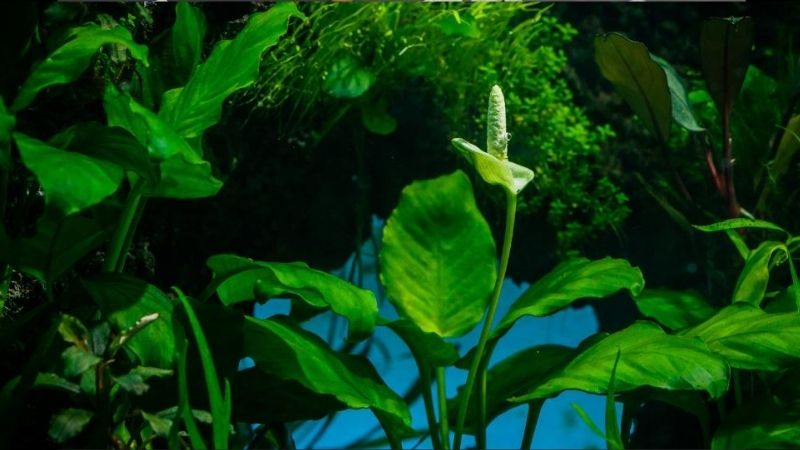
This anubias care guide begins with structure because structure explains every rule that follows. Anubias is an epiphyte that grows attached to wood and rock rather than rooted in soil, so it feeds from the water column and anchors with roots that serve as grips rather than feeding organs.
The Deciding Numbers: Tank Minimum, Temperature, Light and Growth Rate
Anubias tolerates 72-82 F (22-28 C), pH 6.0-7.5 and GH 3-15 dGH (54-268 ppm), which covers nearly every tap water supply people actually keep fish in. It needs no CO2 injection at all, and it will not grow noticeably faster if you add it. That tolerance is the plant’s main selling point.
Light demand is genuinely low, around 10-30 micromoles of PAR at the leaf, and pushing beyond that produces algae rather than growth. Expect roughly one new leaf a month from a healthy plant. A specimen that looks identical after three weeks is behaving normally rather than failing.
Size decides the tank minimum. Anubias nana petite stays near 2-3 in (5-8 cm) and suits 5 gallons (19 L), standard nana reaches 4-6 in (10-15 cm) for a 10-gallon (38 L) tank, and Anubias barteri climbs to 12-16 in (30-40 cm) and needs 20 gallons (76 L) or more. Buy by mature size, not pot size.
Rhizome, Roots and Why Burial Kills It
The rhizome is the thick horizontal green stem that leaves and roots both emerge from, and it must stay in open water. Buried in substrate it rots from the inside within roughly 10-14 days, blackening outward as it goes. No correction to dosing or lighting reverses that process once it starts.
The roots look dark, wiry and sparse compared with a sword plant’s, because they are anchors rather than feeding structures. Tie the rhizome to wood or rock using cotton thread, fishing line or a plant-safe gel, and the roots grip firmly within four to six weeks. After that the thread can go.
Normal Appearance Versus Action Thresholds
Anubias spends a lot of its life looking slightly wrong while being perfectly healthy, which is why many good plants get discarded. The table below separates appearances that need no intervention from the ones that do, pairing what you see with a matching reading from a liquid test kit.
| What you see | Reading alongside it | What it means | What to do |
|---|---|---|---|
| Green spot algae on old leaves | Light 8 h or more | Slow leaves collecting algae | Cut photoperiod to 6-7 hours |
| Yellowing on the oldest leaves | Nitrate under 5 ppm | Nitrogen shortage | Dose macros, retest in a week |
| New leaves pale with green veins | No micro dosing | Iron shortage | Dose a comprehensive micro mix |
| Rhizome soft, brown, foul smelling | Parameters normal | Rhizome rot, usually from burial | Cut back to firm green tissue |
| Leaves melt shortly after purchase | Parameters normal | Emersed growth converting | Trim dead leaves, keep the rhizome |
| No new leaf for a month | Parameters normal | Normal growth rate | Nothing, this is expected |
Anubias in Real Tanks
The practical half of an anubias care guide is placement, because a plant growing on hardscape competes for space and light differently from anything rooted in the bed. Where you attach it determines how much light it receives, and that single choice decides whether you fight algae for years.
Tank Size, Placement and Fit
Attach anubias in the mid-ground or foreground on wood or rock, preferably in partial shade. The shadowed flank of a piece of driftwood suits it far better than an open spot directly beneath the brightest part of the fixture, where its slow-growing leaves accumulate spot algae within weeks.
Leave headroom for the larger varieties. Anubias barteri at 16 in (40 cm) inside a 12 in (30 cm) tall tank ends up growing sideways along the surface and shading everything beneath it. Measure the real numbers before you order: mature leaf length against your tank’s internal height.
What Changes Between 10, 20 and 55 Gallon Tanks
In a 10-gallon (38 L) tank, nana and nana petite are the sensible choices because they stay proportionate to the hardscape. A standard barteri dominates that footprint within a year, and because anubias is slow to recover from division, correcting the mistake takes several months.
In a 55-gallon (208 L) tank anubias works as a mass planting across multiple pieces of wood. Growth is slow enough that filling a background takes 18-24 months from a handful of plants, which is worth knowing before buying one specimen and hoping for coverage by next season. Patience or quantity, never more light.
Tankmates, Bioload and Fish That Leave It Alone
Anubias leaves are tough and largely unpalatable, so goldfish and most large cichlids ignore them where softer plants are stripped within days. That makes it one of very few genuine options for those tanks, alongside java fern, and it tolerates their higher nitrate levels without complaint.
In shrimp tanks the broad leaves collect biofilm that shrimplets graze on, which is a real functional benefit rather than decoration. The caution is not the plant but the products used around it: check every fertiliser and treatment for copper content before dosing an invertebrate tank.
Myths and Mistakes Worth Clearing Up
Three misunderstandings account for most discarded plants, and this section of the anubias care guide replaces each with something measurable. All three come from people treating an epiphyte like a rooted stem plant, which is a reasonable assumption that happens to be wrong. Each has a measurable correction.
Myth: Anubias Needs Root Tabs
Root tabs do nothing for a plant with no feeding roots in the substrate. Anubias takes everything through the water column, so a comprehensive liquid at half the label rate weekly covers it, aiming for roughly 10-25 ppm nitrate and 0.1-0.5 ppm iron in a planted tank. Root tabs are wasted money here.
In a well stocked tank, fish waste often supplies enough nitrogen on its own, which is why anubias frequently thrives with no dosing at all. What waste does not supply is potassium and iron, and that shortage appears as yellowing old leaves and pale new growth over several months.
Myth: Algae on the Leaves Means the Plant Is Sick
Algae on anubias is a light and time problem rather than a plant health problem. Because each leaf lives for a year or more, anything that establishes on it stays there, which is why slow plants under bright fixtures look worse than fast growers in the same conditions. Leaf lifespan explains it.
The correction is photoperiod and placement, not treatment. Cut to 6-7 hours, move the plant into shade, and remove the worst leaves at the rhizome. Avoid algaecides in planted tanks entirely, since several of them contain copper, which kills shrimp and snails at very low concentrations.
Myth: More Light Speeds It Up
Growth rate in anubias is set by the plant rather than by the fixture, and raising PAR above 50 micromoles produces algae instead of leaves. This is the opposite of how stem plants respond, and it is why anubias belongs in shaded positions in high-light aquascapes. Keep it out of the beam.
If you want faster coverage, buy more plants rather than more light. Three small nana attached across a piece of wood fill the same space in a third of the time it takes one specimen to spread, and the tank stays free of the algae a brighter fixture would cause. This anubias care guide favours quantity over intensity.
Long-Term Care, Propagation and Twelve-Month Costs
Anubias is a decade-scale plant in a stable tank, so the closing part of this anubias care guide covers what changes across years rather than weeks. Attachment materials degrade, lighting output fades, and the plant slowly outgrows whichever position you had originally chosen for it.
Trimming and Dividing the Rhizome
Trim damaged leaves at the rhizome with clean scissors rather than tearing them away, and remove any leaf more than half covered in algae. A healthy plant carries six to ten good leaves at a time, shedding older ones naturally as newer growth takes over the work of photosynthesis.
Divide by cutting the rhizome with a clean blade, leaving at least three or four leaves and a section of root on each piece. Smaller divisions survive but stall for months, and every cut surface is an entry point for rot, so divide only when the plant genuinely needs it. Recovery takes months.
What Degrades Over Time
Cotton thread rots away within a month or two by design, but fishing line stays indefinitely and can cut into a thickening rhizome after a year. Check old attachments annually and remove any line that has started to bite into plant tissue before it does structural damage. One check a year suffices.
Equipment ages alongside the plant. LED fixtures lose measurable output over several years, so light that once suited anubias may drift lower, and ageing heaters commonly wander 2-4 F (1-2 C). Neither troubles this plant much, but both change the tank around it. Recheck light and heater accuracy yearly.
Twelve-Month Cost and Sourcing
Running costs are minimal: a comprehensive liquid fertiliser lasting most of a year, thread or plant-safe gel, and nothing else. Prices move constantly, so check them at the moment of purchase rather than budgeting from figures quoted in an article that may be a year old. This anubias care guide avoids fixed figures.
One point on sourcing and disposal: rules covering the sale, transport and discarding of aquatic plants differ by state and country and change over time, so check your local authority before buying or disposing of anything. Never release plants or trimmings into natural waterways.
Frequently Asked Questions
These come up repeatedly during a keeper’s first year with the plant, usually when it is doing something that looks like failure but is ordinary behaviour for a slow-growing epiphyte attached to hardscape rather than planted in the substrate. Almost all reduce to light, attachment or the rhizome rule.
How long does anubias take to attach to wood?
Four to six weeks for roots to grip firmly, sometimes longer in cooler tanks near 72 F (22 C). Cotton thread rots away by itself in that window, while fishing line and plant-safe gel hold indefinitely and should be checked once a year for tightness against the rhizome. Gel sets in seconds underwater.
Does this anubias care guide apply to every variety?
Yes. Nana, nana petite, barteri, coffeefolia and golden share the same rhizome rule, temperature range and light requirement. They differ mainly in mature size, from around 2 in (5 cm) for petite to 16 in (40 cm) for a full-grown barteri in a deep tank. Choose by mature size, not price.
Why is my anubias rhizome turning soft and brown?
That is rhizome rot, and burial is the usual cause. Lift the plant, cut back to firm green tissue with a clean blade, and retie the healthy section to hardscape. If more than half the rhizome is soft, the remaining piece rarely recovers enough to be worth saving. Prevention is simply not burying it.
Can anubias grow fully submerged and out of water?
Both, which is why shop stock is usually grown emersed above the waterline. Those leaves often melt during the first fortnight underwater while the rhizome stays firm. Trim the dead tissue and leave the rhizome alone, and new submersed leaves follow within a month or two. Judge the rhizome, not the leaves.
Is anubias safe with shrimp and snails?
Yes, and the broad leaves are useful grazing surface for biofilm in a breeding tank. The risk sits in what you dose around it: copper appears in some plant supplements and many fish treatments, and it kills shrimp at concentrations far below what fish tolerate quite comfortably. Read every label before dosing.
See More:
Conclusion
The whole anubias care guide reduces to a handful of numbers and one rule: 72-82 F (22-28 C), pH 6.0-7.5, 10-30 micromoles of PAR, no CO2 required, roughly one leaf a month, and a rhizome tied above the substrate rather than buried anywhere within it. Those numbers cover every variety.
Feed it through the water column, give it shade rather than intensity, and buy more plants instead of more light if you want faster coverage. Treated that way it outlasts most of the equipment in the tank, which is why it stays a default recommendation for beginners. Few plants ask less.
Ready to decide? Our #1 pick for 2026 is the Green spot algae on old leaves.
Live price & availability on Amazon.
Related Reviews & Guides



Best Led Light for 20 Gallon Planted Tank in 2026: Compared and Ranked
Amazon Sword Plant Care: How It Grows and What to Watch