Last Updated: October 21, 2026
A fish tank filter does three jobs at once: it pulls out visible debris, it houses the bacteria that convert ammonia to nitrate, and it moves water so oxygen and heat stay even. When a filter is undersized or poorly maintained, you get cloudy water, ammonia spikes, and sick fish. When it is matched to the tank and cleaned on schedule, you barely think about it.
I have run cheap sponge filters for years in breeding tanks and large canisters on messy cichlid tanks. Both work, but they fail in different ways and suit different keepers. Here is how to pick without overspending.
The 4 main types of fish tank filter
Most freshwater tanks use one of these four. Saltwater and large planted tanks sometimes use sumps, but for most buyers under 75 gallons, the choice is simpler.
Sponge filters run on an air pump. Water is drawn through a coarse foam where bacteria live. They provide gentle flow, will not suck up fry or shrimp, and keep working through power blips because the bacteria stay wet and oxygenated. The trade-off is looks and mechanical filtration – they do not polish water well and the sponge takes up space in the tank. They are ideal for bettas, shrimp, quarantine, and fry tanks.
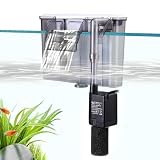
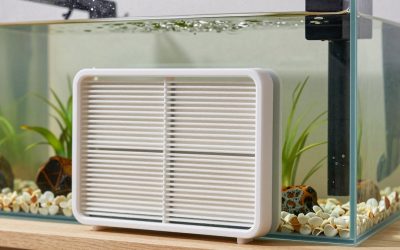
Hang-on-back (HOB) filters hang on the rim and pull water up through a cartridge or basket, then spill it back. They are easy to install, easy to clean, and cheap to run. Downsides: they can be noisy if water level drops, intake tubes can trap small fish without a pre-filter sponge, and cheap cartridges clog fast. If you want a simple hang-on-back aquarium filter for a 10 to 40 gallon community tank, this is usually the practical pick.
Internal filters sit fully inside the tank with a small pump and foam. Good for shallow tanks or where you have no room behind the tank. They take up swimming space and need cleaning more often because the media volume is small.
Canister filters sit under the tank and push water through stacked media trays. They hold far more biological media, run quiet, and handle heavy bioloads. The failure modes are leaks at the O-ring and loss of prime after cleaning if hoses are not seated. They are worth it for 55+ gallons, turtles, goldfish, or cichlids. A quality aquarium canister filter costs more up front but needs opening only every 6-8 weeks.
| Type | Best for | Strengths | Weaknesses |
|---|---|---|---|
| Sponge | 5-20 gal, shrimp, betta, fry | Cheap, gentle, fry-safe, reliable biology | Poor polishing, bulky in-tank, needs air pump |
| Hang-on-back | 10-40 gal community | Cheap, easy install, good surface agitation | Noise if level drops, cartridges clog, intake risk |
| Internal | Small / shallow tanks, no rear clearance | Compact setup, adjustable flow | Takes tank space, small media volume |
| Canister | 55+ gal, goldfish, cichlids | Large media capacity, quiet, strong mechanical filtration | Price, hose maintenance, leak risk if seals neglected |
Sizing and flow: what actually matters
Ignore the box rating alone. Most makers rate for a lightly stocked tropical tank. If you keep goldfish, large cichlids, or turtles, assume you need a filter rated for 1.5 to 2 times your tank volume.
For HOBs and internals, look for 4 to 6 times tank volume per hour in turnover. A 20-gallon community tank does well with 100 to 120 gallons per hour of real flow. For canisters, 3 to 4 times is often enough because the media volume compensates and high flow just blasts plants and stresses bettas.
Adjustable flow is worth paying for. A fixed high-flow HOB on a 10-gallon betta tank will pin the fish in a corner. A sponge filter with a control valve or an HOB with a flow dial lets you run full filtration without too much current. In planted tanks, aim the output at the glass or use a spray bar to spread flow.
Filter media: keep it simple
You need mechanical foam to catch debris and a porous biomedia for bacteria. Chemical media like carbon is optional. Carbon removes odors and medications for about 2 to 3 weeks, then it just takes up space. Do not replace all media at once – that crashes your cycle.
The cheapest upgrade is to ditch disposable cartridges and add reusable foam and ceramic rings. Cut coarse foam to fit the HOB basket and rinse it in old tank water. It lasts years. If you want to stock up, search for aquarium filter sponge and ceramic media in bulk rather than brand-name cartridges. It costs less and filters better.
Never rinse media in tap water if your water is chlorinated. Chlorine kills the bacteria you are trying to keep. Swish it in a bucket of water siphoned from the tank, then put it straight back.
Common failure modes to watch for
Most filter problems are predictable. HOBs lose siphon after a power outage if the impeller chamber drains – keep water level high and clean the impeller every month. Hair and plant string wrap around impellers and make them rattle, then seize. Canisters leak when the main O-ring dries out or gets grit on it. Lightly lubricate it with silicone grease once or twice a year and check hoses for kinks.
Air-driven sponge filters rarely fail mechanically, but the air pump diaphragms wear out after 12 to 18 months and output fades slowly. If bubbles weaken, check for kinked airline and clogged airstone first, then replace the pump. In all filters, the real silent failure is bypass: water finds a gap around clogged media and flows unfiltered. If flow drops by a third, clean it. Do not wait for the scheduled day.
Who should buy what
For a 10-gallon betta or shrimp tank, the cheaper option is fine: a single sponge filter with a small air pump. It is quiet, safe, and $25 total keeps ammonia stable if you stock lightly and change 25 percent of water weekly.
For a 20 to 40 gallon community, get an HOB rated for the next size up, add a pre-filter sponge over the intake, and replace cartridges with foam. Add a second small sponge filter on the opposite side if you stock heavily. Redundancy keeps fish alive if one filter clogs while you are away.
For goldfish, turtles, or 55+ gallons, buy a canister. The media volume and sealed flow path handle waste that would clog an HOB in days. Keep a cheap sponge filter running alongside as a backup and as an instant seed for a hospital tank.
Maintenance that keeps water clear
Rinse mechanical foam every 2 to 4 weeks in tank water. Clean canisters every 6 to 8 weeks, HOB impellers monthly. Replace hoses and suction cups when they harden. Do 25 to 30 percent water changes weekly for most stocked tanks, vacuum only half the gravel at a time to avoid stripping bacteria.
Do not chase crystal water with constant filter upgrades. If water stays cloudy after two weeks with a properly sized filter, the cause is usually overfeeding, overstocking, or a tank that never fully cycled. Test ammonia and nitrite. Both should read zero in an established tank. Fix stocking and feeding first.
FAQ
How long should I run my fish tank filter each day?
Run it 24 hours a day. Turning it off for hours starves bacteria of oxygen and lets ammonia rise. The only short exception is during feeding for fish that struggle in current, then turn it back on within 15 to 20 minutes.
Do I need a filter for a betta in a 5-gallon tank?
Yes. Bettas still produce ammonia. Use a gentle sponge filter or an HOB on the lowest flow with a baffle. Without filtration you would need very frequent water changes to keep ammonia at zero.
How do I know if my filter is too strong?
Fish avoid the outflow, get pushed around, or hide constantly. Plants bend flat in one direction. Fix it by lowering flow, aiming output at glass, adding a spray bar, or switching to a sponge filter for low-current species.
When should I replace filter media?
Foam and ceramic biomedia last years – rinse and reuse until they physically fall apart. Replace carbon monthly only if you use it. Never replace all biological media at once, and never let it dry out during cleaning.
Best Heavy Duty Pvc Pond Liner For Large Fish: Top Smart
Best 5 Gallon Aquarium Kit With Filter And Light: Top Compared