Last Updated: October 4, 2026
Choosing between a canister filter and a hang-on-back (HOB) filter is less about finding a universally “better” product and more about matching the filter to your room, aquarium size, maintenance habits, and tolerance for visible equipment. A canister filter can deliver strong, customizable filtration with less equipment hanging inside the tank, but it costs more and takes longer to clean. A HOB filter is usually cheaper, easier to install, and more convenient for everyday aquarium care, although it occupies tank-rim space and can be noisier or more noticeable.
For a small aquarium in an apartment, a compact HOB filter is often the sensible choice. For a larger display tank, a heavily stocked setup, or a home where a clean, uncluttered tank appearance matters, a canister filter may justify its higher purchase price. The comparison below breaks down the practical tradeoffs so you can make a confident decision in 2026.
As an Amazon Associate we earn from qualifying purchases at no extra cost to you.


Quick Verdict
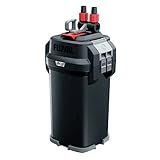
Choose a canister filter if you want high media capacity, flexible filtration stages, a quieter-looking setup, or filtration for an aquarium of roughly 30 gallons or more. Canisters are also useful when you want to place most of the equipment inside the cabinet beneath the aquarium.
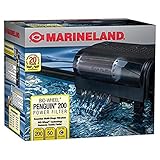
Choose a hang-on-back filter if you want the lowest upfront cost, quick installation, easy access to filter media, and a straightforward solution for a small or medium tank. HOB filters are particularly practical for beginners, quarantine tanks, rentals, and aquariums that need simple routine maintenance.
Side by Side
| Factor | Canister Filter | Hang-on-Back Filter |
|---|---|---|
| Comfort and convenience | Quiet and tidy once installed, but setup and cleaning take more effort | Fast to install and service, though it may create more surface noise |
| Durability | Usually sturdy, with fewer exposed components on the tank rim | Durable for normal use, but the motor and housing remain exposed |
| Typical price range | About $70–$250, with premium systems costing more | About $15–$80 for most home aquariums |
| Maintenance | Less frequent in some setups, but cleaning involves hoses, seals, and multiple baskets | Usually quick; replace or rinse cartridges and clean the intake regularly |
| Space needed | Needs cabinet or floor space plus room behind the aquarium for hoses | Needs several inches of clearance behind the tank and an unobstructed rim |
| Look | Cleaner display because the main unit can sit below the aquarium | Visible box hanging on the back, with an intake tube inside the tank |
| Resale and reuse | Appealing to hobbyists who want customizable, higher-capacity filtration | Easy to resell or repurpose for small tanks and temporary setups |
| Best for | Medium-to-large aquariums, planted displays, cichlids, and high media capacity | Small-to-medium tanks, beginners, offices, rentals, and simple community aquariums |
Where Canister Filter Wins
The strongest advantage of a canister filter is capacity. Instead of placing a small filter box on the back rim, a canister sits outside the aquarium and sends water through tubing. Its internal baskets can hold mechanical media, biological media, and chemical media in separate stages. This gives you more control over how the aquarium is filtered.
A canister is especially useful when the tank is heavily stocked or contains fish that produce substantial waste. More media volume gives beneficial bacteria additional surface area, while larger sponges can capture debris without clogging as quickly as a small cartridge. Flow can also be adjusted on many models, which helps you balance filtration with the needs of slower-swimming fish or plants.
Appearance is another reason buyers choose this style. The aquarium may still have an intake tube and return outlet, but the bulky motor and filter box can be hidden in a cabinet. A compact unit such as the PONDFORSE Canister Filter, listed for under $80, falls near the lower end of the canister price range. A larger option such as the Fluval 207 Performance Canister Filter for aquariums up to 45 gallons is listed for under $150, illustrating how capacity and brand features can raise the initial cost.
Canister filters can also be a good choice for bedrooms, living rooms, and carefully designed furniture arrangements because the visible equipment is minimized. Noise depends on installation, water level, impeller condition, and trapped air, so a canister is not automatically silent. Still, placing the motor below the tank can make the overall setup feel less visually intrusive.
The tradeoff is maintenance. You must shut down the filter, close or disconnect the hoses, carry the canister to a cleaning area, and inspect gaskets and the impeller. A neglected canister can lose flow or develop leaks at worn seals. Regular checks—often every four to eight weeks depending on stocking and debris—are important.
Where Hang on Back Filter Wins
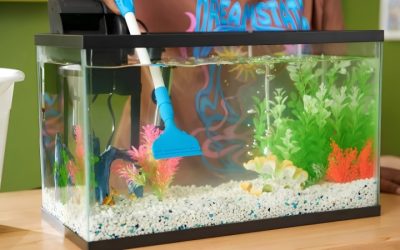
HOB filters win on simplicity. Hang the unit on the rear rim, install the intake tube, fill the filter chamber with aquarium water, and plug it in. Most setups are operating within minutes. That makes a HOB filter convenient for first-time fishkeepers, temporary tanks, and anyone who does not want to manage external hoses.
Price is a major advantage. Basic HOB filters commonly cost $15 to $40, while higher-flow or feature-rich models may cost $50 to $80. For context, the NICREW Slim Aquarium Filter for tanks up to 5 gallons is listed for under $20, and the Marineland Bio-Wheel Penguin 200 GPH Power Aquarium Filter is listed for under $50. These products represent the broad range of HOB pricing without requiring a large equipment budget.
Routine service is also straightforward. You can usually lift out a cartridge or media basket, rinse reusable foam in removed aquarium water, and wipe algae from the intake and spillway. Because the filter is open and accessible, it is easier to notice a clogged sponge, reduced flow, or a dry chamber before a problem becomes serious.
HOB filters do have limitations. Their capacity is restricted by the size of the hanging housing, and cartridge-based designs can become expensive if you replace disposable media frequently. Many aquarists reduce ongoing costs by using reusable foam and adding biological media when the filter design allows it.
Water level matters, too. As aquarium water evaporates, the return stream may become louder or splash more. Topping off the tank helps maintain quiet operation. The filter also requires an unobstructed rear rim, so it may not work with every aquarium lid, wall-mounted arrangement, or built-in furniture design.
Cost Over 5 Years
The purchase price is only part of the calculation. A canister filter may cost $70 to $250 initially, with replacement impellers, seals, tubing, and media adding roughly $10 to $50 per year depending on the model and how much media you reuse. A reasonable five-year equipment-and-maintenance estimate is about $120 to $450, excluding electricity and aquarium water treatments.
A HOB filter may cost $15 to $80 upfront. If you use disposable cartridges, replacement media can add approximately $20 to $70 per year. Over five years, that places a typical HOB setup around $115 to $430. Reusable foam and biological media can reduce this figure, while frequent cartridge replacement can push it higher.
Electricity is usually a modest part of either system’s cost. Many small HOB filters use approximately 2 to 10 watts, while canister filters commonly use about 8 to 30 watts, depending on flow rate and model. Running a 10-watt filter continuously uses about 87.6 kilowatt-hours per year. At $0.16 per kilowatt-hour, that is roughly $14 annually. Your local utility rate will determine the actual amount.
In other words, a canister is not always dramatically more expensive over five years. The biggest difference is often the value of your time: HOB maintenance is faster, while canister maintenance may be less frequent but more involved.
Which One for Your Home
Small apartment
A HOB filter is usually the better fit for a tank under 20 gallons, especially when floor and cabinet space are limited. A slim model can keep the equipment footprint small, and its low purchase price makes it easier to move or replace. Check the filter’s actual dimensions before buying, since even a compact unit may need 3 to 5 inches of clearance behind the aquarium.
Family with kids or pets
Choose based on access and stability. A canister tucked inside a latched cabinet keeps the main equipment away from curious hands and noses, but hoses must be installed correctly and inspected for leaks. A HOB is easier to understand and maintain, although the hanging housing and power cord should be protected from bumps. Either type should use a drip loop on the electrical cord, and children should not handle wet plugs or aquarium chemicals.
Rental
A HOB filter is often the practical rental-friendly option. It requires no cabinet modification, is easy to pack during a move, and generally works with basic aquarium stands. If your lease or room layout makes rear clearance difficult, measure the tank and wall space first. Avoid placing a HOB where a lid cannot close or where water might splash onto the wall.
Long-term home
A canister filter makes more sense when the aquarium is a permanent centerpiece and you plan to keep it for years. Its cleaner appearance, greater media capacity, and flexible configuration can justify the higher initial price. Build in accessible cabinet space for cleaning, leave slack in the hoses, and select a model rated comfortably above your actual water volume rather than relying on the maximum advertised rating.
FAQ
Is a canister filter better than a HOB filter?
Neither is automatically better. Canisters generally offer more media capacity and a cleaner appearance, while HOB filters cost less and are easier to install and maintain. Tank size, stocking level, available space, and maintenance preferences matter more than the filter category alone.
Is a canister filter quieter?
It can be, particularly when the motor is inside a cabinet and the return is positioned below the water surface. However, air in the hoses, a worn impeller, low water level, or an unstable cabinet can create noise. A properly installed HOB can also operate quietly.
Can a HOB filter be used on a large aquarium?
Yes, if its rated flow and media capacity suit the tank. Larger aquariums may require two HOB filters or a high-capacity model. For heavily stocked tanks, a canister often provides more biological and mechanical media space in one unit.
How often should each filter be cleaned?
Inspect either filter weekly for reduced flow, debris, and unusual noise. HOB media may need attention every two to four weeks, while a canister may go four to eight weeks between cleanings depending on stocking and water clarity. Never rinse beneficial biological media under untreated tap water; use removed aquarium water instead.
Ready to decide? Our #1 pick for 2026 is the Comfort and convenience.
Live price & availability on Amazon.
Related Reviews & Guides

6 Best Temperatures For Betta Fish Tank 2026
Best One Touch Automatic Fish Feeder: 4 Proven Easy Options