Last Updated: October 21, 2026
Chasing a quiet sump by size or price misses where the noise comes from, which is usually the drain plumbing and water-drop height, not the box. The best quiet aquarium sump pairs a maker-documented quiet-design feature with a correct tank range, then relies on good plumbing to control the sounds a sump body cannot.
As an Amazon Associate we earn from qualifying purchases.
By David Nguyen
What Makes a Sump Quiet
Real sump quiet comes from a documented design feature plus a system that controls water drop, not from a big or expensive shell. Drain plumbing, the height water falls, the return pump, and the skimmer can each dominate. So look for a maker-stated quiet feature and plan the plumbing that actually governs noise.
Look for a Maker-Documented Quiet Feature
Quiet claims should be tied to a specific design element. IceCap V2 sumps list compartment lids for quieter operation across the 15, 24, and 30 models, and the ESHOPPS RS-100 carries maker Quiet Operation wording, so each names a real feature rather than a vague promise of silence.
These are manufacturer statements, not independent tests. None of these models publishes same-condition decibel data, so treat the quiet wording as a design intent rather than a measured result, and avoid reading one unit as quantifiably quieter than another when no comparable dB figures exist to back that ranking.
Understand Where Sump Noise Comes From
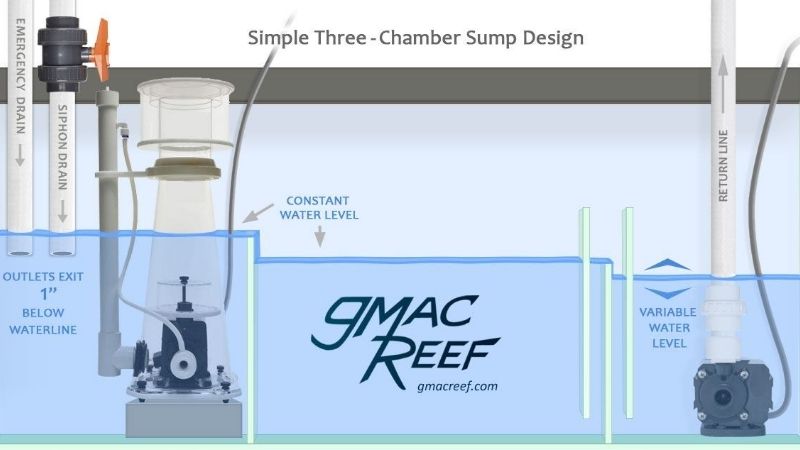
Most audible noise starts in the plumbing, not the shell. The drain path, the height water drops into the first chamber, the return pump, and the skimmer can each dominate a system’s sound, so a sump body’s lids help at the margin while the plumbing decides the overall result you hear.
That is why size and price do not predict quiet. A larger or dearer sump is not inherently quieter, since the body is only one contributor, so plan a drain that runs full and quiet and set the water-drop height low, which controls more noise than any single feature of the sump box.
Match Tank Range and Footprint
Quiet or not, the sump still has to fit and cover your tank. The IceCap 15 covers 10 to 80 gallons, the 24 covers 60 to 110, and the 30 covers 90 to 160, while the RS-100 covers 40 to 90, so match the range to your display first, before weighing up any quiet feature the sump body itself might carry.
Footprints here run 225, 336, 480, and 336 square inches, and the IceCap price steps up about 27.5% from the 15 to the 24 and another 20% to the 30. Read those steps as size and range differences, not as proportional noise reduction, since a bigger, pricier sump is not automatically quieter.
Plan Plumbing That Controls Noise
The biggest quiet gains come from plumbing choices you make at setup. A drain tuned to run full rather than gurgling, a shorter water-drop into the first chamber, and a return kept below the surface all reduce noise more reliably than any lid feature built into the sump body itself.
Equipment placement matters too, since a skimmer or pump vibration can transmit through the stand. Isolate pumps on a soft pad, secure loose plumbing, and set the waterline to soften the drop, treating the quiet-design feature as a helpful start that your plumbing and setup then build on for a genuinely calm system.
Quiet Sumps Worth Considering
No single sump is measurably the quietest, since none publishes comparable decibel data, so these are chosen for maker-documented quiet features plus correct range and fit. The right one depends on your tank size and cabinet, with plumbing doing the heavy lifting on noise once the sump is installed.
| Product | Best For | Key Spec | Watch Out For |
|---|---|---|---|
| IceCap 15 V2 | Quiet-lid design on a smaller tank | 10-80 gal; 15x15x14; compartment lids | Maker claim; no published dB test |
| IceCap 24 V2 | Same quiet design, mid-size range | 60-110 gal; 24x14x16; compartment lids | Larger and pricier, not proven quieter |
| IceCap 30 V2 | Quiet-lid design on a large system | 90-160 gal; 30x16x16; compartment lids | Biggest footprint; no dB comparison |
| ESHOPPS RS-100 | Maker Quiet Operation wording | 40-90 gal; 24x14x14; 336 in2 footprint | Quiet wording only; no independent test |
IceCap 15 V2 – Quiet-Lid Design, Smaller Tank
The IceCap 15 V2 suits a smaller tank where the compartment-lid design is the quiet feature. It covers a 10-to-80-gallon range, measures 15 by 15 by 14 inches for about 225 square inches, and lists compartment lids for quieter operation. It runs around $300 as of 09/2026, the lowest price here.
The strength is a maker-stated quiet feature in a compact, affordable body for a small system. The catch is that the quiet claim is a design statement with no published decibel test, so pair it with good plumbing and a low water-drop rather than expecting the lids alone to silence the sump.
IceCap 24 V2 – Same Design, Mid-Size Range
The IceCap 24 V2 brings the same quiet-lid design to a mid-size system. It covers 60 to 110 gallons, measures 24 by 14 by 16 inches for about 336 square inches, and runs around $375 as of 09/2026, roughly 27.5% above the 15 for its larger range and its bigger overall footprint at retail.
Its strength is the same documented quiet feature scaled to a bigger tank. The trade-off is that the higher price and size buy range, not proven quiet, since there is no comparable dB data showing it is quieter than the 15, so choose it for the range you need and rely on plumbing for noise.
IceCap 30 V2 – Quiet-Lid Design, Large System
The IceCap 30 V2 applies the quiet-lid design to a large system. It covers 90 to 160 gallons, measures 30 by 16 by 16 inches for about 480 square inches, the biggest footprint here, and runs around $450 as of 09/2026, about 52.9% above the 15 for its added capacity and larger range.
The strength is the documented quiet feature on a sump sized for a larger tank. The catch is the same as its siblings: the extra size and cost deliver range, not a measured noise reduction, so confirm your cabinet fits the 30-inch footprint and lean on plumbing and water-drop control for the actual quiet.
ESHOPPS RS-100 – Maker Quiet Operation Wording
The RS-100 offers an alternative with its own quiet wording. Its maker lists Quiet Operation, it covers a 40-to-90-gallon range, and it measures 24 by 14 by 14 inches for about 336 square inches. It sits in the mid price tier as of 09/2026 for a sump that includes a refugium section.
The appeal is a maker-stated quiet design plus a built-in refugium on a mid-size range. The trade-off is that, like the IceCap line, the quiet claim has no independent decibel test behind it, so treat it as design intent and let your plumbing and setup determine how quiet the system actually runs.
Frequently Asked Questions
Keepers wanting a quiet system ask the same things once they see the sump body is only part of the noise. Each answer opens with the direct call, then the condition that changes it, so you can plan for your own plumbing and setup rather than expecting a sump alone to deliver silence.
Is Any Sump Truly Silent?
No sump is silent, and no maker here proves a decibel figure. IceCap and ESHOPPS document quiet-design features like compartment lids and Quiet Operation wording, but those are design statements, not measured silence, so expect a well-set-up sump to be quiet rather than inaudible in a normal room.
The realistic goal is low, steady noise you stop noticing. Achieving it comes mostly from plumbing and water-drop control rather than the sump body, so treat any quiet feature as a helpful start and put the effort into a full-running drain and a low return, which do more for perceived quiet.
Does a Bigger Sump Run Quieter?
No, size does not predict quiet. The IceCap 30 costs more and has the biggest footprint, but there is no comparable decibel data showing it is quieter than the smaller 15, so the extra size simply buys range and capacity rather than any measured reduction in the actual noise you hear.
Noise depends on the plumbing and water-drop, which scale with your setup, not the shell. So pick the sump size for your tank range and cabinet, and control noise through the drain design, return placement, and pump isolation, since those choices govern the sound far more than the sump body’s dimensions.
What Actually Makes the Most Noise?
Usually the drain plumbing and the height water falls into the first chamber, followed by the return pump and skimmer. The sump body’s lids help at the margin, but a gurgling drain or a tall water-drop will out-shout any quiet feature, so the plumbing is where the biggest gains are.
Address those first. Tune the drain to run full rather than sucking air, lower the water-drop into the chamber, keep the return below the surface, and isolate pump vibration on a soft pad, which together control far more noise than choosing one sump body over another ever will on its own.
Can I Trust the Quiet Claims?
Treat them as design intent, not measured results. IceCap’s compartment lids and ESHOPPS’ Quiet Operation wording describe real features, but none is backed by same-condition decibel testing, so read the claims as the maker’s design goal rather than proof that one sump is quantifiably quieter than another.
Use the claims to shortlist, then rely on setup. A documented quiet feature is a reasonable starting point, but your plumbing, water-drop height, and equipment isolation decide the outcome, so plan those carefully rather than expecting the marketing wording alone to guarantee a quiet system once it is running.
Final Thoughts
Shortlist by a maker-documented quiet feature and correct range, then win the quiet in the plumbing, since drain design and water-drop height outweigh the shell. The best quiet aquarium sump is a verified model with a stated quiet design that fits your tank, set up with a full-running drain and an isolated pump.

Quick Picks: Best UV Sterilizers for Aquariums at a Glance
Best Aquarium Filter for Beginners: Compared by the Numbers