Last Updated: October 4, 2026
Alkalinity is the parameter that punishes sloppy dosing, so the pump behind it has to deliver small volumes precisely and repeatably. Choosing the best peristaltic dosing pump for alkalinity comes down to calibrated low-volume delivery, duty cycle, head height, and whether it needs a controller to run.
As an Amazon Associate we earn from qualifying purchases.
By David Nguyen
Quick answer: For most people in 2026, the best peristaltic dosing pump for alkalinity is the Kamoer X1 PRO T — our #1 rated choice. See the full ranked comparison, alternatives and buying advice below.
How to Choose a Peristaltic Dosing Pump
A dosing pump for alkalinity is judged on four things: how accurately it delivers small volumes after calibration, how long it can run each day, how high it must lift liquid, and whether it works alone or needs a controller. Flow rate alone tells you little about precision.
Low-Volume Calibration
Alkalinity doses are small, so what matters is accuracy at low volume after you calibrate, not headline speed. The BRS 2-Part Doser runs about 1.1 mL/min on average, which is roughly 11 mL in ten minutes before calibration, giving you a baseline to trim to your exact daily requirement.
Calibration corrects for tubing and head differences, so always run the pump into a graduated cylinder and adjust. Do not equate a high maximum flow with accuracy; a pump that can push 200 mL/min is not automatically better at delivering a precise 25 mL alkalinity dose day after day.
Duty Cycle
Duty cycle is how much of the day a pump can run without overheating or wearing tubing prematurely. The BRS unit is rated for intermittent use, suiting several short daily doses, while the EcoTech Versa VX-1 can run continuously up to 200 mL/min for larger transfers.
For alkalinity you usually want many small doses, not continuous running, so an intermittent-rated pump is often enough. Tubing is a wear item regardless: the Kamoer X1 PRO T rates its tubing around 2,000 hours, after which output drifts until you replace it and recalibrate.
Head Height
Head height is the vertical lift from reservoir to outlet, and it reduces real output as it rises. The BRS doser handles about 20ft of head, the Neptune DOS QD about 24ft of lift and suction, and the Kamoer X1 PRO T up to about 32ft.
If your reservoir sits well below the tank, choose a pump with headroom to spare and recalibrate at the installed height. A pump calibrated on the bench delivers differently once it must lift several feet, so verify output where it will actually run rather than trusting the bench figure.
Controller Ecosystem
Some pumps run standalone; others need a controller. The Kamoer X1 PRO T and EcoTech Versa VX-1 operate on their own apps, while the Neptune DOS QD requires an A2 or A3 Apex to function, so it is not a standalone doser despite its capable dual-head design.
Match the pump to the system you already own or plan to build. If you run an Apex, the DOS QD integrates tightly; if you want a self-contained doser, a Wi-Fi unit like the Kamoer avoids buying a controller just to dose alkalinity, which keeps the entry cost lower.
Top Picks
These four pumps cover standalone precision, budget dosing, high-volume continuous transfer, and Apex integration. Prices are retailer snapshots as of 09/2026 and move during Prime Day and Black Friday, when reef automation is usually discounted most. Judge them on calibrated low-volume accuracy, not top speed.
| Product | Best For | Key Spec | Watch Out For |
|---|---|---|---|
| Kamoer X1 PRO T | Best overall standalone | within ±2%; up to 32ft head; Wi-Fi; ~under $200 | Tubing ~2,000h wear item |
| BRS 2-Part Doser | Best value | 1.1 mL/min avg; 20ft head; intermittent; ~under $70 sale | Sale price, treat as date-stamped |
| EcoTech Versa VX-1 | Best for continuous/high volume | 6µL/min to 200 mL/min continuous; ~under $250 | 300 mL/min is volumetric, not continuous |
| Neptune DOS QD | Best for Apex ecosystems | 0.1 to 250 mL/min; dual head; ~under $400 | Requires A2/A3 Apex, not standalone |
Kamoer X1 PRO T
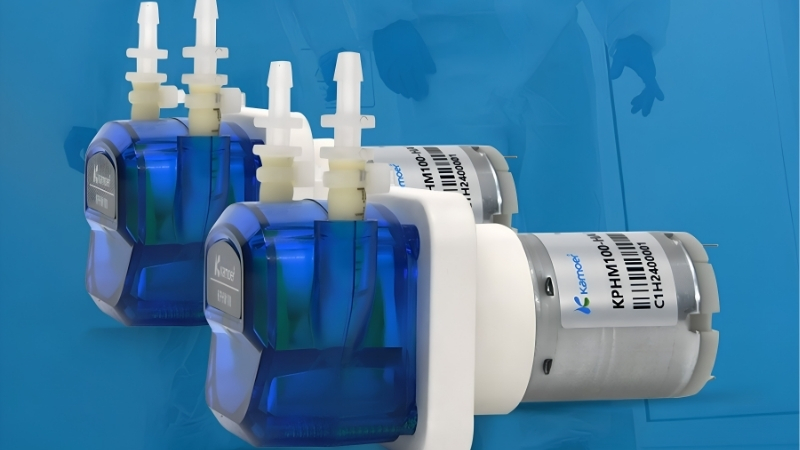
The Kamoer X1 PRO T is the best overall standalone pick at about $175 as of 09/2026, with a stated accuracy of within ±2% and up to about 32ft of head. Its Wi-Fi control means you can dose alkalinity precisely without buying a separate controller first.
Its tubing is rated around 2,000 hours, so plan to replace it and recalibrate as output drifts, a recurring cost on any peristaltic pump. The accuracy figure is a manufacturer specification measured under their conditions, so verify it with your own calibration after installation.
BRS 2-Part Doser
The BRS 2-Part Doser is the value pick at about $60 on sale, delivering roughly 1.1 mL/min average, about 11 mL in ten minutes before calibration, with up to 20ft of head. It is rated for intermittent use, which fits several small daily alkalinity doses well.
That price is a sale snapshot and can revert, so treat it as date-stamped rather than a fixed figure. It is a simpler, lower-head pump than the others, so it suits reservoirs close to the tank rather than deep cabinets with long vertical lifts.
EcoTech Versa VX-1
The EcoTech Versa VX-1 suits continuous or high-volume work at about $250, spanning from 6µL/min at the low end to 200 mL/min continuous, controlled directly through Mobius. That range covers precise alkalinity dosing and larger fluid transfers in one pump.
Read its numbers carefully: the 200 mL/min figure is the continuous rating, while a 300 mL/min figure is volumetric and not the same thing, so do not treat the higher number as its continuous speed. For pure alkalinity dosing, its high-end speed is more capability than most tanks need.
Neptune DOS QD
The Neptune DOS QD is the pick for Apex owners at about $375, a dual-head pump spanning 0.1 to 250 mL/min with about 24ft of lift and suction. Two heads let you dose both parts of a two-part program from one integrated unit.
It requires an A2 or A3 Apex to run, so it is not a standalone doser and adds cost if you do not already own the controller. Within an Apex system, though, it integrates cleanly and shares the same app and scheduling as the rest of the hardware.
Frequently Asked Questions
Buyers ask how accurate these pumps really are, how to calibrate them, whether they can run continuously, and whether they need a controller. Accuracy and calibration matter far more than maximum flow for alkalinity dosing.
How Accurate Are Peristaltic Dosing Pumps?
Good ones state accuracy within a few percent; the Kamoer X1 PRO T lists within ±2% and the Versa around 2% or better. But those are manufacturer figures, and real accuracy depends on calibrating for your tubing and head height.
Do not read a high maximum flow as high accuracy, since they measure different things. A precise low-volume dose comes from calibration and stable tubing, not from a pump’s top speed.
How Do You Calibrate a Dosing Pump?
Run the pump for a set time into a graduated cylinder, measure the actual volume, and enter it so the pump corrects itself. The BRS doser’s roughly 11 mL in ten minutes is a starting figure to refine this way.
Recalibrate after changing tubing or moving the reservoir, since both shift real output. On a peristaltic pump, tubing wear is the main reason a once-accurate dose slowly drifts over months.
Can a Dosing Pump Run Continuously?
Some can. The EcoTech Versa VX-1 is rated for continuous operation up to 200 mL/min, while the BRS doser is rated for intermittent use, meaning short repeated doses rather than nonstop running.
For alkalinity you rarely need continuous flow; many small doses across the day keep parameters steadier. Match the duty-cycle rating to how you actually dose rather than to the highest number on the box.
Do You Need a Controller to Use One?
It depends on the pump. The Kamoer X1 PRO T and Versa work standalone through their own apps, while the Neptune DOS QD requires an A2 or A3 Apex to operate at all.
If you already run an Apex, an integrated doser is convenient; if not, a self-contained pump avoids the extra hardware cost. Decide based on the ecosystem you want to live in long term.
Final Thoughts
The best peristaltic dosing pump for alkalinity is the one that delivers small volumes accurately after calibration and fits your head height and ecosystem. The Kamoer X1 PRO T covers most keepers standalone at about $175 as of 09/2026, the BRS doser is the value option, and the Neptune DOS QD suits Apex systems. Calibrate at the installed height and treat maximum flow as capability, not accuracy.
As an Amazon Associate we earn from qualifying purchases at no extra cost to you. Prices and availability are accurate as of the date shown and are subject to change.
Ready to decide? Our #1 pick for 2026 is the Kamoer X1 PRO T.
Live price & availability on Amazon.
Related Reviews & Guides



Best TDS Meter for RODI Output Monitoring: Smart Top Picks
Best RODI System for Saltwater Tanks: Top Ultimate Guide