Last Updated: October 4, 2026
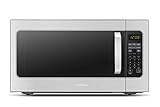
- Top Pick: Chefman Countertop Microwave Oven 1.1 Cu. Ft., 1000 Watts with 10 Power Levels, 6 Cooking Presets with One-Touch Express Cook, Eco Mode, Child Safety Lock, & Mute Button – Black
- Best Value: TOSHIBA Large Countertop Microwave Oven with Smart Sensor, 2.2 Cu.Ft, 1200W
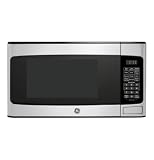
- Premium Choice: GE Countertop Microwave Oven, 1150 Watt, 1.6 Cu. Ft., Stainless Steel
Choosing a microwave for an Australian kitchen is harder than it looks. You need enough capacity for your household’s cooking habits, enough power to actually heat food evenly, and a price that doesn’t stretch past what a countertop appliance deserves. The spec sheets all look similar, and Australian retailers often list US-only models, which makes comparing real-world performance tricky. The best microwave ovens australia buyers can find in 2026 range from under $75 for a compact retro unit to around $230 for a 4-in-1 air fryer combo that replaces three separate appliances.
What separates a genuinely good microwave from a mediocre one comes down to a few specific factors. Power delivery matters more than raw wattage—conventional microwaves cycle the magnetron on and off to simulate lower power levels, causing uneven heating and rubbery edges. Inverter models deliver continuous variable power for more consistent results. Sensor cooking is another real differentiator: a well-calibrated humidity sensor saves you from overcooking, while a cheap one triggers randomly and wastes time. Owner feedback across these eight models reveals that mid-range options often outperform pricier ones in reliability, and that combo appliances only make sense if you will use the extra functions at least a couple of times a week.
As an Amazon Associate we earn from qualifying purchases at no extra cost to you.




Quick Picks
| Product | Best for | Price |
|---|---|---|
| Chefman 1.1 Cu. Ft. 1000W | Value-focused buyers who need presets | under $90 |
| Toshiba 2.2 Cu.Ft. 1200W | Large families and batch cooking | under $200 |
| GE 1.6 Cu. Ft. 1150W | Everyday mid-size households | $185 |
| Frigidaire Combo-Fry 1.2 cu ft | Air frying without a separate appliance | under $150 |
| Toshiba 4-in-1 Air Fryer 1.5 Cu.Ft. | Cooking minimalists wanting one unit | under $250 |
| Frigidaire Retro 0.7 Cu. Ft. 700W | Small spaces and style-conscious buyers | under $80 |
| Toshiba Flatbed Inverter 1.3 Cu.Ft. 1200W | Even heating and reheating leftovers | under $200 |
| GE Compact 1.1 Cu. Ft. 950W | Dorm rooms, apartments, and offices | $124 |
How We Picked
We evaluated these models against four criteria: capacity relative to household size, power delivery method (inverter versus conventional cycling), feature relevance for the price, and patterns in owner-reported reliability. A microwave that cannot reheat a plate of pasta evenly at 50 percent power has failed at its core job regardless of how many presets it offers. Combo units earned their place here only when owner reviews confirmed that the secondary functions—air frying, convection baking—produced results genuinely worth the counter space.
The 8 Best Microwave Ovens Australia in 2026
Chefman Countertop Microwave Oven 1.1 Cu. Ft. 1000W
This is the go-to option for buyers who want a functional microwave without spending much. The 10 power levels and six cooking presets cover most reheating and defrosting tasks, and the one-touch express cook eliminates button-fumbling. Owners consistently praise the intuitive control layout and the eco mode that dims the display and turns off the interior light when idle.
- Pro: Ten power levels for under $90 is unusually generous for this price bracket.
- Pro: Child safety lock and mute button make it practical for households with young kids.
- Con: 1000 watts is adequate but not fast—expect longer run times on dense items compared to the 1200W models in this roundup.
Skip this if you regularly heat large casseroles or need inverter-grade evenness for delicate foods.
Toshiba Large Countertop Microwave Oven 2.2 Cu.Ft. 1200W
The largest capacity here makes it the obvious pick for families of four or five, or anyone who reheats in bulk. The smart sensor adjusts cooking time based on moisture output, which owners report works reliably for frozen meals and leftovers. At 1200 watts, it runs through tasks quickly.
- Pro: 2.2 cubic feet of interior fits a full-size dinner plate, large mugs, and even a small casserole dish without rearranging.
- Pro: Smart sensor reduces guesswork on frozen and fresh foods, with fewer incidents of overcooked edges.
- Con: Its footprint is genuinely large—measure your counter space before committing, because it will not fit in tight kitchen layouts.
Skip this if you have limited counter space or live alone; you will not need the volume.
GE Countertop Microwave Oven 1.6 Cu. Ft. 1150W
A solid middle ground between the compact GE and the oversized Toshiba. The 1.6 cubic feet accommodates standard dinnerware comfortably, and the stainless steel finish resists fingerprints better than most at this price. Owners note the interior is easy to wipe clean and the turntable is sturdy.
- Pro: 1150 watts provides faster reheating than the 1000W and 950W options here without the size penalty of larger models.
- Pro: Stainless steel exterior maintains appearance over months of daily use in busy kitchens.
- Con: No sensor cooking—you rely on timers, which means occasional overcooking on variable-density foods.
Skip this if you want hands-off cooking via a humidity sensor or need maximum interior volume.
Frigidaire Combo-Fry 1.2 cu ft Microwave Air Fryer Convection
This combo unit targets people who want to eliminate a standalone air fryer from the counter. The convection function bakes and crisps, while the microwave handles reheating. For under $140, it undercuts most dedicated air fryers and microwaves combined.
- Pro: Three cooking modes in one footprint—microwave, convection, and air fry—genuinely reduce appliance clutter.
- Pro: XL capacity claim is validated by owners who fit a 12-inch pizza or a full chicken breast on the rack.
- Con: Combo units always compromise on at least one function; air fry results here are adequate but not as crisp as a dedicated basket fryer.
Skip this if you already own a good air fryer or if you rarely need convection baking.
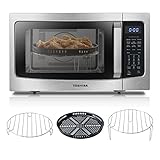
Toshiba 4-in-1 Microwave Oven with Air Fryer Combo 1.5 Cu.Ft. 1000W
The most versatile single appliance on this list. Microwave, air fry, convection bake, and grill functions all live in one housing. Owners who committed to it report replacing multiple gadgets and appreciating the consolidated cooking workflow. The trade-off is price and a learning curve on mode selection.
- Pro: Four cooking methods cover nearly every reheating, baking, crisping, and grilling task a small kitchen needs.
- Pro: 1.5 cubic feet is a practical interior for both the microwave cavity and the air fry rack without feeling cramped.
- Con: For under $250 it is the priciest unit here, and 1000 watts in microwave mode is on the lower side for the cost.
Skip this if your budget is tight or if you already have a separate oven and air fryer you use regularly.
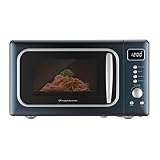
Frigidaire Retro Countertop Microwave Oven 0.7 Cu. Ft. 700W
The most visually distinctive option in this group. The azure-argent color, analog-style dial, and compact frame suit kitchens where the microwave sits in plain sight. Seven auto cook menus and auto defrost handle basics, and the glass turntable is easy to remove for cleaning.
- Pro: Lowest price here for under $80, and the retro aesthetic is genuinely well-executed rather than gimmicky.
- Pro: Footprint is tiny—fits on a bookshelf, office desk, or apartment counter without dominating the space.
- Con: 700 watts is the lowest power output in this roundup; reheating dense or frozen items takes noticeably longer.
Skip this if you need speed or capacity; it is a style and space choice more than a performance one.
Toshiba Flatbed Microwave Oven with Inverter Technology 1.3 Cu.Ft. 1200W
This is the performance pick. The inverter technology delivers continuous variable power rather than cycling the magnetron, which means more even heating and fewer cold centers in dense foods. The flatbed design eliminates the turntable, giving you a rectangular usable area that fits odd-shaped dishes and larger plates.
- Pro: Inverter power delivery produces noticeably better results on liquids, pasta, and cheese-topped foods compared to cycling models.
- Pro: Flatbed interior is easier to clean and accommodates rectangular containers that turntable models reject.
- Con: For under $200 you pay a premium over the GE 1.6 at $185, and some owners find the touch controls less intuitive than physical dials.
Skip this only if you need air frying or convection functions; as a pure microwave, it is the strongest performer listed.
GE Countertop Microwave Oven Compact 1.1 Cu. Ft. 950W
A no-nonsense compact microwave built for dorm rooms, small apartments, and office break rooms. Six auto cooking settings handle popcorn, pizza, and defrost without guessing, and the child-lock prevents curious hands from starting cycles. At $124 it sits between the Chefman and the retro Frigidaire in value.
- Pro: Compact enough for tight spaces yet 1.1 cubic feet still fits a standard dinner plate comfortably.
- Pro: Stainless steel exterior looks more premium than its price suggests and coordinates with common kitchen appliances.
- Con: 950 watts is the second-lowest here, so expect slower performance on frozen meals compared to the 1200W Toshiba or GE 1150W model.
Skip this if you cook for more than two people or need fast reheating on dense items.
Buying Guide
Match Capacity to Your Real Cooking Volume
Capacity in cubic feet does not directly translate to usable space because the turntable occupies part of the interior. A 1.1 cubic foot microwave with a turntable often fits less than a flatbed 1.3 model. If you regularly reheat full dinner plates, a standard 10-inch baking dish, or large soup bowls, you need at least 1.5 cubic feet. For single-serve reheating, 0.7 to 1.1 is sufficient. The 2.2 cubic foot Toshiba is for households cooking in bulk, not for someone reheating a coffee mug.
Understand Inverter Power Versus Conventional Cycling
Conventional microwaves achieve “50 percent power” by running the magnetron at full blast half the time and resting the other half. This causes hot spots at edges and cold centers, especially in liquids and cheesy dishes. Inverter models reduce the magnetron output continuously, producing more uniform heating. The Toshiba Flatbed is the only inverter unit in this list, and the difference is most noticeable on soups, stews, and foods with uneven density. If you primarily reheat solid items like pizza or bread, conventional cycling is acceptable.
Evaluate Combo Functions Honestly
Air fry and convection modes in microwave combos produce results that are good but not identical to dedicated appliances. The key question is usage frequency. If you air fry weekly, a combo unit saves counter space and money. If you air fry monthly, you are paying a premium for a feature that will sit idle and you will not be satisfied with the results compared to a proper basket fryer. The two combo units here are worth it for cooking minimalists and small-kitchen residents, not for food enthusiasts who want the crispest possible outcome.
Our Verdict
The top pick is the Toshiba Flatbed Microwave with Inverter Technology for under $200. It excels at the one job every microwave must do—heat food evenly and reliably—and the flatbed design adds practical usability that turntable models cannot match.
The budget pick is the Chefman 1.1 Cu. Ft. for under $90. It delivers ten power levels, useful presets, and practical safety features at a price that undercuts everything else without feeling like a compromise on core function.
The condition where another product wins: If you have a family of five or regularly cook in bulk, the Toshiba 2.2 Cu.Ft. for under $200 is the superior choice despite the large footprint, because the extra capacity and smart sensor together handle volume cooking that smaller units simply cannot.
FAQ
Is wattage the most important spec when choosing a microwave?
Wattage determines speed, but power delivery method determines quality of results. A 700W inverter microwave will heat more evenly than a 1200W cycling model, though it will take longer. Prioritize inverter technology first, then wattage.
Are combo microwave-air fryers worth buying over separate appliances?
They are worth it if your counter space is genuinely limited and you air fry often enough to justify keeping the unit active. If you have room for separate appliances, a dedicated air fryer will outperform any combo unit on crispiness and capacity.
What is a flatbed microwave and why does it matter?
A flatbed microwave has no turntable; the magnetron and heating element sit beneath a solid ceramic or glass floor. This creates a rectangular usable area that fits larger plates, square containers, and multiple items simultaneously, and it is far easier to wipe clean than a turntable cavity with a rolling ring.
Can I use a US-purchased microwave on Australian power?
No. US microwaves are designed for 120V mains, while Australia operates at 230V. A transformer solution is impractical for a high-wattage appliance and adds significant cost. Look for models sold through Australian retailers or manufactured for 230V operation before purchasing.
Related Reviews & Guides



Best Automatic Fish Feeder for Vacation: 4 Reliable Picks

Safe Nitrate Level for Freshwater Fish: Targets and Limits