Last Updated: November 11, 2026
Charging an electric car from a standard wall outlet works, but it is slow enough to feel like a part-time job. A Level 2 home charger on a 240-volt circuit changes that, turning overnight parking into a full refill and removing the weekly scramble for public stations. The decision this keyword implies is not simply which brand to buy; it is how much amperage your electrical panel can supply, whether you want a plug-in or a hardwired install, and what connector your car uses.
The units below are mostly 40 to 50 amp wall-mounted chargers with J1772 connectors, plus one NEMA 14-50 plug-in model and a hardwired NACS version for newer vehicles. They suit homeowners with a garage or driveway, renters who can get landlord permission, and anyone replacing a mobile charger that came with the car. In 2026 the practical divide is between smart, app-connected chargers that schedule off-peak charging and simpler, cheaper units that just deliver power. Both are covered, with an eye on what each listing actually states.

ChargePoint HomeFlex Level 2 EV Fast Charger, J1772, Smart, Hardwired, 50A | For Electric Cars, Adds Up to 37 Mi/Hr, WiFi App Control, 23-Ft Cable, Adjustable 16-50A, Indoor/Outdoor Rated, Energy Star
Included for '6 Best EV Home Chargers (November 2026)' because the listing specifies J1772 and Smart, details this guide uses to compare options.
View on Amazon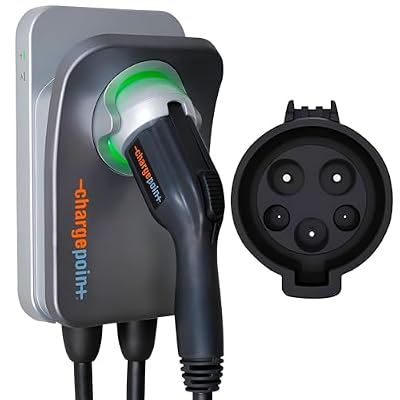
ChargePoint HomeFlex Level 2 EV Charger J1772 - NEMA 14-50 Plug | Fast Smart Battery Power Charging at Home for Electric Automobile Vehicles - for Electric Car
Included for '6 Best EV Home Chargers (November 2026)' because the listing specifies NEMA 14-50 Plug and for Electric Car, details this guide uses to compare options.
View on Amazon
EMPORIA Level 2 EV Charger w/ J1772 Connector — 48 Amp, 240V WiFi Enabled Electric Vehicle Charging Station, 25ft Cable, Hardwired with Whip, White
Included for '6 Best EV Home Chargers (November 2026)' because the listing specifies 240V WiFi Enabled Electric Vehicle Charging Station and 25ft Cable, details this guide uses to compare options.
View on Amazon
EMPORIA Pro Level 2 EV Charger with PowerSmart - 48 amp Fast EV Charger for Home with Hardwire and J1772 Connector - 240v Electric Vehicle Charging Station and 25' EV Charging Cable
Included for '6 Best EV Home Chargers (November 2026)' as a relevant option in this category; details come from the product listing.
View on Amazon
IYILO Level 2 EV Charger, 48Amp/11.5KW/240V, UL 2594, ETL & Energy Star | J1772 Wall EV Charger with Dual Temp Sensors, Power Sharing, Dynamic Load Balancing, Schedule Charging, RFID, Smart APP
Included for '6 Best EV Home Chargers (November 2026)' because the listing specifies 48Amp/11.5KW/240V and UL 2594, details this guide uses to compare options.
View on Amazon
Autel Level 2 EV Charger 50A, J1772 Hardwired Home Charger, WiFi,25ft Cable | Up to 46 Mi/Hr,Smart WiFi&Bluetooth App Control,Indoor/Outdoor Rated, Adjustable 16-50A, Certified Safety Protection
Included for '6 Best EV Home Chargers (November 2026)' because the listing specifies J1772 Hardwired Home Charger and WiFi, details this guide uses to compare options.
View on AmazonQuick Picks
| Product | Best for | Key spec from the title |
|---|---|---|
| ChargePoint HomeFlex 50A Hardwired | Smart scheduling with an app | J1772, 50A, 23-ft cable, WiFi |
| ChargePoint HomeFlex NEMA 14-50 | Plug-in install, easy to move | J1772, NEMA 14-50 plug, smart charging |
| EMPORIA Level 2, 48 Amp | Long cable and WiFi monitoring | 48 amp, 240V, 25-ft cable, hardwired with whip |
| IYILO 48Amp Wall Charger | Multi-charger and load sharing homes | 48A/11.5kW, UL 2594, power sharing |
| Autel Level 2 50A | Fastest listed charging speed | 50A, up to 46 mi/hr, WiFi and Bluetooth |
| Grizzl-E Classic 40 Amp | Rugged, simple, no-app charging | Up to 40 amp, indoor/outdoor, NEMA 14-50 plug |
How to Choose
Amperage and what your panel can support
Home chargers should be sized to 80 percent of the circuit breaker. A 50 amp circuit supports a 40 amp charger, while a 60 amp circuit supports a 48 amp charger. Higher amperage adds speed only if your car can accept it; many onboard chargers cap at 32 or 40 amps, so a 48 amp unit may never reach its ceiling. Ask an electrician to check your panel before deciding, because a panel upgrade can cost more than the charger itself.
Plug-in versus hardwired
A NEMA 14-50 plug-in model uses a common 240-volt outlet, simplifies installation, and lets you take the charger with you if you move. Hardwired chargers are connected directly to the circuit, which allows higher amperage and a tidier look, but they need an electrician. Ignore claims that one connection is universally better; the right choice depends on your outlet, your garage, and local code.
Connector type and cable length
Most non-Tesla vehicles in North America use the J1772 connector, while newer models are shifting toward NACS. Check your car’s port first. A 20 to 25 foot cable gives flexibility when parking, though longer cables are heavier and harder to coil. If the charger will mount outside, look for indoor/outdoor rated enclosures and a safe cable holster.
Smart features and certification
WiFi and app control allow scheduling, usage tracking, and utility rebate eligibility in some areas. Features such as power sharing and dynamic load balancing help homes with two chargers or a tight panel. Look for UL or ETL certification; unlabeled chargers can cause insurance and safety problems. Budget units often skip smart features and use plastic housings that age quickly in the sun.
The 6 Best Options
Skipped from the brief: a second EMPORIA Pro variant, a hardwired NACS ChargePoint for Tesla-style ports, and two portable Level 1 and 2 units that are not wall-mounted home chargers.
ChargePoint HomeFlex Level 2, 50A Hardwired
This ChargePoint is hardwired with a J1772 connector, 50 amp capability, a 23-foot cable, and WiFi app control. The title cites up to 37 miles of range per hour, a figure that depends on your car and circuit. It is the choice for a homeowner who wants a polished app experience, scheduling for off-peak electricity rates, and a long cable that reaches any parking angle.
Its hardwired design supports a clean wall mount in a garage and pairs well with utility rebate programs that ask for a connected charger. Many owners like that the app logs each session, which makes it simple to track what charging costs on your electric bill from month to month.
- Smart app, WiFi, and scheduling
- Long 23-foot cable
- Trade-off: hardwiring means an electrician visit
Skip it if you plan to move soon and want a plug-in unit you can take along, or if you would rather avoid an app account altogether.
ChargePoint HomeFlex Level 2, NEMA 14-50 Plug
This version swaps hardwiring for a NEMA 14-50 plug, using the same style of outlet found in many RV hookups and dryer circuits. It keeps the J1772 connector and smart features from the same HomeFlex line, and the title mentions fast smart charging at home. The plug-in design is friendlier for renters, since it can leave with you when the lease ends.
Confirm amperage settings on the listing because plug-in versions often cap lower than hardwired ones. That is a fair trade for people who mainly need an overnight top-up, since a lower rate still refills most daily commutes by morning, and unplugging it later is easy.
- Plug-in install and easy relocation
- Smart charging with the HomeFlex app
- Trade-off: plug-in versions typically deliver less power
Skip it if you have no suitable 14-50 outlet near your parking spot, or if an existing outlet is worn, since a loose plug can overheat under continuous load.
EMPORIA Level 2 EV Charger, 48 Amp
The EMPORIA lists 48 amp output, 240 volt supply, WiFi, a 25-foot cable, and a hardwired whip, in a white housing. At 48 amps it is aimed at cars that accept higher charge rates, and the longer cable gives parking flexibility. The WiFi feature supports remote monitoring and scheduling, which matters for time-of-use rates.
It is a strong fit for homeowners who want faster charging and are already installing a dedicated circuit. The white housing and hardwired whip give a tidy wall appearance, and the monitoring features help you see when the car actually pulled power overnight.
- High 48 amp output
- 25-foot cable for flexible parking
- Trade-off: needs a 60 amp circuit for full output
Skip it if your panel cannot support a 60 amp breaker, if your car charges slowly anyway, or if you want a plug-in design instead of a hardwired whip.
IYILO Level 2 EV Charger, 48 Amp
The IYILO lists 48 amp, 11.5 kW output at 240 volts, with UL 2594, ETL, and Energy Star credentials. The title also mentions dual temperature sensors, power sharing, and dynamic load balancing. Those last two features matter for households with two EVs or a tight panel, because the system can split capacity between chargers instead of tripping a breaker.
It reads as the most feature-rich choice for multi-vehicle homes, and the temperature sensors suggest extra attention to heat management in a closed garage during summer.
- Power sharing and load balancing
- Certification listed in the title
- Trade-off: less established app ecosystem than major brands
Skip it if you want proven app polish and long-term support from a larger brand, or if you want a charger that clearly lists an app ecosystem in the title.
Autel Level 2 EV Charger, 50A
Autel lists a hardwired J1772 charger at 50 amps with WiFi and Bluetooth app control, a 25-foot cable, and indoor and outdoor use. The title claims up to 46 miles of range per hour, the highest figure in this group, though real speed depends on your car’s onboard charger. Bluetooth adds a backup connection when the home WiFi is unreliable at a detached garage, and the long cable helps with awkward driveway angles or two-car garages.
It is built for speed-conscious drivers with capable vehicles.
- Highest listed charging rate
- WiFi and Bluetooth control
- Trade-off: it requires a robust circuit and professional install
Skip it if your car accepts only a modest charge rate, which would waste its ceiling, or if the circuit you can install is smaller than 60 amps.
Grizzl-E Classic Level 2, up to 40 Amp
The Grizzl-E Classic is the rugged, no-nonsense option. It lists up to 40 amps, a UL certified indoor/outdoor wall charger, and a NEMA 14-50 plug. There is no app in the title, which keeps the design simple and cuts failure points. It is popular with drivers who want a durable box that does one job without WiFi or subscriptions.
The 40 amp ceiling matches many cars’ onboard limits, so you may lose nothing in real charging speed. It also makes a good garage backup for visitors who drive an electric car, since the outlet-based setup is easy to understand.
- Simple, durable design
- Plug-in NEMA 14-50 install
- Trade-off: no smart scheduling in the title
Skip it if you rely on app-based off-peak scheduling or utility rebates for smart chargers, or if you want cable lengths beyond what the listing shows.
Which One Fits Your Situation
You want to cut electricity costs with scheduling
The ChargePoint HomeFlex hardwired model and the EMPORIA both offer WiFi scheduling, so the car charges during cheap overnight hours.
You rent or may move
The ChargePoint NEMA 14-50 or the Grizzl-E Classic plug into an outlet, so they can travel with you. Ask your landlord before drilling a mount.
You have two EVs on one panel
The IYILO power sharing and load balancing features are built for this situation. A load management plan avoids breaker trips and lets both cars finish charging by morning instead of fighting for the same capacity.
You drive a long-range EV and want speed
The Autel 50A has the highest listed range per hour, so confirm your car can accept the higher rate. If it cannot, the Grizzl-E or the ChargePoint plug-in model costs less and delivers essentially the same overnight result.
Common Mistakes
- Buying a 48 amp charger when the panel or car can only handle 32 or 40 amps.
- Skipping a licensed electrician for hardwired installs, which can void certifications and insurance.
- Choosing the wrong connector for the car, particularly with NACS ports.
- Mounting a charger where the cable cannot reach the port without stretching.
- Ignoring local permits or utility rebate requirements before buying, which can cost you an available incentive or delay inspection.
Frequently Asked Questions
Is Level 2 charging worth it over a standard outlet?
For most daily drivers, yes. A 240-volt circuit delivers many times the range per hour of a standard outlet, which covers a full overnight refill.
Do I need a smart charger?
Not required, but app scheduling can cut costs under time-of-use rates and some utilities require connected chargers for rebates.
Can I install it myself?
Plug-in models are simpler, but a new 240-volt circuit still calls for a licensed electrician in most places.
Will a 48 amp charger work with a car limited to 32 amps?
Yes, the car simply draws what it can accept. You will not gain speed, so a lower amperage unit may be a better value. Buying extra capacity can still make sense if you expect to replace the car with a faster-charging model soon.

Cinco de Mayo Cocktail Recipes: Margaritas, Palomas, and More
6 Best Truck Ramps (November 2026)