Last Updated: October 4, 2026
- Top Pick: Briignite Grow Light Bulbs, LED Grow Light Bulb A19 Bulb, Full Spectrum
- Best Value: hygger 24/7 Mode Submersible Aquarium LED Light, Full Spectrum Hidden Fish Tank Light with 3 Rows Beads 7 Colors Auto On Off Sunrise-Daylight-Moonlight, Adjustable Timer Brightness
- Premium Choice: Mefflypee Grow Lights for Indoor Plants, LED Grow Light Stand, Red Blue Yellow Full Spectrum Plant Lamp with Adjustable Tripod, Color Changing Dimmable Vegetative Lamp with Auto On Off Timer (Type A)
Choosing an LED light by color alone is a common mistake. A package may say “full spectrum,” “daylight,” or “7 colors,” but those phrases do not tell you whether the light will look comfortable in a living room, help plants grow, show food accurately, or create a useful aquarium cycle. The most important specifications are usually color temperature, color rendering, brightness, beam spread, controls, and intended use.
Another mistake is assuming that a higher wattage automatically means better light. Wattage measures electricity consumption, not the amount of useful light reaching your desk, plants, fish tank, or wall. Buyers also overlook size and mounting requirements. A light that has the right color but cannot fit beneath a cabinet, cover a 36-inch aquarium, or reach the top of a plant stand is still the wrong purchase.
As an Amazon Associate we earn from qualifying purchases at no extra cost to you.



This guide explains how to choose LED light color spectrum in 2026, with practical measurements and price expectations for accent lighting, task lighting, aquarium lights, and indoor plant lights.
Decide These 3 Things First
- What are you lighting? Decide whether the light is for reading, cooking, relaxing, decorating, viewing an aquarium, or growing plants. A comfortable living-room bulb and a plant lamp may both use LEDs, but their useful spectrum and controls are different.
- What visual effect do you want? Warm white, generally 2,700K to 3,000K, feels cozy and flattering. Neutral white, around 3,500K to 4,100K, is balanced for kitchens, offices, and bathrooms. Cool or daylight white, about 5,000K to 6,500K, looks crisp and energetic but can feel harsh in a bedroom.
- How much control do you need? A basic bulb may need only on and off operation. A plant or aquarium light may benefit from dimming, a timer, sunrise and sunset transitions, or separate red, blue, and white channels. Do not pay for controls you will never use.
Size and Coverage
Match the physical size of the fixture to the area that needs illumination. For a desk or reading corner, a lamp with a 6- to 10-inch shade or a 12- to 18-inch light bar is usually easier to position than a small decorative bulb. For under-cabinet use, measure the available length and leave at least 1 inch of clearance at each end for mounting hardware and cable bends.
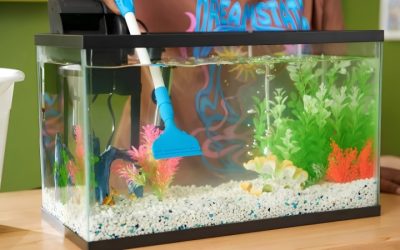
Aquarium lighting requires especially careful measurement. Record the tank’s inside length and width, not just its advertised gallon capacity. A 24-inch light may cover a 24-inch tank, but the edges can be noticeably darker if the fixture has a narrow beam. Compact products such as an approximately 7- to 12-inch submersible aquarium light are better suited to small tanks or accent areas than large planted aquariums.
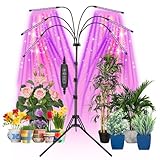
Plant lights should be judged by coverage at the height where they will operate. A small A19 grow bulb may illuminate one plant within roughly 12 to 18 inches. A tripod or stand-style lamp can cover a broader 2- to 4-square-foot area, depending on its output and placement. Look for an adjustable neck or tripod that reaches at least 24 to 48 inches if you expect plants to grow.
Material and Heat Management
LEDs create less heat than incandescent bulbs, but they are not heat-free. The housing should move heat away from the diode and power components. Aluminum bodies, vented housings, and substantial heat sinks are generally preferable to completely sealed, flimsy plastic enclosures for lights that run many hours each day.
For a standard room bulb, a plastic diffuser is not automatically a problem. It can make the light softer and reduce glare. For plant lamps, inspect whether the diffuser is clear enough to deliver light efficiently and whether the stand feels stable. For aquarium lights, confirm the product’s water-resistance rating and follow the installation instructions. A light described as submersible should still have a sealed cable connection and a power supply kept safely away from water.
Do not judge quality by the number of visible color beads. A fixture with red, blue, yellow, and white LEDs may create colorful effects, but more colors do not necessarily mean better plant growth or more accurate room lighting.
Construction and Controls
Construction matters most when a light will be moved, adjusted, or operated daily. Check the thickness and rigidity of a gooseneck, the locking points on a tripod, and the grip of clips or brackets. A stand that sags by several inches can change the light intensity at the target and make a plant lamp frustrating to use.
For everyday room lighting, look for a standard base such as E26 or E27, a diffuser that fully covers the LEDs, and a driver rated for the intended voltage. For connected or remote-controlled lighting, confirm whether the remote requires line of sight, batteries, or a separate hub. Enbrighten’s Spectrum remote-controlled indoor accent string lights, for example, are aimed at decorative color effects rather than replacing a reading or work light.
Timers should be easy to override. A useful plant timer may offer 3-, 6-, or 12-hour settings, while an aquarium fixture may provide a 24-hour cycle with gradual sunrise, daylight, and moonlight phases. If the timer resets whenever power is interrupted, that limitation should be clear before purchase.
Comfort and Performance
Color temperature is only one part of visual quality. For areas where you read, cook, dress, or evaluate colors, look for a color rendering index of at least CRI 80; CRI 90 or higher is preferable for artwork, clothing, food, and makeup. CRI does not describe brightness, so a high-CRI bulb can still be too dim.
Brightness is commonly listed in lumens. A 450- to 800-lumen bulb is suitable for many lamps and small rooms, while a 1,000- to 1,600-lumen bulb can provide stronger general illumination when the fixture and shade allow it. A 6-watt LED may be brighter than a 10-watt older LED, so compare lumens rather than wattage.
For plants, the most useful specifications may be PPFD and coverage at a stated distance, but many budget products do not provide complete data. When those numbers are missing, treat “full spectrum” as a marketing description rather than a performance guarantee. A grow bulb such as the Briignite A19 full-spectrum example may be practical for one or two plants, but it should not be assumed to replace a larger panel or stand light.
Also check flicker information, particularly for a desk lamp, video calls, or a light used by someone sensitive to pulsing. Product pages may state “flicker-free” or list a modulation test, but do not infer laboratory performance from appearance alone.
Price Tiers
Budget, $8 to $20: This range covers basic A19 grow bulbs, simple color-changing accent lights, and small aquarium fixtures. The Briignite grow bulb example is listed for under $10, while a compact hygger 24/7 aquarium light example is listed for under $20. Expect limited documentation, basic plastic construction, and fewer mounting options. These products can be worthwhile when the coverage area is small.
Midrange, $20 to $60: You are more likely to find adjustable stands, better dimming, multiple timer settings, sturdier brackets, and improved heat management. The Mefflypee tripod grow-light example is listed for under $40. This tier is often the best fit for a small indoor plant collection or a decorative fixture used frequently.
Premium, $60 and above: Premium products may offer stronger output, better coverage data, replaceable components, quieter drivers, high color accuracy, app control, or more durable metal construction. Pay for a feature that solves a real need, such as reliable scheduling or even coverage—not simply for a longer list of colors.
Warranty and Expected Life
Many LED products advertise long operating lives, commonly 15,000 to 50,000 hours, but that figure is an estimate under stated conditions, not a promise that every component will last that long. The driver, switch, timer, and power adapter can fail before the diodes.
Look for a written warranty of at least one year for a low-cost fixture and two to five years for a more expensive light. Confirm what is covered: the complete fixture, power supply, remote, or only the LED board. Keep the receipt and photograph the model label, since replacement parts and warranty claims often depend on the exact version.
For a permanently mounted light, favor a brand with a clear support channel and available replacement adapters. A slightly higher initial price can be worthwhile if it prevents replacing the entire fixture after a failed power supply.
Delivery and Assembly
Check the package dimensions and assembly requirements before ordering. A bulb should need no assembly, but a tripod grow light may require 10 to 20 minutes to attach legs, route a cable, and set the head angle. Aquarium lights may include suction cups, clips, or brackets that fit only a limited rim thickness, such as 0.25 to 0.75 inch.
Inspect the return policy for damaged diffusers, bent stands, or missing hardware. A light with a glass component needs protective packaging, while a long bar or tripod can arrive with shipping damage even when the LEDs work. Confirm whether the product ships with the correct plug, adapter, batteries, and mounting pieces rather than assuming they are included.
Spec Checklist
| Spec | Budget | Mid | Premium |
|---|---|---|---|
| Typical price | $8–$20 | $20–$60 | $60–$200+ |
| Color temperature | One setting or basic RGB | 2,700K–6,500K or selectable colors | Precise tunable white and RGB control |
| Color rendering | CRI 80 or unspecified | CRI 80–90 | CRI 90+ with documented ratings |
| Brightness | 300–800 lumens, or limited grow coverage | 600–1,600 lumens or stated plant coverage | 1,000+ lumens with detailed output data |
| Controls | On/off or simple remote | Dimming, timer, or several modes | App, schedules, sunrise transitions, and channel control |
| Construction | Plastic body, basic bracket | Reinforced plastic or aluminum sections | Metal housing, replaceable parts, robust mounting |
Red Flags
- “Full spectrum” is listed without color temperature, CRI, lumens, or plant-coverage information.
- The seller promises plant growth but gives no distance, coverage area, PPFD, or operating instructions.
- A waterproof or submersible claim appears without a clear water-resistance rating or safety guidance.
- The wattage is prominent, but lumens or useful output are missing.
- The light uses a proprietary adapter with no replacement option.
- Reviews mention timer resets, flicker, overheating, weak suction cups, or a stand that will not hold its position.
- The fixture is too short for the target area, requiring intense light at the center and leaving dark edges.
FAQ
What LED color is best for a living room?
Choose 2,700K to 3,000K warm white for a relaxed atmosphere. If the room doubles as a workspace, a dimmable 3,000K to 4,000K light offers more flexibility.
Is full-spectrum LED light always best for plants?
No. “Full spectrum” is not a standardized performance guarantee. Compare coverage, brightness at a stated distance, timer functions, and any available PPFD information. A small full-spectrum bulb may be appropriate for one plant but inadequate for a shelf of mature plants.
Is 5,000K too blue for a bedroom?
It can feel stark, especially at high brightness. Use 2,700K to 3,000K in bedrooms and reserve 4,000K to 6,500K for task areas, daytime use, or plant lighting.
How many watts should an LED light have?
Start with the required brightness and coverage, not wattage. For general room use, compare lumens; for plants, compare stated coverage and PPFD when available. A lower-wattage LED can deliver more light than an older, higher-wattage design.
Ready to decide? Our #1 pick for 2026 is the Typical price.
Live price & availability on Amazon.
Related Reviews & Guides


6 Best Fish Tank Stand Petsmarts 2026
6 Best Plants For Betta Fish Tank 2026