Last Updated: October 21, 2026
Most ATO problems are installed, not manufactured. The common mistakes when buying an auto top off system cluster around four ideas: matching pump flow to tank gallons, ignoring vertical lift, letting the plumbing siphon, and using the wrong water, and each one can defeat an otherwise capable system before it ever runs correctly.
As an Amazon Associate we earn from qualifying purchases.
By David Nguyen
How Auto Top Off Buying Mistakes Happen
The frequent errors are about physics and plumbing, not brand choice, so they repeat across otherwise good systems. The four below cover the pattern: matching pump gallons-per-hour to aquarium gallons, ignoring vertical lift and tubing, misplacing the sensor or outlet, and ignoring water compatibility.
Mistake: Matching Pump GPH to Aquarium Gallons
The first mistake is treating tank gallons as the sizing number. Bulk Reef Supply notes that evaporation depends on surface area, water movement, temperature and humidity, not nominal volume, so there is no valid rule that a 75-gallon tank needs a matching 75-gallon-per-hour pump just to keep up with it.
So size the pump by evaporation and lift, never by matching gallons to flow. An ATO replaces slow evaporation rather than moving water on demand, which is why a modest, well-protected pump that reaches the outlet serves better than a high maximum picked only to mirror the tank’s stated size on paper.
Mistake: Ignoring Vertical Lift and Tubing Length
The second mistake is buying on maximum head without measuring the real rise. A Duetto2 lists an 8.2-foot maximum head, but that is the zero-flow endpoint, not the flow delivered at that height, and IceCap even tells users to keep the total hose run within about 6 feet or so across the whole run.
So measure the reservoir-to-outlet lift and the tubing length before choosing. Because delivered flow drops as the pump fights more height, and some makers cap the hose run, a pump can look adequate on its headline head yet fall short once your actual plumbing and tubing run are taken into account.
Mistake: Putting the Sensor or Outlet in the Wrong Place
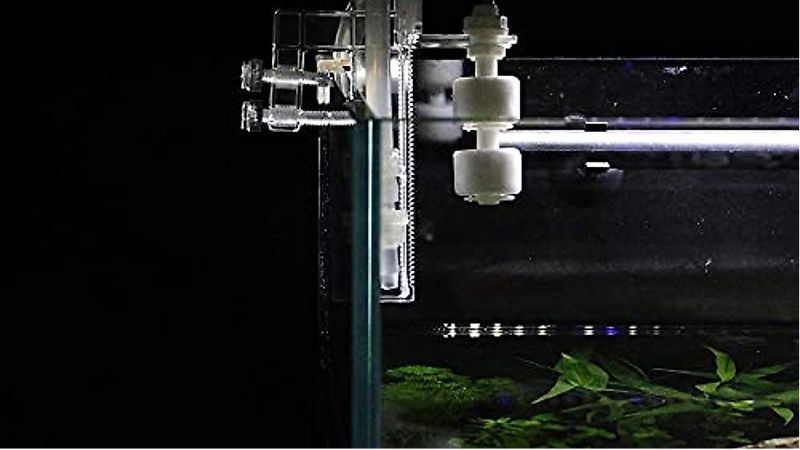
The third mistake is careless placement of the sensor or the outlet. XP Aqua warns that microbubbles and direct light around an optical sensor cause false readings, while Red Sea shows that outlet and reservoir geometry can start a siphon, so location is part of a correct install.
So plan where the sensor and outlet sit as deliberately as the wiring. Keeping the sensor clear of bubbles and bright light, and routing the outlet so gravity cannot take over, prevents the false triggers and unintended flows that a good sensor cannot fix once it has been badly positioned in the water.
Mistake: Ignoring Water Compatibility
The fourth mistake is overlooking what water a system is built for. The Red Sea ReefATO+ is seawater only because its sensor relies on seawater conductivity, and separately, top-off water in a reef should be fresh RO/DI, since evaporation removes water while the salts stay behind.
So confirm both the sensor’s water type and the correct top-off water before buying. A seawater-only unit simply cannot sense a freshwater tank, and topping off a reef with saltwater raises salinity over time, which makes water compatibility a hard check rather than an afterthought at checkout.
Real Products That Show the Differences
Each system below illustrates one of the common errors rather than being ranked against the others, since these mistakes cut across brands. The table pairs product, what it demonstrates, key spec and the caveat to keep, and the gallons-per-hour and head figures are published maxima, not delivered flow at your lift.
| Product | What It Demonstrates | Key Spec | Watch Out For |
|---|---|---|---|
| XP Aqua Duetto2 | Sensor placement matters | 8.2 ft head; dual optical | Bubbles / direct light |
| Red Sea ReefATO+ | Siphon and water compatibility | 8 ft head; seawater-only sensor | Wrong geometry can siphon |
| Tunze Osmolator 3 Nano | Manufacturer size ceiling | About 66 gal; 9.84 ft head | Do not use above range |
| IceCap ATO EZ | Tubing and head constraints | 5 W; 50 gph; ~6 ft | Do not exceed hose/head scope |
XP Aqua Duetto2
The XP Aqua Duetto2 shows why sensor placement matters: a 74-gallon-per-hour maximum, an 8.2-foot head and dual optical sensing with a QST timer, priced around $175 as of 09/2026, with an optical sensor whose accuracy depends on being mounted somewhere clean, stable and free of bubbles or direct light.
It is a capable unit that a bad location can still defeat. Place its optical sensor away from microbubbles and direct light as XP advises, since either can trigger a false reading, which is exactly the installation mistake this pick is here to illustrate rather than a fault of the pump hardware itself.
Red Sea ReefATO+
The Red Sea ReefATO+ shows the siphon and water-compatibility traps: a 75-gallon-per-hour maximum, an 8-foot head and a seawater-only sensor, priced around $225 as of 09/2026, with plumbing that can siphon whenever the outlet sits below the reservoir water surface without a siphon break fitted in the line.
So follow the siphon-break geometry rather than assuming the included part works regardless of routing. Its seawater-only sensor also rules out a freshwater tank, which makes it a clear example of the two water-and-plumbing mistakes buyers most often overlook when they focus only on the headline flow number.
Tunze Osmolator 3 Nano
The Tunze Osmolator 3 Nano shows the size-ceiling mistake: 5-watt pump operation, a 9.84-foot head and an explicit scope up to about 66 gallons, priced around $150 to under $200 depending on the exact channel and SKU as of 09/2026, with a clearly stated aquarium-volume limit printed plainly on the box.
It is precise and quiet within its range, but using it above that stated ceiling is the error to avoid. Treat the roughly 66-gallon figure as a hard boundary rather than a suggestion, since stretching a nano-class controller past its documented scope is a mistake that no single feature or spec can offset later.
IceCap ATO EZ
The IceCap ATO EZ shows the tubing and head constraint: a 5-watt pump, a 50-gallon-per-hour maximum and a roughly 6-foot head and hose scope, priced around $100 as of 09/2026, with a maker instruction not to exceed its own documented tubing length and vertical lift scope here.
It is a strong complete kit that overreaching plumbing can undermine. Keep the hose run and vertical rise within its stated roughly 6-foot scope, since pushing past the documented tubing and head is the installation mistake this pick illustrates rather than a real shortcoming of the kit itself here at all.
Frequently Asked Questions
These answers target the errors buyers repeat, since most ATO trouble is installed rather than manufactured. Each opens with the direct answer and the reason behind it, so sizing, siphoning, sensor placement and water choice stay grounded in the makers’ own guidance rather than rules of thumb.
Should ATO Pump GPH Match Tank Gallons?
No, because evaporation and lift matter far more than that simple ratio. Tank gallons do not set how much water evaporates or how high the pump must push, so matching a pump’s gallons-per-hour to the tank’s size is only a coincidence of matching numbers rather than any real pump-sizing method at all.
So choose the pump by measured evaporation and vertical head instead. A pump that reaches your outlet and keeps up with real water loss is correctly sized, whatever its maximum flow, which is why the gallons-to-gallons shortcut is one of the single most common buying mistakes made here.
Can an ATO Keep Filling After the Pump Stops?
Yes, it can, through siphoning, if the tubing geometry lets gravity take over. When the outlet sits below the reservoir water surface, water can keep flowing after the pump switches off, which is exactly the kind of runaway fill a siphon break is specifically designed to stop before it can flood the tank.
So check the outlet-to-reservoir geometry and fit the siphon break as specified. Red Sea prescribes a siphon breaker precisely when the outlet lies below the reservoir water level, so preserving that condition, rather than assuming any routing is safe, stops an unintended gravity fill after the pump shuts off.
Why Does an Optical Sensor Give False Alarms?
Usually because something is interfering with the light path, most often microbubbles. XP Aqua lists bubble interference as a cause and tells users to clean the sensor or move it away from microbubbles, so a false alarm often points to sensor placement rather than to a genuinely broken or dirty sensor.
So inspect the sensor’s surroundings before assuming it has failed. Bubbles, film or a poor location can all confuse an optical reading, and because a QST or fail-safe alert can also mean an empty reservoir, it is worth checking more than one likely cause rather than settling on just the first one found.
Should I Top Off a Reef With Saltwater?
No, not for normal evaporation replacement, because evaporation removes water while the salts remain. Bulk Reef Supply says reef top-off should use fresh filtered RO/DI water, since replacing evaporated water with saltwater would steadily raise the tank’s overall salinity higher over time.
So reserve saltwater for planned water changes, not automatic top-off. Using fresh RO/DI for the ATO keeps salinity stable as water evaporates, which is why the top-off water itself, quite separate from the sensor’s water-type requirement, is a compatibility detail genuinely worth getting right up front.
Final Thoughts
The common mistakes when buying an auto top off system are mostly installed: matching pump flow to tank gallons, ignoring lift, letting the plumbing siphon, and using the wrong water. Size by evaporation and head, and match both the sensor and top-off water, since electronics do not cancel installation physics.

Best 1 Terabyte Hard Drive in 2026: How the Top Models Compare
Best Lacrosse Rebounders for Backyard Training