Last Updated: November 11, 2026
Choosing an M.2 SSD sounds simple until you notice that two drives with the same 2280 shape can differ by a factor of five in quoted speed, and that the fastest one may not even run at full speed in your motherboard. The real decision is which PCIe generation your slot supports, how much capacity you need on day one, and whether the extra speed of a newer drive will ever show up in the work you actually do. Spending on throughput you cannot use is the most common way people overpay for storage.
This guide is for people upgrading a desktop, refreshing a laptop, or adding a second drive for games and project files. Every pick below is an NVMe drive in the M.2 2280 size, and the comparisons rely only on what each listing states, such as the PCIe generation, capacity, and quoted read speed. Several titles are cut off mid-sentence, so confirm the remaining details on the listing, especially warranty and cooling notes, before you buy.
Quick Picks

Samsung SSD 9100 PRO 2TB, PCIe 5.0x4 M.2 2280, Up to 14,700MB/s | NVMe Internal Solid State Hard Drive best for AI Computing, Gaming, and Heavy Duty Workstations (MZ VAP2T0B/AM)
Included for '6 Best M2 SSDs (November 2026)' as a representative aquarium product in this roundup; selection reflects the product set returned for this topic.
View on Amazon
Samsung SSD 990 PRO 2TB, PCIe 4.0 M.2 2280, Up to 7,450 MB/s | NVMe Internal Solid State Hard Drive for High End Computing, Gaming, and Heavy Duty Workstations, (MZ-V9P2T0B/AM)
Included for '6 Best M2 SSDs (November 2026)' as a representative aquarium product in this roundup; selection reflects the product set returned for this topic.
View on Amazon
Kingston NV3 1TB M.2 2280 NVMe SSD | PCIe 4.0 Gen 4x4 | Up to 6000 MB/s | SNV3S/1000G
Included for '6 Best M2 SSDs (November 2026)' as a representative aquarium product in this roundup; selection reflects the product set returned for this topic.
View on Amazon
Samsung SSD 990 PRO 4TB, PCIe 4.0 M.2 2280, Up to 7,450 MB/s | NVMe Internal Solid State Hard Drive for High End Computing, Gaming, and Heavy Duty Workstations (MZ-V9P4T0B/AM)
Included for '6 Best M2 SSDs (November 2026)' as a representative aquarium product in this roundup; selection reflects the product set returned for this topic.
View on Amazon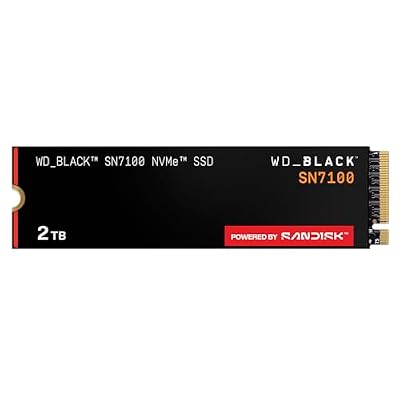
WD_Black SN7100 2TB NVMe SSD - Gen4 PCIe, M.2 2280, Up to 7,250 MB/s Read Speed, Up to 6,900 MB/s Write Speed, Next Gen TLC 3D NAND, for Laptops, Handheld Gaming Devices - WDS200T4X0E
Included for '6 Best M2 SSDs (November 2026)' as a representative aquarium product in this roundup; selection reflects the product set returned for this topic.
View on Amazon
Samsung SSD 990 PRO 1TB, PCIe 4.0 M.2 2280, Up to 7,450 MB/s | NVMe Internal Solid State Hard Drive for High End Computing, Gaming, and Heavy Duty Workstations (MZ-V9P1T0B/AM)
Included for '6 Best M2 SSDs (November 2026)' as a representative aquarium product in this roundup; selection reflects the product set returned for this topic.
View on Amazon| Product | Best for | Key spec from the title |
|---|---|---|
| Samsung 9100 PRO 2TB | Newest Gen 5 desktop builds | PCIe 5.0×4, up to 14,700MB/s |
| Samsung 990 PRO 2TB | Fast Gen 4 all-rounder | PCIe 4.0, up to 7,450 MB/s |
| Kingston NV3 1TB | Simple, budget-minded upgrade | PCIe 4.0 Gen 4×4, up to 6000 MB/s |
| WD_Black SN7100 2TB | Laptops and handheld PCs | Up to 7,250 MB/s read, 6,900 MB/s write |
| SanDisk Optimus 5100 500GB | Lean boot drive | PCIe 4.0, up to 6,600MB/s read |
| fanxiang S501Q 1TB | Older Gen 3 systems | PCIe 3.0×4, up to 3200MB/s |
How to Choose
Match the PCIe generation to your slot
A PCIe 5.0 drive in a Gen 4 slot falls back to Gen 4 speeds, and a Gen 4 drive in a Gen 3 slot falls back again. Check your motherboard or laptop manual for the generation of each M.2 socket, because many boards give only one slot the fastest lanes, and populating a second slot can even split bandwidth. Paying for Gen 5 makes sense only if the slot supports it. Otherwise a quick Gen 4 drive gives you almost the same everyday feel for noticeably less money.
Pick capacity before speed
A drive that is nearly full slows down, because it has less free space to use as a write cache. For a boot drive, 1TB is a sensible floor in 2026, and 2TB is more comfortable if you install large games or keep video projects locally. A 500GB drive works as an operating system disk, but it fills quickly once updates, a browser cache, and a few big installs pile up. Buying one size up usually costs less than replacing a drive later.
Read the sustained numbers, not just the headline
The “up to” figure is a peak, usually measured in short bursts. Sequential speed matters when you copy large files, while booting and launching apps depend more on responsiveness at low queue depth, where most modern Gen 4 drives feel alike. If a listing shows a write speed beside the read speed, that gives a better picture of how the drive handles big transfers. Also look for the memory type named in the title, since TLC is generally preferred over drives that lean on a small cache.
Mind heat, thickness, and form factor
Fast drives run warm and may throttle without airflow. Many desktop boards include an M.2 heatsink, but laptops and handhelds often have very little clearance, so a bare drive without a bulky cooler is the safer fit there. Confirm that the 2280 length is supported, since some compact devices accept only shorter sticks, and check whether your device needs a single-sided drive. Skipping this check is how people end up with a drive that physically will not seat.
The 6 Best Options
Samsung 9100 PRO 2TB
This is the drive for someone building a new system around a PCIe 5.0 slot and wanting the highest quoted throughput on the list. The title states PCIe 5.0×4, M.2 2280, and up to 14,700MB/s, and it is aimed at AI computing, gaming, and heavy-duty workloads. Two terabytes also gives room for a large library without juggling drives, which suits creators who keep raw footage or datasets on the same volume as their apps.
- Strength: the highest quoted speed in this group, with a Gen 5 interface that leaves room to grow.
- Strength: 2TB of capacity leaves plenty of free space for sustained writes.
- Trade-off: it only reaches its headline speed in a Gen 5 slot, and faster drives usually run hotter.
Skip it if your board tops out at Gen 4 or your daily tasks are browsing and office work.
Samsung 990 PRO 2TB
The 990 PRO 2TB is a PCIe 4.0 M.2 2280 drive with quoted reads up to 7,450 MB/s, and it suits people who want top-tier Gen 4 performance without moving to a newer platform. The title positions it for high-end computing, gaming, and heavy-duty work, which makes it a natural fit for a primary drive in a capable desktop or a well-ventilated laptop that accepts a full-size stick. It is a sturdy default when you are unsure how much speed you need.
- Strength: close to the ceiling of what a Gen 4 slot can deliver.
- Strength: 2TB gives a roomy boot and games volume in one place.
- Trade-off: it costs more than entry-level Gen 4 options that feel similar for ordinary use.
Skip it if you only need a modest system drive, since the speed premium is hard to notice outside large transfers.
Kingston NV3 1TB
Kingston’s NV3 is the straightforward choice for buyers who want a PCIe 4.0 Gen 4×4 NVMe drive in the 2280 size without spending at the top of the market. The title lists up to 6000 MB/s and a 1TB capacity, which is plenty for an operating system, everyday apps, and a modest game collection. It is also a reasonable way to give an aging laptop a second life, provided the slot is compatible.
- Strength: a current-generation interface at a budget-friendly tier.
- Strength: 1TB is a practical middle capacity for most single-drive setups.
- Trade-off: the quoted speed is lower than the premium Gen 4 drives, and the title gives no write figure, so confirm details on the listing.
Skip it if you regularly move huge video files or want maximum headroom for sustained writes.
WD_Black SN7100 2TB
The SN7100 is a Gen 4 NVMe drive with up to 7,250 MB/s read and up to 6,900 MB/s write, and the title points to laptops and handheld devices. That strong write number is the standout, because it matters when you copy large installs or export media. It is a sensible pick when you want near-flagship Gen 4 performance in a mobile device that accepts a 2280 stick, and the 2TB size avoids frequent cleanups.
- Strength: a high quoted write speed alongside fast reads.
- Strength: next-generation TLC 3D NAND is named in the title, and 2TB gives generous space.
- Trade-off: the listing title is truncated, so confirm compatibility with your specific handheld or laptop.
Skip it if your device supports only shorter M.2 sizes or demands a particular thickness.
SanDisk Optimus 5100 500GB
The Optimus 5100 is a compact-capacity PCIe 4.0 drive with up to 6,600MB/s read and up to 5,600MB/s write quoted on the listing. At 500GB it fits someone who wants a fast operating system drive and keeps bulk files elsewhere, such as on a secondary hard drive or external storage. It also works as a quick swap for a failing boot drive in a workstation where the data lives on a network share.
- Strength: Gen 4 speeds in a small, lower-cost capacity.
- Strength: a write speed is listed, which helps you judge large transfers.
- Trade-off: 500GB fills quickly once modern games and updates arrive.
Skip it if this will be your only drive for games, photos, and projects, because you will likely outgrow it soon.
fanxiang S501Q 1TB
This is a PCIe 3.0×4 NVMe drive with up to 3200MB/s listed, made for older laptops and desktops whose M.2 slot is Gen 3. In that setting, a Gen 4 drive would be slowed down anyway, so matching the drive to the slot avoids paying for speed you cannot use. The title also notes SLC cache and 3D NAND, which tells you how it is built for bursts of activity.
- Strength: a sensible match for Gen 3 slots, with 1TB of space.
- Strength: still far quicker than a SATA drive or a hard disk for boot and load times.
- Trade-off: it will feel slow next to Gen 4 drives during large copies.
Skip it if your system supports Gen 4 or Gen 5, since a faster drive is a better long-term investment.
Which One Fits Your Situation
You are building a fresh Gen 5 desktop
The Samsung 9100 PRO 2TB is the logical match when your board has a Gen 5 slot and you work with large assets, because both interface and capacity are at the top of this list. Pair it with a heatsink and good case airflow so the drive can hold its speed during long transfers.
You want strong speed on a Gen 4 board
Go with the Samsung 990 PRO 2TB. It gets close to the Gen 4 ceiling, so you capture most of the available performance without needing a newer motherboard, and it leaves room for a second drive later.
You are refreshing a laptop or handheld
The WD_Black SN7100 2TB is described for laptops and handhelds and lists a strong write speed, so it is a good candidate once you confirm the physical fit. Check the manual for length and thickness limits first.
You are on a tight budget or an older machine
Pick the Kingston NV3 1TB for a modern Gen 4 system, or the fanxiang S501Q 1TB if your slot is Gen 3. If you only need a small system disk, the SanDisk Optimus 5100 500GB is a lean option.
Common Mistakes
- Buying a Gen 5 drive for a board whose M.2 slot is only Gen 4 or Gen 3, then wondering why the quoted speed never appears.
- Choosing 500GB for a machine that will also hold games and media, then running out of room within months.
- Comparing only the read figure and ignoring the write speed that governs large copies and installs.
- Forgetting to check whether the slot needs a heatsink or has height clearance, especially in thin laptops.
- Assuming every SSD labeled M.2 is NVMe, when some M.2 drives use the slower SATA interface.
Related guides
- Patio Furniture Sets With Fire Pit Table
- Spotting Scopes For Long Range Shooting
- Espresso Machines With Built In Grinder
Frequently Asked Questions
Is a PCIe 5.0 SSD worth it for gaming?
For most games, load times on a good Gen 4 drive are close to a Gen 5 drive. Gen 5 helps more with huge file transfers and professional workloads, so it is optional for pure gaming unless you want the newest platform.
Will an NVMe drive work in my laptop?
Only if the laptop has an M.2 slot that supports NVMe and the 2280 length. Check the manual or the manufacturer’s spec page, because some older models accept only SATA M.2 drives or shorter sizes.
How much capacity should I get?
A 1TB drive suits most single-drive builds, while 2TB is better if you install many large games or edit video. Choose 500GB only for a dedicated operating system disk with data stored elsewhere.
Do I need a heatsink?
Fast Gen 4 and Gen 5 drives benefit from one, and many desktop boards include it. In a laptop, rely on the chassis design and avoid adding anything that does not physically fit.
6 Best Snow Boots (November 2026)

7 Best Fish Poaching Pans (November 2026)