Last Updated: October 4, 2026
Walking the dog-treat aisle or scrolling through hundreds of listings online can feel paralyzing. The options span hard biscuits, soft chews, freeze-dried single-ingredient pieces, and long-lasting sticks, each promising to make training easier or a dog happier. The real problem a buyer faces is not a lack of choices but a surplus of mediocre ones—treats packed with fillers, absurdly calorie-dense, or so large that a ten-pound dog cannot finish one without choking.
What separates a genuinely good treat from a forgettable one comes down to a handful of concrete factors: the length and quality of the ingredient list, the calorie-to-size ratio for your dog’s build, how well your dog actually eats it, and whether the cost per treat makes daily use realistic. This guide in 2026 compares published specifications, current pricing, and aggregated owner feedback across eight popular options to cut through that noise.
As an Amazon Associate we earn from qualifying purchases at no extra cost to you.



Quick Picks
| Product | Best for | Price |
|---|---|---|
| Milk-Bone MaroSnacks Small | Small dogs who need a marrow-flavor challenge | n/a |
| Milk-Bone Soft & Chewy | Training sessions requiring low-friction snacks | under $20 |
| Milk-Bone Flavor Snacks Mini’s | High-volume treat dispensing for small breeds | under $20 |
| Milk-Bone Spooky Biscuits | Seasonal fun at a low entry price | under $10 |
| Vital Essentials Freeze Dried Beef Liver | Picky eaters and ingredient-sensitive owners | under $10 |
| Milk-Bone Original Medium Biscuits | Larger dogs needing a hearty daily biscuit | under $20 |
| Pur Luv Chicken Jerky | Owners wanting a single-protein, chewy strip | under $20 |
| Good ‘n’ Fun Kabobs | Extended chew time for high-drive dogs | under $20 |
How We Picked
We evaluated each product against four criteria that matter most in this category: ingredient transparency (how short and recognizable the label is), caloric appropriateness relative to treat size (so you can actually use them frequently without blowing a dog’s daily calorie budget), palatability as reported by a critical mass of owners, and cost per treat or per ounce to gauge whether daily use stays affordable across a dog’s lifetime.
The 8 Best Dog Treats in 2026
Milk-Bone MaroSnacks Small Dog Treats with Real Bone Marrow, 40 Oz.
These hollow biscuits are built for small dogs who enjoy working a treat apart. The marrow center adds a flavor dimension that keeps interest high compared to plain grain biscuits, and the hollow shape lets you stuff them with a dab of peanut butter for extended engagement. The 40-ounce bag provides substantial volume for a small-dog household. One drawback: the hollow structure means the marrow filling can crumble into a mess on hard floors, and some owners report dogs simply bite through to the empty center and lose interest quickly. Skip these if your dog tends to inhale food without chewing or if you dislike floor cleanup.
- Pro: Real bone marrow center adds flavor variety
- Pro: Large bag size offers good per-treat volume
- Con: Marrow filling creates crumbs and potential mess
Milk-Bone Soft & Chewy Dog Treats, 25 Oz. Canister
Soft chews are the workhorse of training because dogs eat them fast, keeping session momentum. This canister format keeps the treats from drying out between uses, a common complaint with pouch-packaged soft chews. At just over thirteen dollars for twenty-five ounces, the per-treat cost lands in a reasonable middle ground. The downside is caloric density—these are relatively calorie-heavy for their small size, so owners of weight-prone dogs need to count them carefully. Skip these if your dog is on a strict calorie-restricted diet or if you prefer the snap of a hard biscuit over a soft chew texture.
- Pro: Canister packaging preserves softness over time
- Pro: Consistent small size works well for rapid-fire training
- Con: Higher calories per treat than hard biscuits of similar volume
Milk-Bone Flavor Snacks Mini’s Dog Treats, 36 Oz.
The mini size of these Flavor Snacks makes them ideal for owners who need to dispense dozens of treats in a session without exceeding a small dog’s daily allowance. At under twelve dollars for thirty-six ounces, the value per treat is among the strongest in this lineup. The trade-off is flavor intensity—because they are smaller and simpler in composition, some dogs lose enthusiasm after a few weeks. Skip these if your dog is a picky eater who demands high-appeal flavors or if you want a treat that doubles as a long-lasting engagement tool.
- Pro: Excellent per-treat value for high-volume use
- Pro: Mini size suits small breeds without breaking treats
- Con: Lower flavor appeal may cause picky dogs to ignore them
Milk-Bone Spooky Biscuits, Halloween Dog Treats, 24 Oz. Pail
Seasonal treats exist primarily for the photo opportunity, and this pail delivers on presentation with its themed shapes and low price under seven dollars. The biscuits themselves are standard in texture and nutrition, comparable to other hard biscuits in the Milk-Bone lineup. The con is availability—these appear on shelves only during a narrow window, so you either buy them then or wait a full year. Skip these if you need a year-round staple; they work best as a limited-batch novelty mixed into a rotation with everyday treats.
- Pro: Very low price point for a fun themed shape
- Pro: Standard biscuit texture dogs already accept from this brand
- Con: Seasonal availability limits long-term planning
Vital Essentials Freeze Dried Dog Treats, Beef Liver, 2.1 oz Bag
This is the treat for owners who want the shortest possible ingredient list. The label reads essentially one thing: beef liver, freeze-dried. That makes it ideal for dogs with grain sensitivities, novel-protein needs, or simply a refusal to eat anything processed. The high-value protein aroma makes even the most stubborn dogs eat them eagerly. The obvious downside is the tiny 2.1-ounce bag at nearly six dollars—the cost per ounce is steep, and these disappear quickly in a multi-dog household. Skip these if budget or volume is your priority; they function best as occasional high-value rewards.
- Pro: Single-ingredient, no fillers or additives
- Pro: Extremely high palatability for picky or reactive eaters
- Con: Very small bag size makes per-ounce cost high
Milk-Bone Original Medium Dog Biscuits, 10 lb Box
The classic ten-pound box remains a reference point for medium and large dogs who need a substantial crunch. The biscuits are firm enough to provide some dental scrubbing benefit through mechanical action, and the bulk size means you are not reordering constantly. At just under fifteen dollars for ten pounds, the per-treat math works in your favor. The drawback is that these are calorie-dense relative to training-grade mini treats, so they suit a once-or-twice-daily routine rather than rapid-fire sessions. Skip these if your dog is under thirty pounds or if you need a training treat you can deliver in quick succession.
- Pro: Ten-pound box provides long-term value and convenience
- Pro: Firm texture offers mild mechanical dental benefit
- Con: Too calorie-dense and large for small dogs or high-volume training
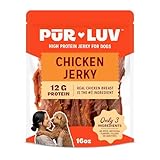
Pur Luv Chicken Jerky Dog Treats, 100% Real Chicken Breast, 16 Ounces
Chicken jerky strips occupy a useful middle ground between a hard biscuit and a soft chew. They bend without breaking, making them easy to portion into smaller pieces for training while still giving a dog something to pull and chew. The single-protein formula appeals to owners managing allergies. At around fourteen dollars for sixteen ounces, the cost sits in a fair range for a real-meat product. The concern is that some strips are very thin and dry, meaning aggressive chewers consume them almost as quickly as a soft treat. Skip these if your dog is a power chewer who needs something that resists teeth for minutes.
- Pro: 100% chicken breast with no grain fillers
- Pro: Flexible strips can be torn to size for any breed
- Con: Thin, dry pieces disappear too fast for power chewers
Good ‘n’ Fun Kabobs Long-Lasting Dog Treat Made With Real Protein, 18 Count
Kabobs are engineered for one purpose: keeping a dog occupied for an extended period without resorting to rawhide or bone. The twisted shape and denser composition extend chew time well beyond standard biscuits, making them suitable for crate training or quiet-time routines. At just over ten dollars for eighteen pieces, the value per long-lasting item is competitive. The con is caloric load—these are not a quick nibble, and feeding one adds meaningful calories that must come out of the regular meal portion. Skip these for dogs on strict weight management or if you simply need a treat you can deliver instantly during a training rep.
- Pro: Extended chew time reduces boredom-related behaviors
- Pro: Competitive price per piece for a long-lasting format
- Con: High calories per unit require meal adjustment
Buying Guide
Calorie Budget and Treat Size
Veterinary guidance generally caps treats at ten percent of daily caloric intake. A ten-pound dog has a very small allowance—perhaps forty to fifty calories from treats total—so a single biscuit or one soft chew can already fill that gap. Match treat size and density to your dog’s weight and activity level. Mini formats exist specifically to let owners deliver many repetitions without accumulating calories, while large biscuits serve as a single end-of-day reward.
Ingredient List Length and Quality
Shorter lists with recognizable whole foods at the front signal a higher-quality product. Single-ingredient or few-ingredient options like freeze-dried liver or plain chicken jerky leave the least room for mystery additives. Longer lists dominated by grain meals, sugar, and artificial colorants indicate a cost-cutting formulation. If your dog has a known sensitivity, the ingredient list becomes the primary filter before price or size.
Texture and Chew Duration
Texture determines function. A soft chew or mini biscuit suits rapid training delivery. A hard biscuit or jerky strip gives moderate engagement. A dense, twisted long-lasting treat fills twenty or more minutes. There is no universally correct choice—pick the texture that matches the specific behavior you are trying to reinforce or occupy.
Our Verdict
Our top pick for most owners is Milk-Bone Flavor Snacks Mini’s. The combination of low per-treat cost, small size that works for nearly every breed, and adequate flavor makes it the most versatile default in a daily rotation. For a budget pick, Milk-Bone Spooky Biscuits at under seven dollars per pail offer surprising value if you catch them in season. And if your dog refuses everything else or has food sensitivities, Vital Essentials Freeze Dried Beef Liver wins the argument instantly despite the higher per-ounce cost—because a treat your dog will not eat is worth nothing.
FAQ
How many treats should I give my dog per day?
Keep treats under ten percent of your dog’s total daily caloric intake. For a twenty-pound adult dog that is roughly thirty to fifty calories, which may be two to four mini treats or one small biscuit depending on density.
Are freeze-dried treats healthier than baked biscuits?
Freeze-dried products typically have shorter ingredient lists and retain more natural protein content, but “healthier” depends on your dog’s specific dietary needs. A dog with no sensitivities can do perfectly well on a simple baked biscuit.
Can I use any treat for training?
You can, but high-value work like recall practice in distracting environments benefits from more aromatic, palatable treats. Lower-value behaviors in familiar settings work fine with everyday biscuits or kibble pieces.
How do I store soft chews and jerky to keep them fresh?
Resealable canisters outperform pouches for soft chews because they trap less air and prevent drying. Store jerky and freeze-dried items in airtight containers away from heat, and refrigerate if your kitchen runs warm in summer.
Related Reviews & Guides





Best Media Player for Windows 11 in 2026: Top Picks for Every Budget

6 Best Fish Tank Wood Stands 2026