Last Updated: October 21, 2026
For a first ATO, the safest choice is the one that is hardest to set up wrong. The best auto top off system for beginners is a complete kit with the pump and tubing included and backup protection built in, not the model with the most app features, because fewer setup decisions means fewer ways to get it wrong.
As an Amazon Associate we earn from qualifying purchases.
By David Nguyen
How to Choose an Auto Top Off System for Beginners
A beginner’s ATO should remove setup decisions, not add more of them. The four criteria below do that: buy a complete system with the pump included, prefer built-in backup protection, make anti-siphon setup part of the install, and keep the sensor away from the spots that fool it.
Buy a Complete System With the Pump Included
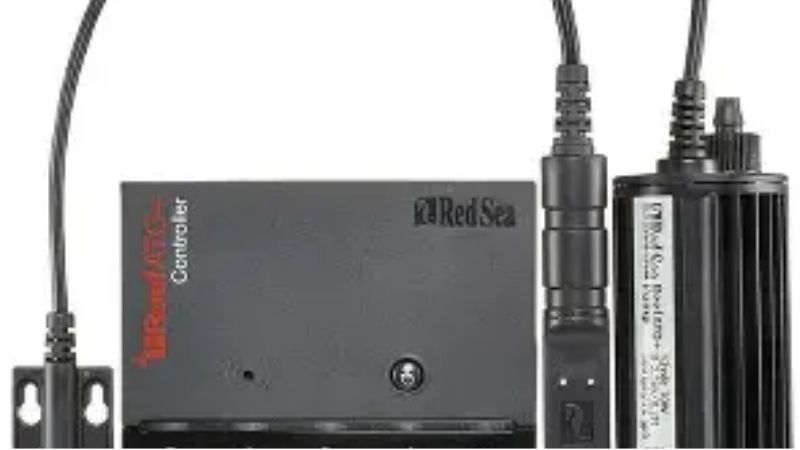
Start with a kit that works right out of the box. The IceCap, N-Fill, Duetto2 and Tunze Nano are complete operating systems, so avoid accidentally buying a controller-only product such as the HydroFill Ti, whose pump Innovative Marine explicitly sells separately, without first budgeting for that extra separate pump.
So confirm the pump and tubing are in the box before comparing anything else. A complete system removes the compatibility guesswork of matching a controller, a pump and the hoses all together yourself, which is exactly the kind of decision a first-time buyer is most likely to get subtly wrong on a very first build.
Prefer Built-In Backup Protection
Redundancy should come built in, not bolted on later. The IceCap adds a third safety sensor, the N-Fill pairs dual floats with a roughly 90-second timeout, the Duetto2 backs its optical sensor with a QST timer, and the Tunze Nano uses a selectable dosing-duration safety timer of its own built in.
So look for at least one independent backstop, while remembering more is not automatically failure-proof. These safeguards address different failure modes, so the protection logic matters more than the raw sensor count, and no honest math turns three sensors into a fixed percentage somehow safer than two.
Make Anti-Siphon Setup Part of Installation
Anti-siphon is part of a correct install, not an extra step. The IceCap and N-Fill include siphon breakers and the Duetto2 includes anti-siphon components, because tubing geometry can otherwise let reservoir water keep flowing into the tank after the pump itself has already stopped running.
So set the siphon break up as the maker intends from the start. Skipping it can let gravity continue a fill the pump has ended, which is the kind of quiet overflow risk a beginner most wants to design out, so treat the anti-siphon hardware as strictly required rather than optional.
Keep the Sensor Away From Bad Locations
A good sensor still needs a good spot to work. XP Aqua warns against placing the optical sensor where microbubbles or direct light can reach it, because either can interfere with the reading, which makes sensor placement part of a correct setup rather than merely an optional last detail.
So plan the sensor location as carefully as the wiring itself. Keeping it clear of bubble streams, pump turbulence and bright light lets it read the water level reliably, since even a well-built sensor gives false signals when it is mounted somewhere that quietly confuses its water-level reading.
Top Picks
Each pick below is judged on how hard it is to set up wrong, because a first ATO should make the safe install the obvious one. The table pairs product, best use, key spec and the caveat to keep, and the gallons-per-hour and head figures are published maxima rather than delivered flow at your lift.
| Product | Best For | Key Spec | Watch Out For |
|---|---|---|---|
| IceCap ATO EZ | Best overall for beginners | Triple optical sensors; complete kit; ~under $150 | About 6 ft max head |
| Nature Dimensions N-Fill | Best budget beginner system | Dual floats + ~90-sec timeout; ~under $70 | Mechanical float sensors |
| XP Aqua Duetto2 | Best compact plug-and-play | Dual optical + QST; 8.2 ft head | Higher price |
| Tunze Osmolator 3 Nano | Best premium simple setup | 0.5 mm sensor; dosing timer; ~under $150 | One optical sensor; 66 gal ceiling |
IceCap ATO EZ
The IceCap ATO EZ leads for beginners as a complete, redundant kit: triple optical sensing with the pump, tubing and a siphon break in the box, a 50-gallon-per-hour pump and about a 6-foot maximum head, priced around $100 as of 09/2026 for the whole ready-to-run kit packed into one box.
It pairs an out-of-the-box kit with three sensors that reduce reliance on any single reading. Its roughly 6-foot maximum head is the main limit, so confirm your reservoir sits comfortably below that lift, and remember the extra sensors reduce single-point risk rather than making it failure-proof.
Nature Dimensions N-Fill
The N-Fill is the budget beginner system, pairing dual float sensors with a roughly 90-second overfill timeout and alarm, a 47.6-gallon-per-hour pump and a 63-inch maximum head, priced around $70 as of 09/2026 for a complete, button-controlled kit that needs no app or separate controller at all.
It uses mechanical floats rather than optical sensors, which is the trade at this price. That keeps it simple and cheap with real redundancy, so confirm its 63-inch, roughly 5.25-foot head suits your lift, and check retailer availability since the same SKU can show as preorder in one store and in stock in another.
XP Aqua Duetto2
The XP Aqua Duetto2 is the compact plug-and-play pick: a dual optical sensor with a QST timer, a 74-gallon-per-hour maximum and an 8.2-foot head, and no programming requirement at all, priced around $175 as of 09/2026 for a tidy, no-programming install right straight out of the box.
Its higher price is the trade for that extra lift and dual optical sensing. Mount its optical sensor well clear of microbubbles and direct light as XP advises, and treat the plug-and-play design as removing programming, not the basic care of placing the sensor and the siphon break correctly first.
Tunze Osmolator 3 Nano
The Tunze Osmolator 3 Nano is the premium simple setup: 0.5-millimeter optical control, pump dry-run and blockage protection and a selectable maximum dosing-duration limit, specified up to about 66 gallons, priced around $150 at BRS as of 09/2026 for a precise, plug-and-play beginner setup.
It offers precise, plug-and-play sensing with one optical control sensor, which is the main caveat alongside its size ceiling. Keep the roughly 66-gallon limit in mind so you stay inside its range, and rely on the dosing-duration timer as its built-in backstop against an overfill.
Frequently Asked Questions
These answers aim at the setup worries a first-time buyer actually has, since an easy, correct install matters more than headline flow. Each opens with the direct answer and the condition behind it, so a beginner leans on complete kits and real backups rather than sensor-count math or app features.
What Is the Easiest Type of ATO to Install?
A complete plug-and-play kit is the easiest, because it reduces the number of pump, controller and tubing compatibility decisions you have to make yourself. With all of the parts matched in the box, setup becomes placing the sensor and running the tube rather than sourcing and matching loose components.
So favor a system sold as a finished kit over a build-it-yourself controller. The fewer compatibility choices a first install requires, the fewer chances there are to pair mismatched parts, which is why completeness is the single quality that most eases a beginner’s very first ATO setup.
Should a Beginner Use One Sensor or Multiple Sensors?
Multiple independent detection or safety mechanisms reduce single-point failure risk, so more than one backstop is a genuine benefit. But the actual protection logic matters more than the sensor count, since different safeguards each address different failure modes in real practice on an actual tank.
So value how the backups work, not just how many there are. Two well-designed layers can protect far better than three that simply overlap each other, which is why no honest comparison turns sensor count into a fixed safety score such as three sensors somehow being 50 percent safer than just two of them ever could.
Why Does an ATO Need a Siphon Break?
Because tubing geometry can otherwise let water keep flowing after the pump stops. Red Sea explains that a siphon breaker is needed when the hose routing could allow reservoir water to continue siphoning into the tank once the pump itself has already switched off at the very end of a cycle.
So a siphon break is really a safeguard against gravity, not the pump itself. Installing it as the maker intends stops an unintended fill from continuing on its own, which is exactly the kind of quiet overflow a beginner most wants to rule out entirely during a very first careful ATO setup at home.
Can a Beginner Use a Controller-Only ATO?
Yes, but it adds component-selection work that a complete kit avoids. The HydroFill Ti, for example, costs about $93 for just the controller alone and still requires a separate ATO pump of its own, so it is not a finished, ready-to-run system on its own without first buying more separate parts.
So a controller-only route suits someone ready to match a pump and tubing themselves. For most beginners the simpler path is a complete kit, since comparing total working-system cost, not a controller’s sticker price, is what keeps the first purchase both safe and genuinely easy for a newcomer.
Final Thoughts
The best auto top off system for beginners is the one hardest to set up wrong: a complete kit with the pump and tubing included, built-in backup protection, and anti-siphon hardware installed correctly. Favor completeness over app features, and treat more sensors as reducing single-point risk, not as failure-proof.

Dwarf Sagittaria Care: A Practical Foreground Guide

Best Non Agitator Washing Machine for Gentle Cleaning