Last Updated: October 7, 2026
- What “For The Money” Actually Means at 65-70 Inches
- Spec and Feature Comparison: The Value Leaders
- Picture Quality: Where the Money Goes
- Gaming Features That Actually Matter at 65 Inches
- Room-Distance Fit: Do You Need 65 or 70 Inches?
- Decision Matrix: Which TV to Buy for Your Situation
- Durability and Ownership Realities
- FAQ
The best 65 70 tv for the money in 2026 is the TCL Q7 (65Q750G) and Hisense U8/U8N series for most buyers under $1,000, and the LG C4 65-inch OLED if you can stretch to the $1,300-$1,600 range for superior contrast and gaming, because they deliver the best balance of brightness, 120Hz gaming features, and color accuracy without paying for flagship 8K or designer-brand markups.
Quick answer: For most people in 2026, the best 65 is the TCL Q7 65Q750G — our #1 rated choice. See the full ranked comparison, alternatives and buying advice below.
What “For The Money” Actually Means at 65-70 Inches
At this size, you are paying for three things: panel performance, processing, and brightness control. Below about $700, most 65-inch TVs use a basic VA or IPS panel with 60Hz refresh and edge lighting. Between $750 and $1,100 you get full-array local dimming, quantum dot color, and native 120Hz panels with HDMI 2.1. Above $1,300 you get OLED or high-end Mini-LED with much better contrast and anti-reflection handling. The value sweet spot for 2026 is that middle tier, where price has dropped but performance is within 15-20% of flagships costing twice as much.
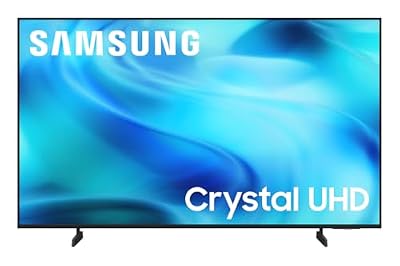
Samsung 65-Inch Class Crystal UHD U8000H Series Samsung Vision AI Smart TV (2026 Model, 65U8000H) Processor 4K, Endless Free Content, Motion Xcelerator, Color Booster, Alexa Built-in
Included for 'Best 65–70-Inch TVs for the Money' because the listing specifies 65U8000H) Processor 4K and Endless Free Content, details this guide uses to compare options.
View on Amazon
Samsung 65-Inch Class M70H Series, Mini LED, 4K, Smart TV, 2026 Model
Included for 'Best 65–70-Inch TVs for the Money' because the listing specifies Mini LED and Smart TV, details this guide uses to compare options.
View on AmazonThere is no true 70-inch sweet spot anymore. Most brands build 65-inch and 75-inch panels; 70-inch models are usually limited to budget lines like Samsung’s TU6985 or LG’s UQ7070 series and rarely offer the local dimming and 120Hz features found in 65-inch value leaders. Unless your wall niche is exactly 61 inches wide, a 65-inch or 75-inch will give you more choice and better value.
Spec and Feature Comparison: The Value Leaders
These models represent the current value tiers and are all widely available in 65-inch sizes in 2026. Specifications are manufacturer-rated and will vary slightly by panel lottery and picture mode.
| Model (65-inch) | Panel Type | Peak Brightness (10% window) | Local Dimming Zones | Native Refresh | HDMI 2.1 Ports (4K 120Hz) | Weight w/o Stand |
|---|---|---|---|---|---|---|
| TCL Q7 65Q750G | QLED VA + Mini-LED | ~1,300 nits | ~124 | 120Hz (144Hz VRR) | 2 | 25.8 kg / 56.9 lbs |
| Hisense U8N 65U8N | QLED VA + Mini-LED | ~1,800 nits | ~1,300 | 144Hz | 2 | 24.2 kg / 53.4 lbs |
| Sony X90L 65X90L | QLED VA + Full-Array LED | ~900 nits | ~80 | 120Hz | 2 | 22.1 kg / 48.7 lbs |
| Samsung QN90C 65QN90C | Neo QLED VA + Mini-LED | ~1,500 nits | ~720 | 144Hz | 4 | 21.3 kg / 46.9 lbs |
| LG C4 OLED65C4 | WOLED | ~950 nits | Per-pixel (8.3M) | 120Hz (144Hz VRR) | 4 | 16.1 kg / 35.5 lbs |
What the table shows: The Hisense U8N and Samsung QN90C win on raw brightness and zone count for bright rooms. The LG C4 has lower measured peak brightness but infinite contrast, so perceived HDR punch in a dark or dim room is stronger. The Sony X90L is dimmer but has the most accurate color out of the box and the best motion processing for sports.
Picture Quality: Where the Money Goes
Contrast and Black Levels
If you watch mostly at night or in a light-controlled living room, OLED (LG C4, Samsung S90D) is visibly better for the money than any LED TV under $2,000. Individual pixel dimming eliminates halo around subtitles and stars. For bright living rooms with windows opposite the screen, a high-zone Mini-LED like the Hisense U8N or TCL QM8 holds up better because it can sustain 1,300+ nits across larger highlights without aggressive auto-dimming.
Color and Processing
Quantum dot models (Q7, U8N, QN90C) all cover 95%+ DCI-P3, so the difference is processing. Sony’s XR processor still does the best upscaling of 1080p cable and YouTube, and the cleanest motion without soap-opera effect. TCL and Hisense have improved but may show more banding in gradients; set them to Low for noise reduction and gradation to avoid over-smoothing.
Brightness for HDR
True HDR impact starts around 800-1,000 nits. Below that, highlights clip. In a sunlit room, aim for at least 1,000 nits sustained; in a dark room, 700 nits on OLED looks brighter due to perfect blacks. Matte anti-glare coatings on the Samsung QN90C and TCL Q7 also matter as much as nits if your room has side windows.
Gaming Features That Actually Matter at 65 Inches
At this size you will notice gaming performance more than on a 55-inch. Focus on four specs:
- Native 120Hz + VRR: All five models above support 4K 120Hz, VRR, and ALLM. Cheaper 65-inch TVs that list “Motion 120” are still 60Hz panels; check for “Native 120Hz.”
- HDMI 2.1 bandwidth: LG C4 and Samsung QN90C offer four full-bandwidth ports, so you can connect PS5, Xbox Series X, and a gaming PC without swapping. TCL, Hisense, and Sony typically offer two, with the other two limited to 4K 60Hz.
- Input lag: In game mode all of these measure between 5 and 13ms at 4K 120Hz. Anything under 15ms is effectively instant for console gaming.
- B10 vs. Burn-in: OLED has the fastest pixel response (0.1ms) and no motion blur, ideal for competitive shooters. For static HUD-heavy gaming over 6+ hours daily, Mini-LED has zero burn-in risk and higher sustained brightness.
Room-Distance Fit: Do You Need 65 or 70 Inches?
Bigger is not automatically better. Use field-of-view math, not just wall size.
Worked calculation: For mixed 4K streaming, movies, and gaming, THX recommends a 36-40 degree viewing angle. To calculate ideal distance:
- 65-inch diagonal = 56.7 inches wide. Ideal distance = screen width / (2 * tan(viewing angle/2)).
- For 40 degrees: 56.7 / (2 * tan(20°)) = 56.7 / 0.727 = ~78 inches, or 6.5 feet.
- For 36 degrees: 56.7 / (2 * tan(18°)) = 56.7 / 0.649 = ~87 inches, or 7.3 feet.
So a 65-inch TV is ideal at 6.5 to 7.5 feet. A 70-inch (61 inches wide) pushes that to 7 to 8 feet. If your sofa is 9-11 feet away, you will see more immersion from a 75-inch than a 70-inch. If you are under 6 feet away, a 65-inch will let you see the whole screen without eye strain.
Also check physical fit: A 65-inch TV is typically 57.1 x 32.8 inches without the stand and needs a console at least 56 inches wide if using feet instead of a center pedestal. Most 65-inch models are VESA 300×300 or 400×300 and weigh 21-26 kg, so a single-stud mount is not enough; use a mount rated for at least 35 kg anchored into two studs.
Decision Matrix: Which TV to Buy for Your Situation
| Your Situation | Best Value Pick | Why |
|---|---|---|
| Bright living room, windows, sports during the day, $700-$900 budget | TCL Q7 or Hisense U7N | High brightness, anti-glare, 144Hz for sports motion, low price per nit |
| Dark basement, movies and streaming, $900-$1,100 budget | Hisense U8N | Highest zone count under $1,100 and 1,800-nit HDR with strong local dimming |
| PS5 / Xbox / PC gaming in a dorm or apartment, need 4 HDMI 2.1 | LG C4 65-inch or Samsung QN90C | Four 4K 120Hz ports, lowest input lag, OLED for contrast or Mini-LED for no burn-in worry |
| Balanced family room, want accurate color without calibrating | Sony X90L | Best out-of-box color accuracy and upscaling for cable/YouTube, even if dimmer |
| Need exactly 70 inches for a built-in nook | Samsung 70-inch Q60C / LG UQ7570 70-inch as budget fill, or step to 75-inch Q7/U8N if you can adjust | 70-inch class rarely gets Mini-LED or 120Hz, so you trade features for size; 75-inch value models cost only $100-$200 more |
Durability and Ownership Realities
What actually wears or causes problems first on large TVs:
- Power supply and LEDs: Full-array and Mini-LED sets run hotter than OLED. Leave 4 inches of clearance behind the set and vacuum the rear vents every 3-4 months. Do not mount flush inside a tight cabinet without ventilation.
- Image retention vs. burn-in: LED/QLED cannot burn in. OLED can retain a faint ghost of a news ticker or game HUD after thousands of hours of static content. Modern LG and Samsung OLEDs run pixel refresh cycles automatically when off and include logo dimming; avoid leaving them paused on a bright static menu for hours.
- Cleaning mistakes: The anti-reflective coating on QN90C and OLED is easy to scratch. Use only a dry microfiber cloth. Never use window cleaner, alcohol, or paper towels. Lightly dampen with distilled water only if needed.
- Feet and stands: Many 65-inch TVs use wide-set feet requiring a 48-60 inch console. If your furniture is narrow, budget for a center pedestal stand or a VESA stand rated for 65-75 inches.
- Software longevity: Google TV (TCL, Hisense, Sony) and webOS (LG) both receive 3-4 years of major updates. Consider an external streaming stick after year four if apps become slow; panel life is typically 50,000-70,000 hours, far longer than smart platform support.
FAQ
Is a 70-inch TV worth $100 more than a 65-inch of the same series?
Only if your viewing distance is over 7.5 feet. At 6-7 feet, the extra 5 diagonal inches adds about 17% screen area but you will not see more detail on 4K content and you may lose local dimming zones or 120Hz if the 70-inch version is from a lower tier.
Do I need HDMI 2.1 for non-gaming use?
No. HDMI 2.1 is critical for 4K 120Hz gaming and future 4K 120Hz streaming boxes, but for movies and current streaming (4K 60Hz max), HDMI 2.0 is sufficient. Buy HDMI 2.1 for headroom if you own or plan to own a current-gen console or gaming PC.
How bright should my room be for an OLED?
OLED excels in dim to moderately bright rooms. If your room gets direct sun on the screen, a Mini-LED QLED at 1,300+ nits with a matte screen will preserve color and contrast better at noon without closing blinds.
Ready to decide? Our #1 pick for 2026 is the TCL Q7 65Q750G.
Live price & availability on Amazon.
Related Reviews & Guides


Best 3D Archery Targets for Practice
Best Electric Smokers for Easy Smoking